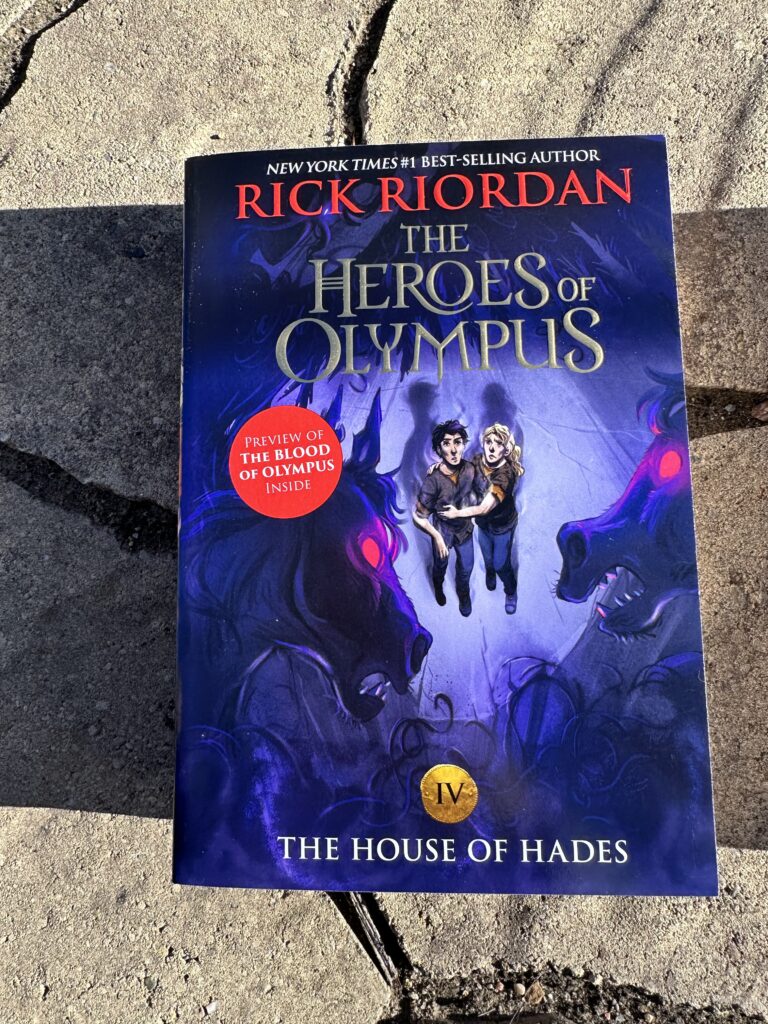
The House of Hades by Rick Riordan **Book Hangover Alert Still really enjoying rereading these. Not going to blurb this one because spoilers. Still in awe of Uncle Rick. I really admire the way he had POV chapters from all 7 main characters and it worked. I like the way each section from a certain character had it’s own mini character arc within the whole. Also love my baby Nico, who must be protected at all costs. 4.5/5 dead legionnaires
New Books Read
Tor Publishing Group
Ebony Gate by Ken Bebelle and Julia Vee The Phoenix Hoard book 1 of 2 This one was fun. I read it for my world building class. Emiko is just trying to leave her bloody history in the past, but when a magical debt is called in by a death god, she must take up her sword again to save her new home, San Francisco’s Chinatown. I enjoyed the world and the family politics Vee and Bebelle set up. 3/5 swords
Tor Publishing Group
The First Bright Thing by J.R. Dawson*** **Book Hangover Alert CW: domestic violence, alcoholism Full disclosure, J.R. Dawson is one of the professors for my program who taught the world building class I keep mentioning. In 1926 the Ringmaster, Rin, keeps her circus of Sparks (individuals with powers) one step ahead of the shadow chasing her from her past, while trying to prevent the next Great War that she and Mauve, a Spark who can see the future, can see coming. Rin must find a way to protect her circus and all those who love her and learn to believe herself worthy of that love. I loved the world of the circus and the nonlinear storytelling and the found family, queer vibes. 4/5 illusions
HarperCollins
This Appearing House by Ally Malinenko* CW: cancer Once again just have to say that middle grade authors get so much respect from me. They are so important, and everyone should read middle grade books. (I read this one for world building as well.) A house appears at the end of Jac’s street out of nowhere and that combined with Jac’s shaking hands and headaches makes her afraid that her cancer could be returning, 5 years after diagnosis and successful treatment. Jac and her best friend enter the house on a dare, but this isn’t your average haunted house. Jac is sure it’s trying to tell her something. But can she figure it out before it kills her? This book is so important for any kids (or even adults really) living with or recovered from cancer. I cried. I think the percentage of middle grade books that make me cry is higher than the percentage of adult books that make me cry. 4/5 mourners
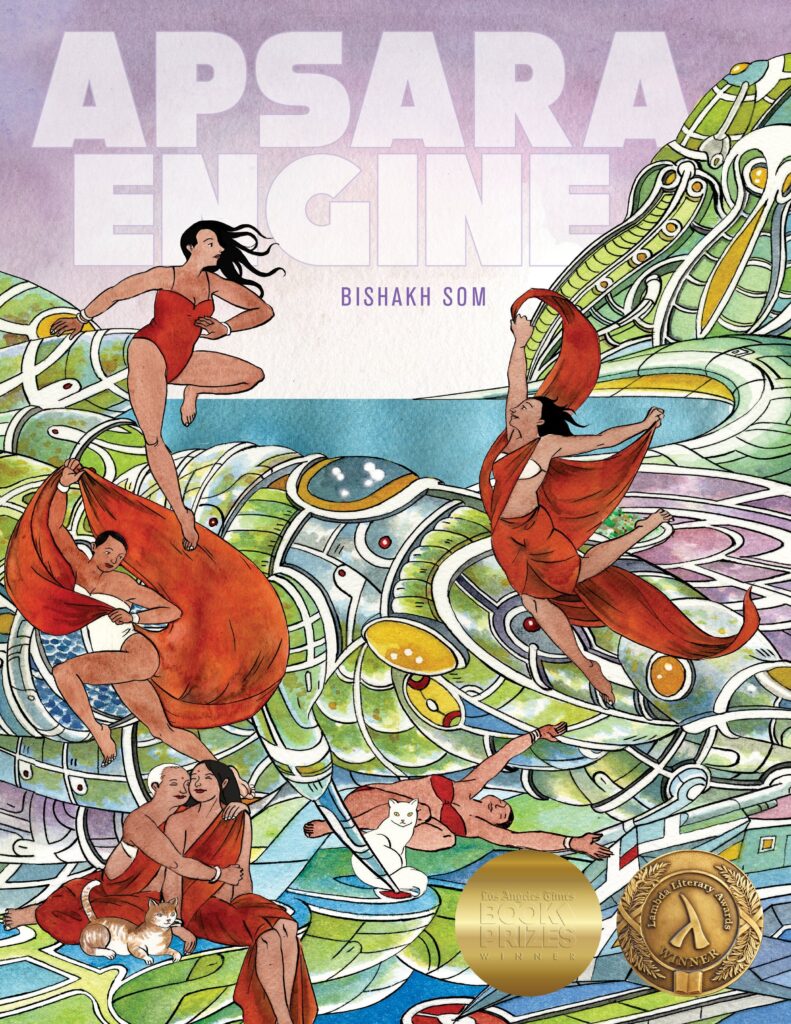
Apsara Engine by Bishakh Som*** Delightfully strange and queer. This is a collection of graphic short stories. They are very weird but also very good. The art is also lovely. 3/5 odd little creatures
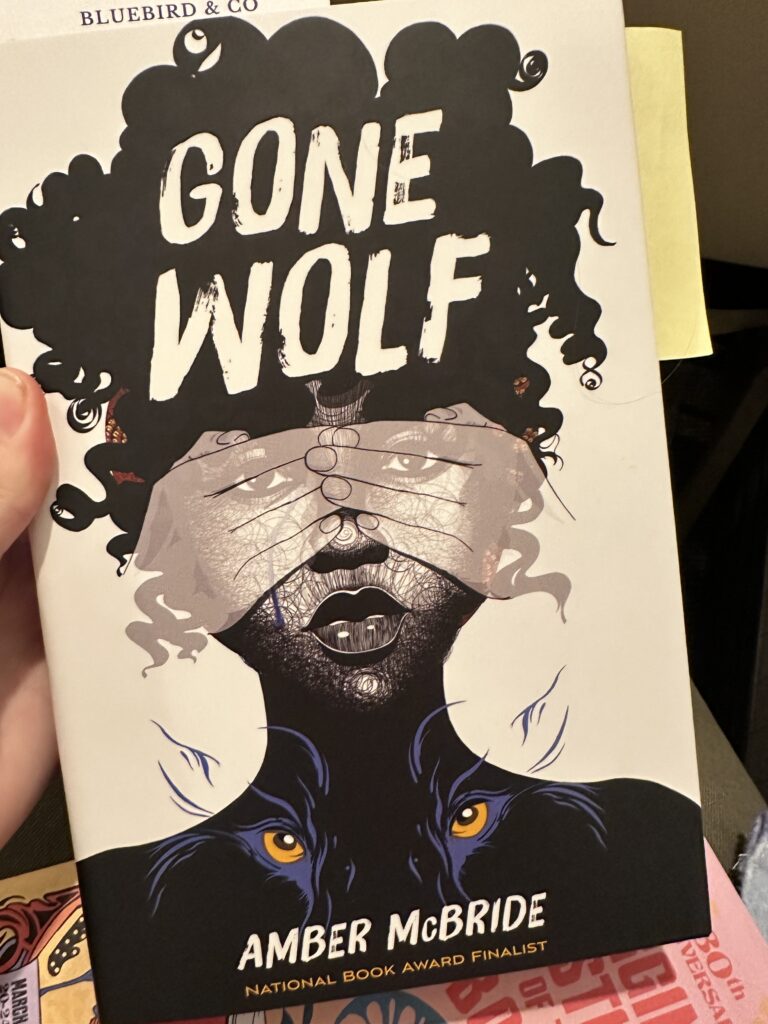
Gone Wolf by Amber McBride*** **Book Hangover CW: slavery, racism, trauma, grief, death, animal death This one is middle grade too. Same sentiment as above. I read this in one evening and it was excellent. Inmate Eleven lives in the Bible Boot, a dystopian future American South after a second Civil War. Inmate Eleven is a Blue, brainwashed to believe she is inferior to the Clones. She’s also a genetic match for the president’s son, kept to ensure he lives a long life. In 2022 Virginia, Imogen is struggling to come to terms with the pandemic and the history and present reality of racial trauma in America. The two stories weave together beautifully to paint a portrait of a young Black woman learning to find healing and empowerment. McBride’s poetry background lent a gorgeous lyricism, rhythm, and repetition to the prose. I cried. 4/5 wolves
Knopf
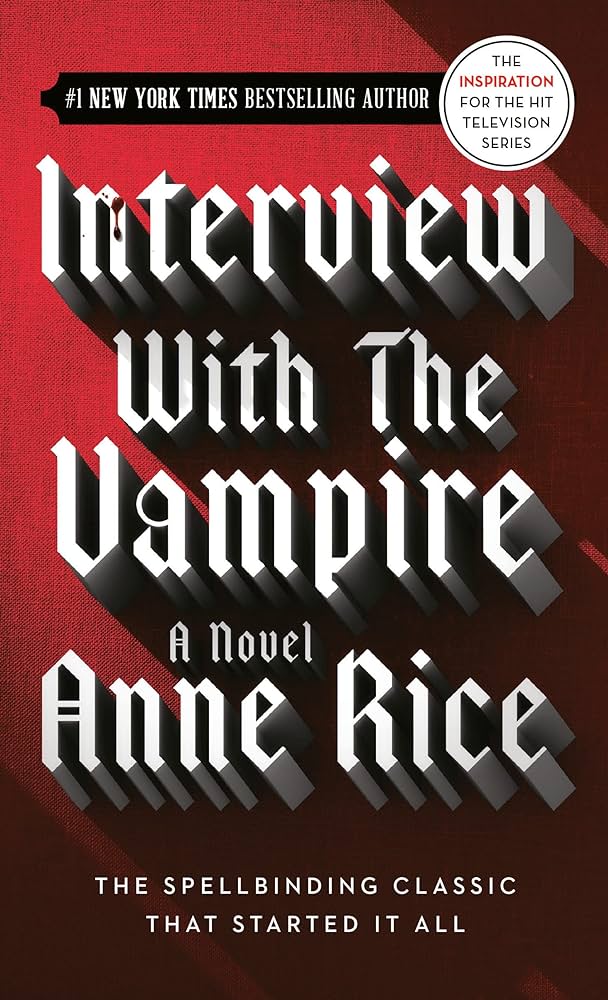
Interview with a Vampire by Anne Rice The Vampire Chronicles book 1 of 13 CW: slavery, pedophilia vibes? I can’t say whether or not I liked this book. It was kind of a slog to get through and I was wishing it was over for most of it. But now that it is over…I sort of want to read the next book? I sort of want to see the movie or the new show? I can’t stop thinking about it? The vampire Louis narrates his life story from his conversion to a vampire in the late 1700s until present day to a human journalist. It’s kinda gay (but could be gayer, tbh). It’s kinda unhinged. 3/5 fangs
Books I did not finish
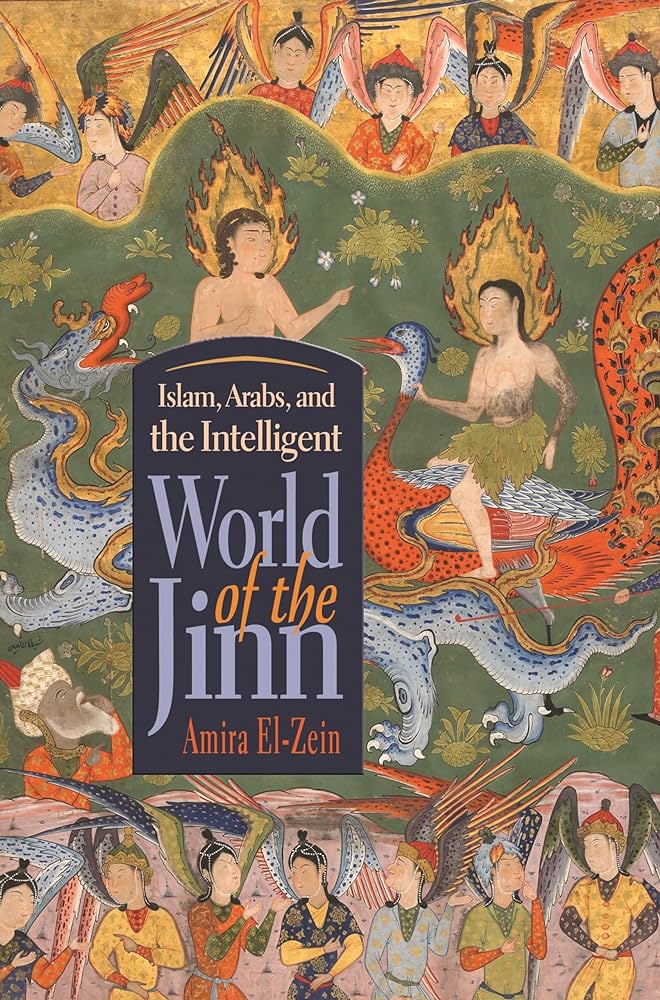
Islam, Arabs, and the Intelligent World of the Jinn by Amira El-Zein I feel bad saying I didn’t finish this because I didn’t stop because it wasn’t good. I was reading it for research on a potential project. For now the project is shelved, but I may continue it some time in the future, in which case I’ll probably return to this book. I did learn a lot about the Muslim concept of the jinn in comparison to humans and it was very interesting.
*This book only includes straight, white, cis people.
**Book Hangover Alert indicates the kind of book that will leave you full up on love. Satisfied, but wishing the book never had to end. You’ll be laying on the floor with no idea what to do with yourself (other friends have called this feeling Good Book Depression or say that certain books necessitate Floor Time). This is the kind of book that gets its teeth in you and won’t let go easily. After the last page you’ll be thinking about this book for a long time. You’ll bother all your friends trying to get them to read it so that you won’t be alone in your Hangover.
***This book is part of my Books for a Social Conscience series! Read The First Bright Thing for historical fiction that doesn’t erase queer people. Read Apsara Engine for trans voices in graphic storytelling. Read Gone Wolf for a better understanding of racial trauma.
Reads marked as part of the Books for a Social Conscience series will regularly address topics like race and racism, colonialism and post-colonialism, LGBTQIA+ experience, feminism, BIPOC experience, social and political issues, history, identity, class, disability experience, immigration, gun violence, poverty, colorism, environmentalism, and more! The goal of these books is to diversify the stories we’re reading, grow our empathy for those who are different from us, and amplify voices who are often silenced.
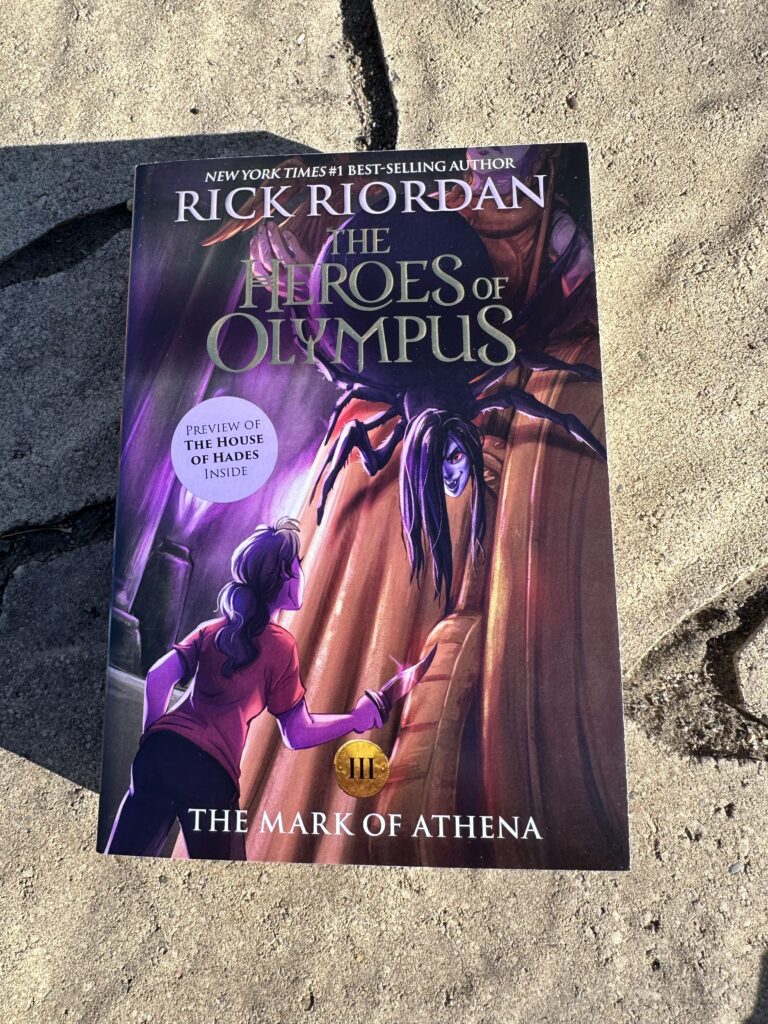
The Mark of Athena by Rick Riordan **Book Hangover Alert Heroes of Olympus book 3 of 5 This book is just so excellent. I really enjoy the first two books, but this one, when the team is all assembled? *Chef’s kiss* Now that the seven Greek and Roman heroes are all assembled, the quest to defeat Gaia can begin in earnest. This book focuses on the team’s first task, following the Mark of Athena to recover the Athena Parthenos. I’m really impressed by Riordan’s ability to navigate POV with so many important characters. I’ve been thinking a lot about craft lately and his books are just so well structured from a craft standpoint. 10/5 pairs of Chinese handcuffs
New Books Read
Hodder Children’s Books
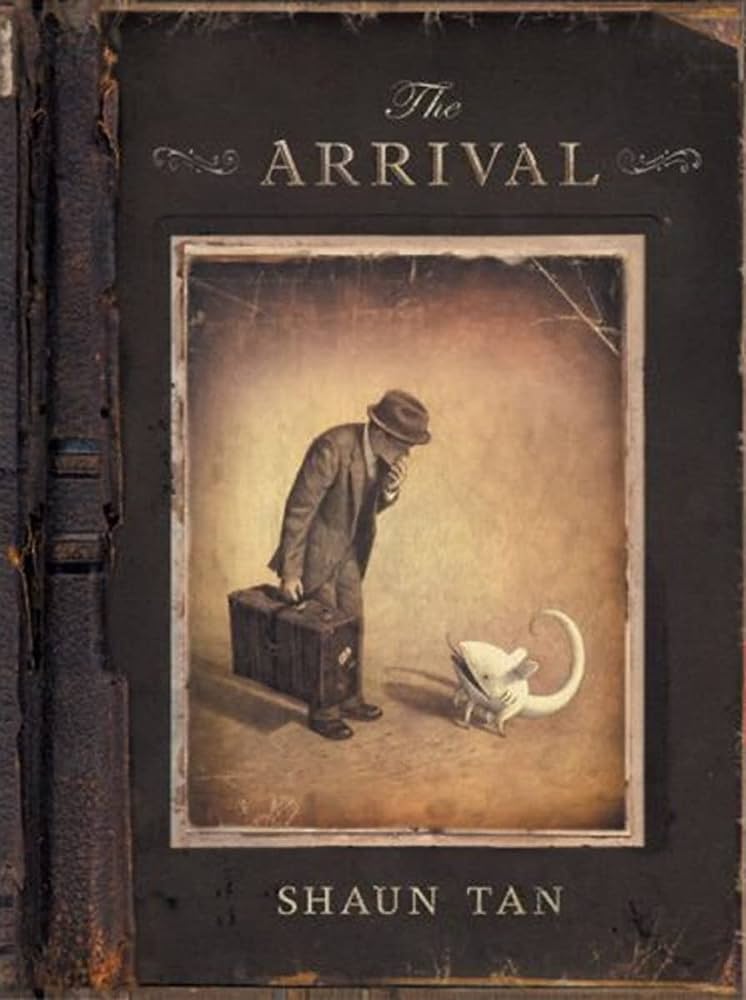
The Arrival by Shaun Tan*** This is a lovely little graphic novel told in only pictures. It follows our protagonist as he moves to an unfamiliar, fantastical land and has to adapt to new cultures and customs, make new friends, and not lose himself along the way. It’s so lovely and heartwarming and the way the art tells the story is really impressive. I also love the world Tan creates and all the little creatures that populate it. 3.5/5 lil creatures
Tor Books
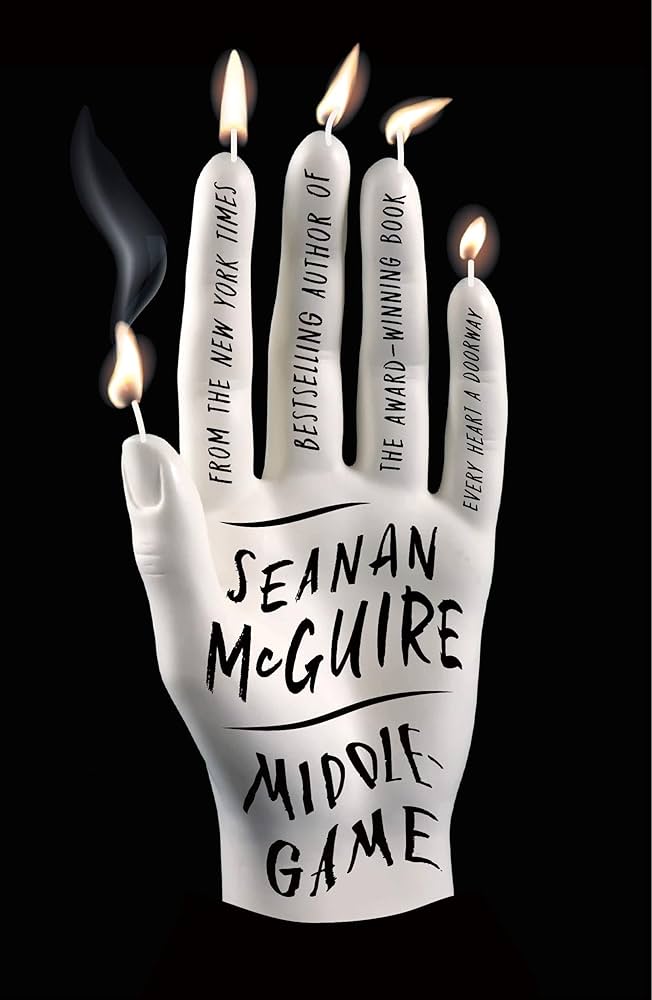
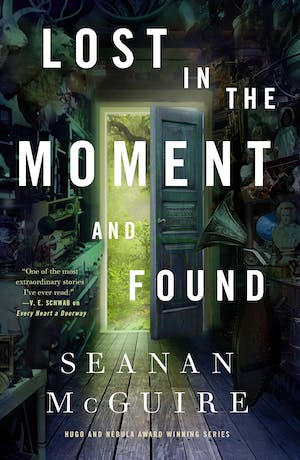
Middlegame by Seanan McGuire **Book Hangover Alert It was so hard to fulfill my obligations while I was reading this book because I just wanted to keep reading it. I love McGuire’s Wayward Children books, but honestly, this book is on another level. It is so good. Alchemist James Reed is attempting to build the Doctrine of Ethos, believed by alchemists to be the fundamental force of the universe. But when he creates two children to embody the Doctrine, he fails to take into account their humanity. Roger and Dodger were created for a purpose, but must find their own way. I feel like that was a very inadequate blurb, so just ignore it and go read the book. This book also has ace rep, which we love. I see you Dodger. Also, not really important, but I learned so much about Hands of Glory? And they are way cooler and have way more lore than JK Rowling made it seem like in Harry Potter. 5/5 timelines
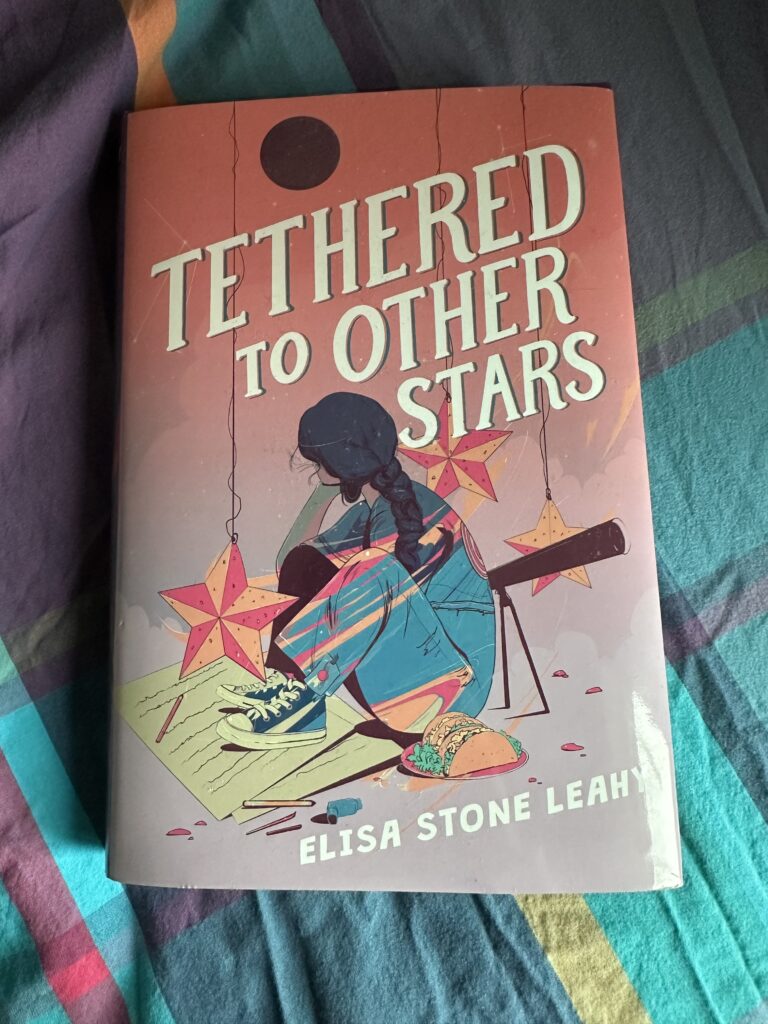
Tethered to Other Stars by Elisa Stone Leahy*** **Book Hangover Alert CW: bullying, microaggressions, racism Another absolute banger. I read this for my world building class this quarter and it was fantastic. Middle grade novels do not get enough praise. Wendy is a middle schooler trying to fit in to a new school, keeping her head down and avoiding the notice of ICE, when Luz, an undocumented immigrant, takes sanctuary at the church near Wendy’s house and refuses to be deported. Wendy faces bullying, injustice, and the struggles of making new friends. This book tackles a lot of really big issues in such an empathetic, human, and approachable way. 5/5 telescopes
National Geographic Books
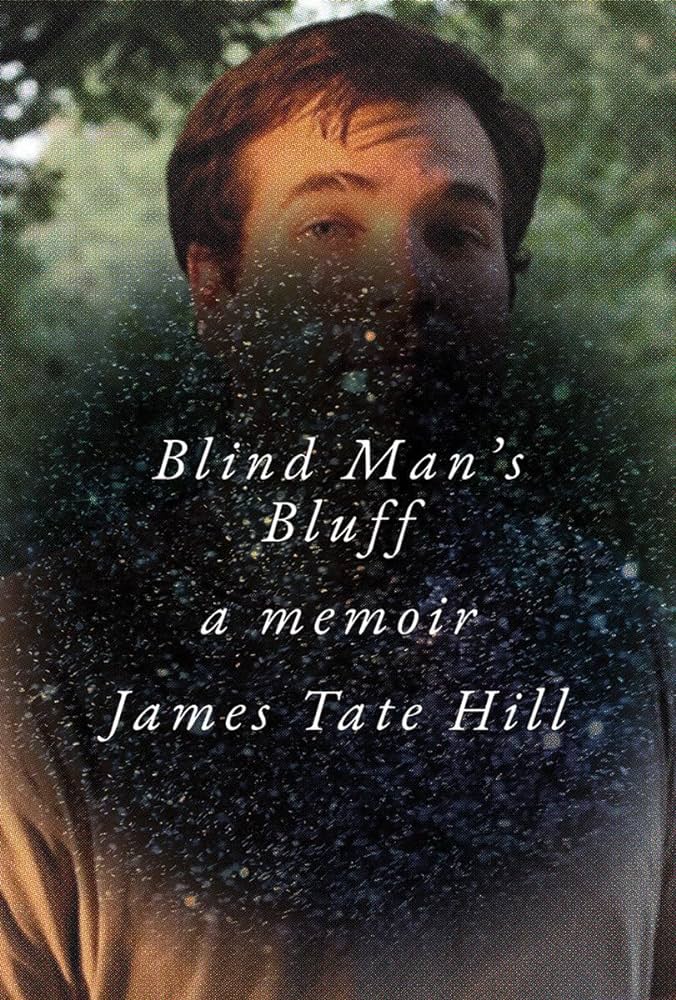
Blind Man’s Bluff by James Tate Hill*** * This is a fascinating memoir about a man who lost his sight as a teenager but continued to pretend that he could see much better than he could. The story follows his journey through internalized ableism to self-acceptance. I enjoyed this. I thought it was really interesting, though I do feel like Hill could have grappled a little more explicitly with internalized ableism and societal ableism. By the end of the book, it’s understood that he’s come to terms with his own blindness, but I guess I would have appreciated more of a critique of ableism. Hill made some interesting POV choices, telling a couple of the chapters in second person. While I think that was a cool choice and it let me as a reader feel I was experiencing what he did, it did get a little tiresome to read after a while. I think it may have been better to restrict that POV choice to the prologue and tell the rest in first person. But that’s probably just personal preference. 3.5/5 screen readers
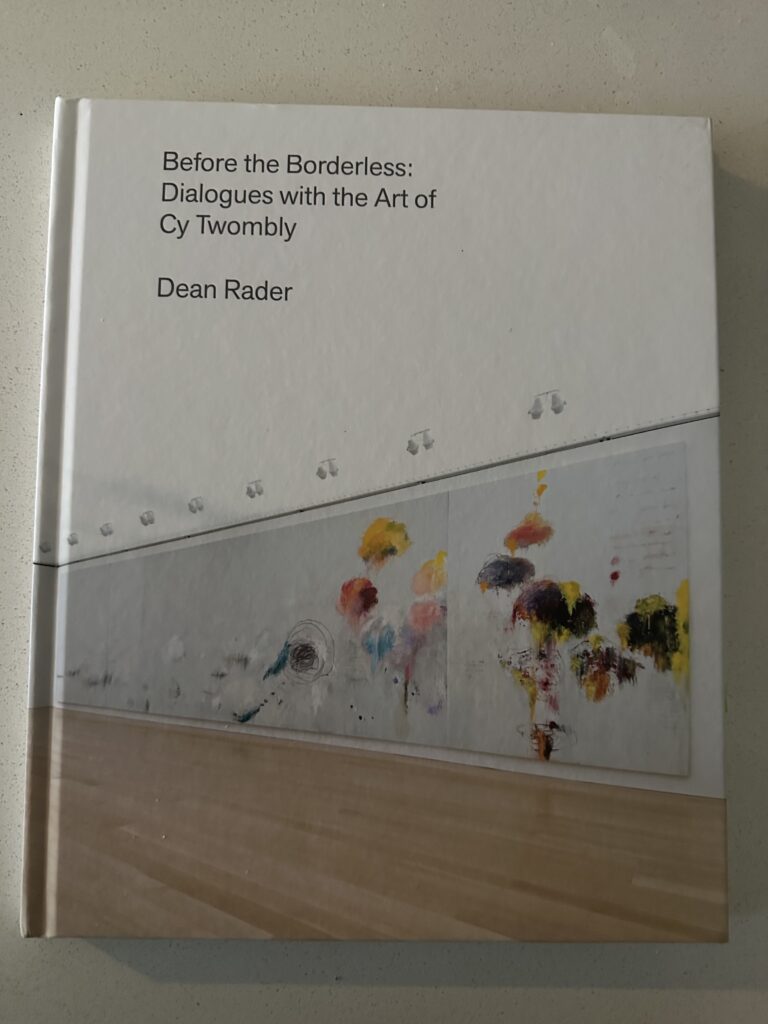
Before the Borderless: Dialogues with the Art of Cy Twombly by Dean Rader **Book Hangover Alert This book is a collection of ekphrastic poetry on the art of Cy Twombly. When I was the Editor-in-Chief of the Rappahannock Review, we published a poem by Rader that appears in this book, though the version in this book is revised a little. I’ve been thinking a lot about ekphrasis lately as I’m getting ready to teach a course on the interplay between image and text. This whole book was so good. I wouldn’t say I’m a huge fan of Twombly’s art, but Rader’s poems bring them a lot more meaning and dimension for me. And conversely, when I look at the art, the poems gain new meaning as well. I’m really impressed by Rader’s use of white space and enjambment, and I highly recommend this book to poetry and art lovers. 4/5 paintings
Broadway Books
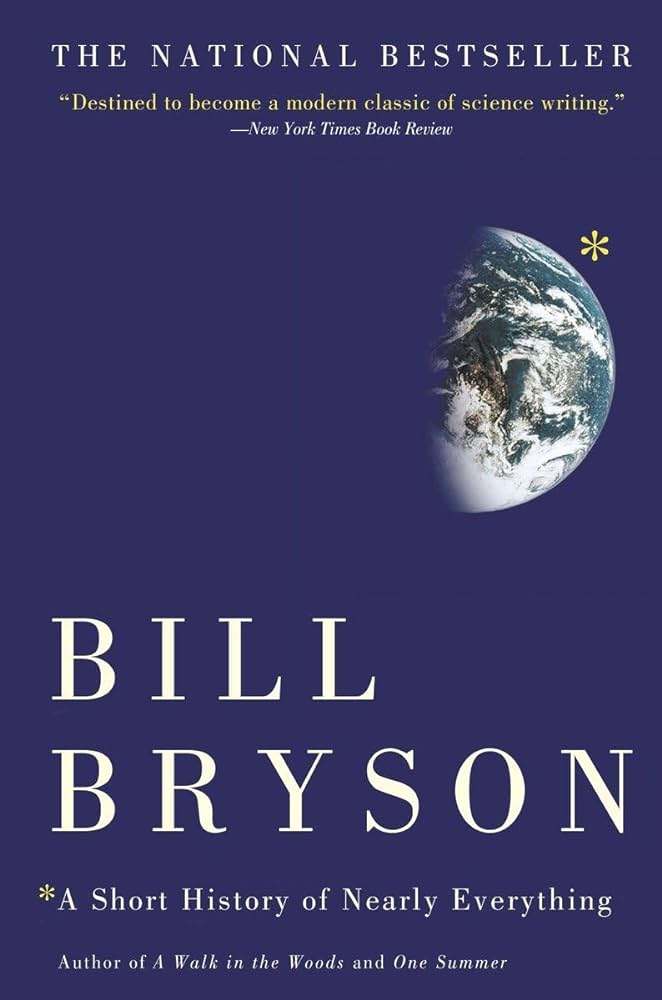
A Short History of Nearly Everything by Bill Bryson* My dad has been bugging me to read this book for forever, and now I finally have. It gives a good background for understanding Western science up to 2003. I prefer Bryson’s travel writing, just because I’m generally more interested in that, but this book did have some good general knowledge things that I’m glad I know now. It was published in 2003, though, so some things are now outdated. I would personally have been more interested in learning about women’s contributions to science and scientific inquiry form non-Western countries, but I guess that wasn’t the goal of this book. 3/5 male scientists
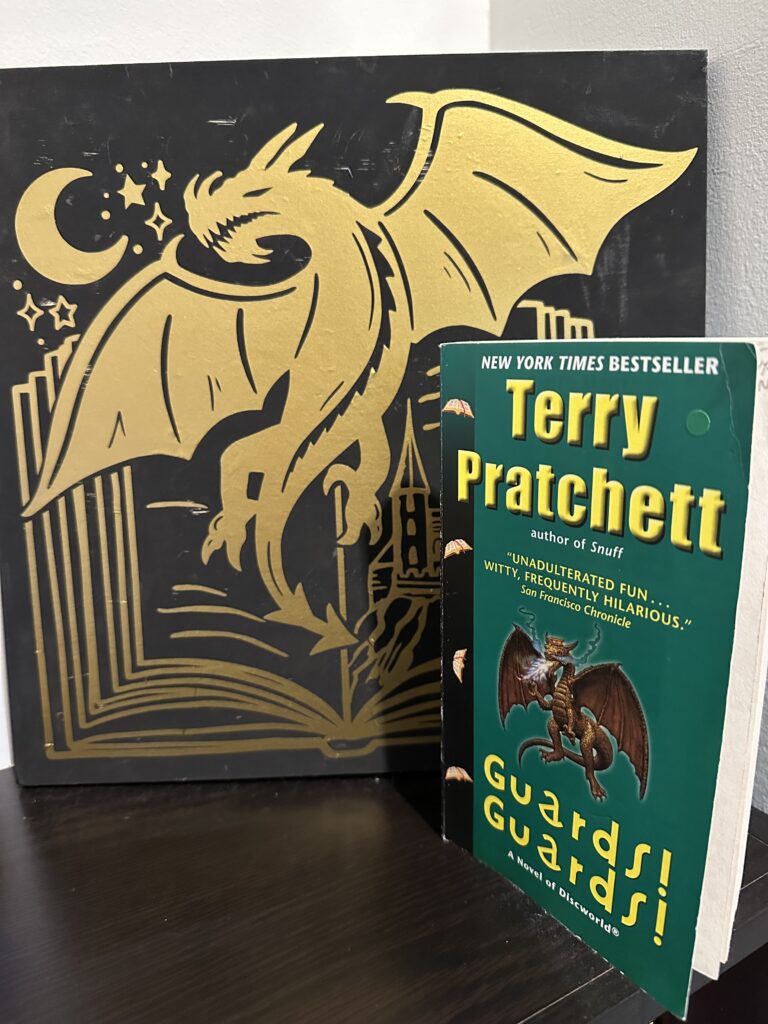
Guards! Guards! by Terry Pratchett* City watch book 1 of 8 Discworld book 8 of 41 It’s always a good day to read a Terry Pratchett book. The Night Watch, led by Captain Vimes, is a bit of a joke in Anhk-Morpork, capital of the Discworld, but when a mysterious Brotherhood begins summoning dragons as part of a plot to put a puppet king on the throne, Vimes has got to shape up and get to the bottom of it. This book has all of the trademarks of a wonderful Terry Pratchett novel, plus some cute swamp dragons. 3.5/5 dragons
*This book only includes straight, white, cis people.
**Book Hangover Alert indicates the kind of book that will leave you full up on love. Satisfied, but wishing the book never had to end. You’ll be laying on the floor with no idea what to do with yourself (other friends have called this feeling Good Book Depression or say that certain books necessitate Floor Time). This is the kind of book that gets its teeth in you and won’t let go easily. After the last page you’ll be thinking about this book for a long time. You’ll bother all your friends trying to get them to read it so that you won’t be alone in your Hangover.
***This book is part of my Books for a Social Conscience series! Read The Arrival for a visual telling of an immigration story. Read Tethered to Other Stars to learn more about undocumented immigration and racism and microaggressions as they affect children and families. Though I feel like it could have done more, Read Blind Man’s Bluff to learn more about internalized ableism and to learn more about an experience of blindness.
Reads marked as part of the Books for a Social Conscience series will regularly address topics like race and racism, colonialism and post-colonialism, LGBTQIA+ experience, feminism, BIPOC experience, social and political issues, history, identity, class, disability experience, immigration, gun violence, poverty, colorism, environmentalism, and more! The goal of these books is to diversify the stories we’re reading, grow our empathy for those who are different from us, and amplify voices who are often silenced.
January’s books set a pretty high standard for the year. I hope all the books I read this year are as good.
New Books Read
Macmillan Publishers
The Hundred Years’ War on Palestine by Rashid Khalidi*** CW: war If you’re trying to educate yourself on the Israel/Palestine conflict, this is a good one. Khalidi begins his history in 1917 after the break up of the Ottoman empire and traces the impacts of various outside forces on the region. Khaldi breaks his survey int 6 declarations of war, or resolutions or accords that resulted in the continued colonization and oppression of the Palestinian people. This book has so much information in it. I think my main problem in reading it was that I didn’t have much background knowledge of the region. This wouldn’t be the book I would start with, if you’re trying to learn about Palestine, but it does have tons of good information. 3/5 declarations of war
Make Me a World
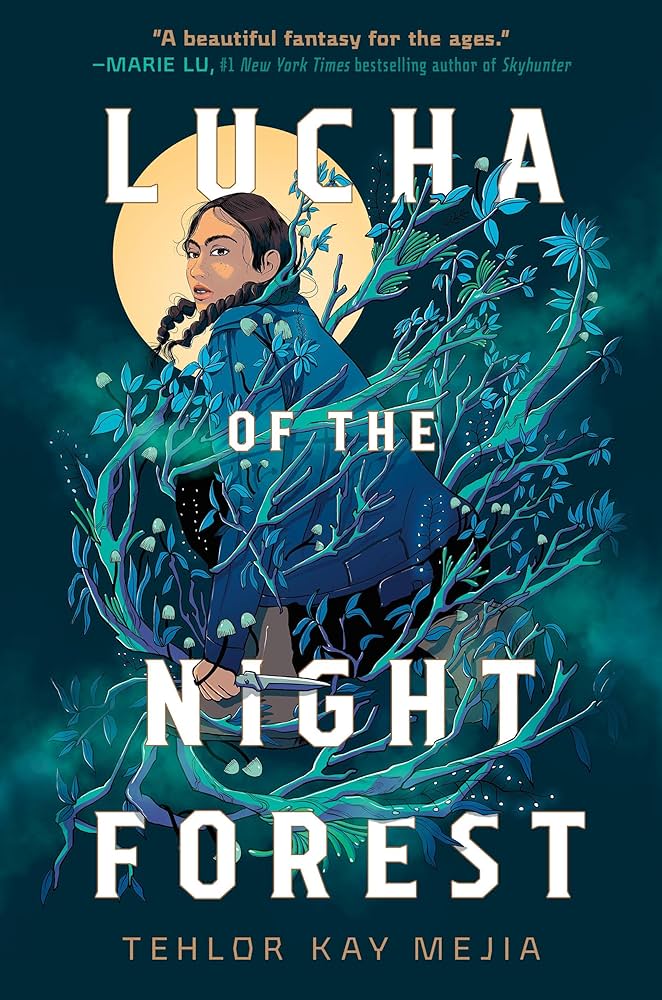
Lucha of the Night Forest by Tehlor Kay Mejia Lucha of the Night Forest book 1 of 2 CW: addiction, substance abuse This was a nice little dark fantasy. After Lucha loses everything, she makes a pact with a sinister god to destroy the thing that has destroyed her city, her mother, and now her sister: a drug called olvida. But there’s more to the forest–and to Lucha–than meets the eye. With the help of a priestess of the forest goddess, Lucha discovers her own powers and the secrets of the gods. This was enjoyable. I liked the world. I’m not sure it needs to be a series. I did feel like we could have solved all the problems in one book if we’d tried harder. 3.5/5 hallucinogenic hares
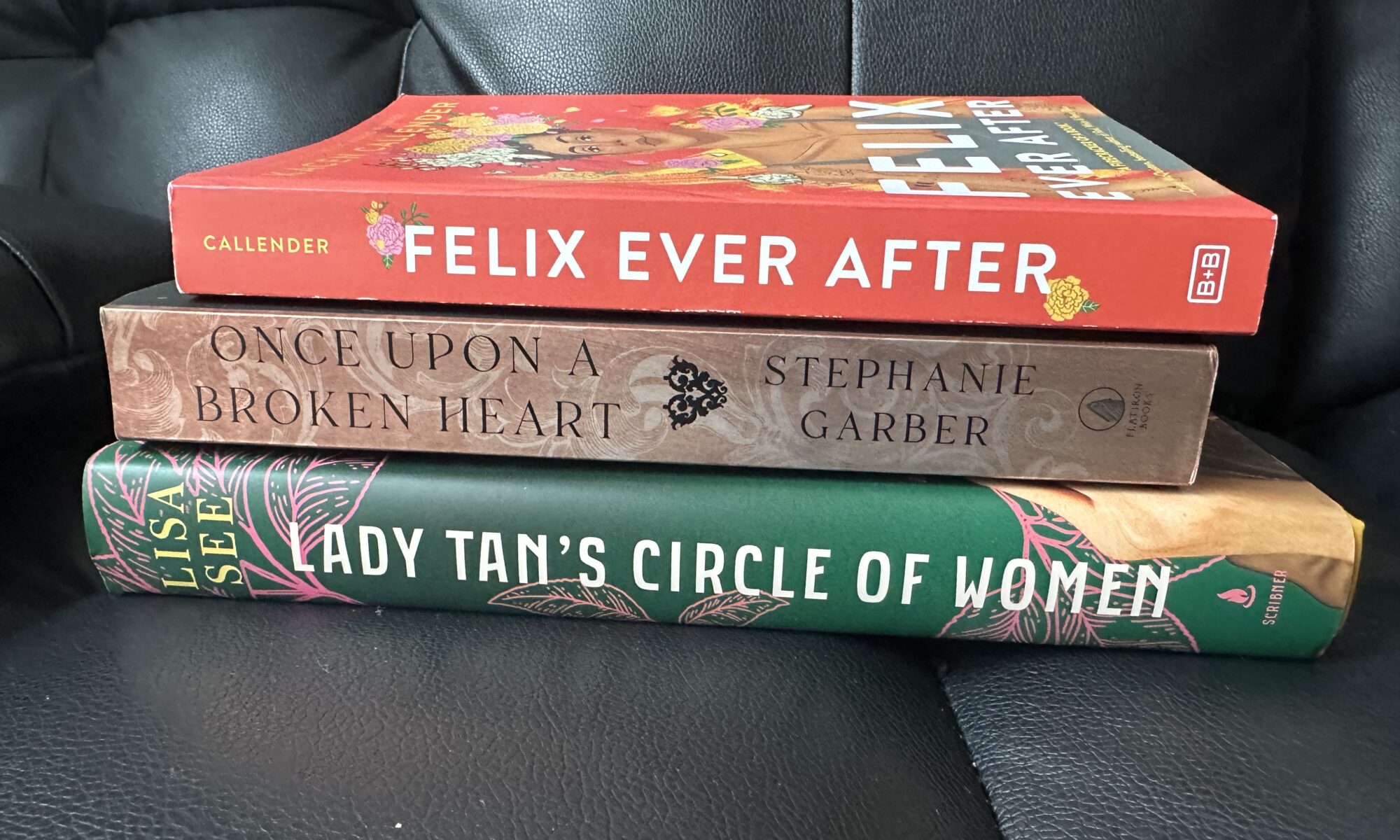
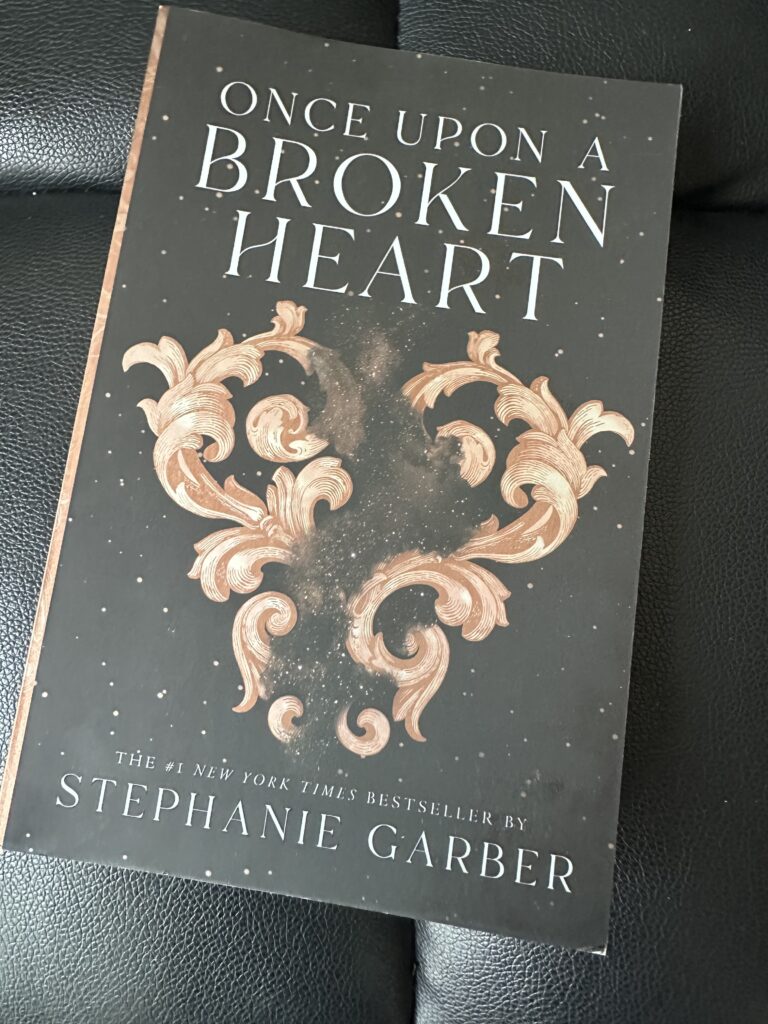
Once Upon a Broken Heart by Stephanie Garber Once upon a Broken Heart book 1 of 3 This one was so fun. Just before the wedding of her lover and her step-sister, broken-hearted Evangeline Fox makes a wish to crafty Fate, Jacks, the Prince of Broken Hearts. This foolish wish sets off a chain of events and intrigues that span continents as Evangeline tries to find her happily ever after. This book takes place in the same world as Caraval, and I love the world Garber created. It’s also nice to see Jacks again. (How can a character with zero morals be so lovable??) Garber is also excellent at describing clothing. I want every outfit described in the book. Excited to read the rest! 4/5 gorgeous outfits
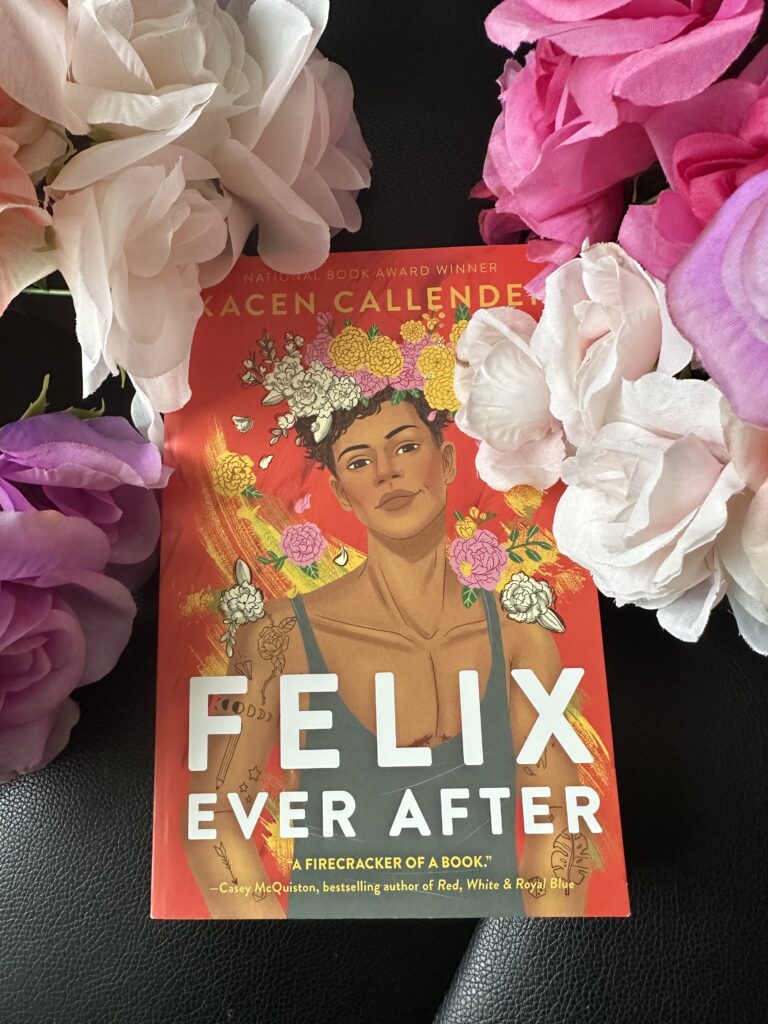
Felix Ever After by Kacen Calendar*** **Book Hangover Alert CW: anti-trans prejudice, dead-naming, misgendering, body dysphoria I love that I read a book whose title included the words “once upon” and then immediately read a book with a title including the words “ever after.” I just think it’s neat. Felix is a trans high schooler trying to find love and focus on his summer art portfolio for his elite high school. But Felix is being harassed online and in school by an anonymous fellow student at his school. Determined to figure out who’s behind it and get revenge, Felix is blind to the love that surrounds him. This book was so wonderful. I read the first 50 pages and then the next day I read the rest of it in one go. I could not put it down. The end was so healing and wonderful. 5/5 self-portraits
G. P. Putnam’s Sons Books for Young Readers
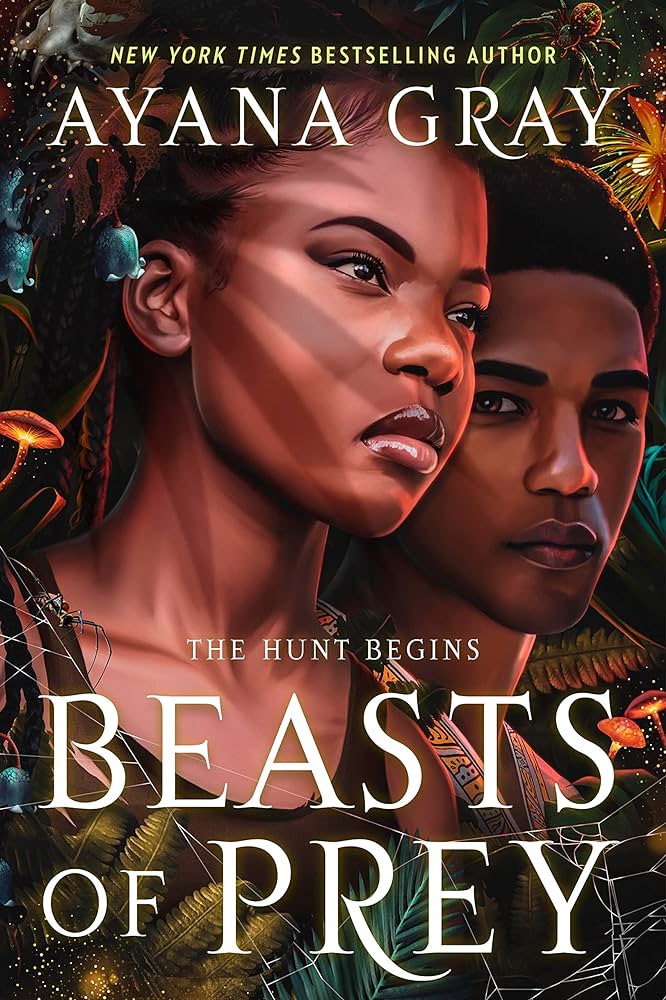
Beasts of Prey by Ayana Gray Beasts of Prey 1 of 3 I wanted to like this book and I didn’t and I couldn’t really figure out why. After a terrible fire at the Night Zoo, indentured servant Koffi and disgraced initiate Ekon must work together to track down a terrifying beast in the impenetrable Greater Jungle. But they each have their own agenda and, worse, so does a suspiciously cult-like religious order of warriors Ekon was expelled from, who are also looking for the beast. This book has an interesting world, character development, a pretty map in the front cover. I don’t know why I didn’t like it. I just didn’t really want to keep reading it. I got to the end of every chapter, and I was like, I could be done now. Maybe I just wasn’t the target audience (which is okay!). I did finish it because I didn’t feel it was fair to give up when I didn’t even know why I didn’t like it. But I won’t be reading the rest of them. 3/5 jungle beasts
Pan Macmillan UK
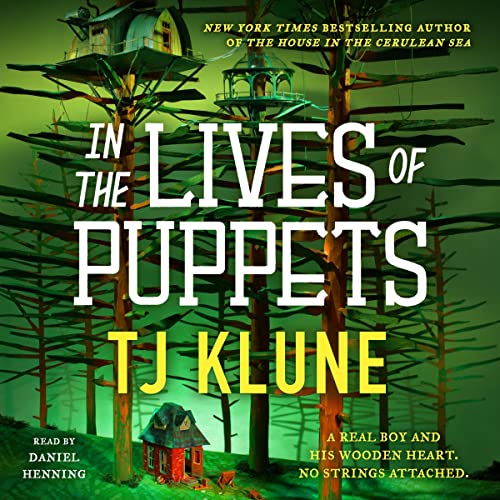
In the Lives of Puppets by TJ Klune **Book Hangover Alert Obsessed with TJ Klune. I loved The House on the Cerulean Sea, and I love this book too. Think Pinocchio + Wall-e, with a dash of Frankenstein–if Frankenstein had loved his monster instead of fearing him. Obsessed. Victor grows up in the woods, the only human raised by three robots on the edge of civilization. After Victor’s father (also a robot) is destroyed and taken to the city, Victor and his robot friends must go on a journey to save him–and also the world. We love to see asexual representation, and this book has it. For me, there was exactly the right amount of romance in this book (which I do realize means less than most people seem to want). Also I want to say that the narrator of the audiobook is 10/10. This book is a warm hug. It’s hilarious. It’s poignant. It’s devastating. It’s beautiful. I adored it. 5/5 robots
Tor Books
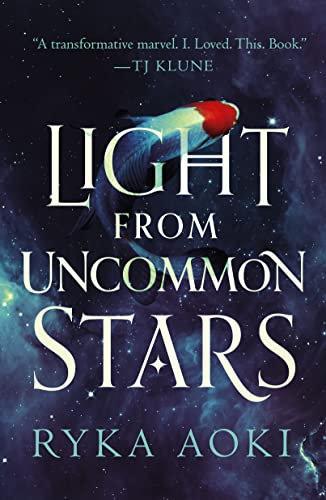
Light from Uncommon Stars by Ryka Aoki*** **Book Hangover Alert CW: anti-trans prejudice, misgendering, body dysmorphia, dead naming This book was a wild ride from start to finish. Shizuka Satomi, a famous violin teacher, is looking for her seventh and final student, whose soul will complete the bargain Shizuka made with Hell. Shizuka finds Katrina, a young trans violinist, who has been forced to run away from home. But both Shizuka and Katrina get a little more than they bargained for and discover the secret to escaping Hell. There are also aliens building a Stargate in a giant donut. This book is just so good. Also a warm hug. So healing and lovely. The research Aoki had to do for this book just astounds me. And don’t read this book on an empty stomach. The food descriptions are incredible. 5/5 donuts
GMP
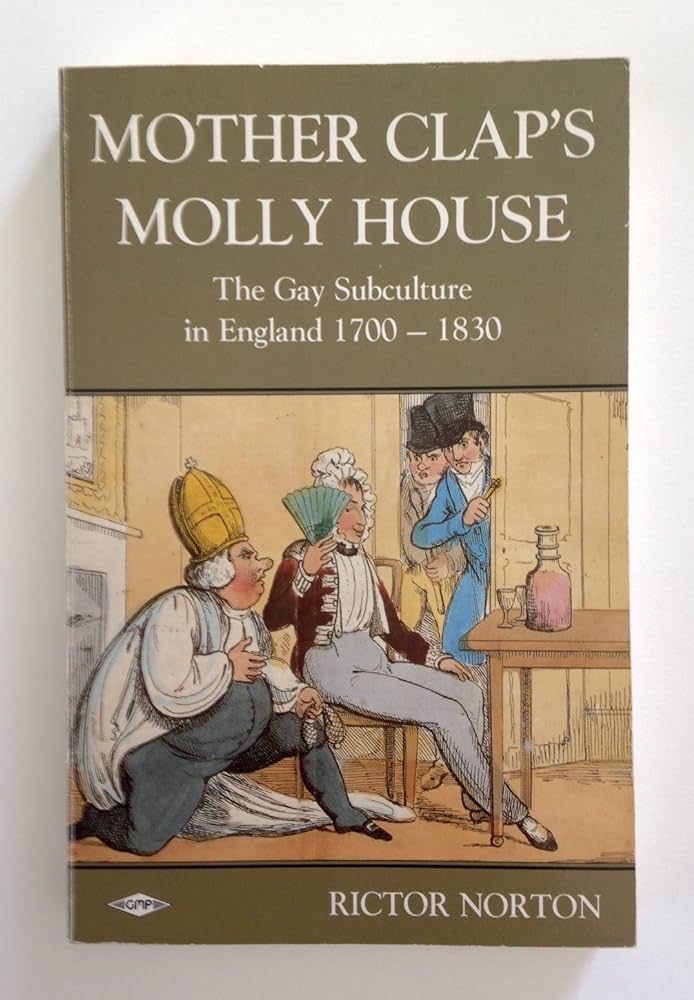
Mother Clap’s Molly House by Rictor Norton*** CW: homophobia, rape, pedophilia I’ve been trying to get my hands on a copy of this book for ages, and I finally got it through inter-library loans at Drexel. Norton’s book explores the formation of a gay subculture in England between 1700 and 1830. This includes the examination of molly houses, or the first gay clubs. It was so fascinating. There’s so little research out there on molly houses, so I’m glad I finally got to read this book. 3.5/5 molly houses
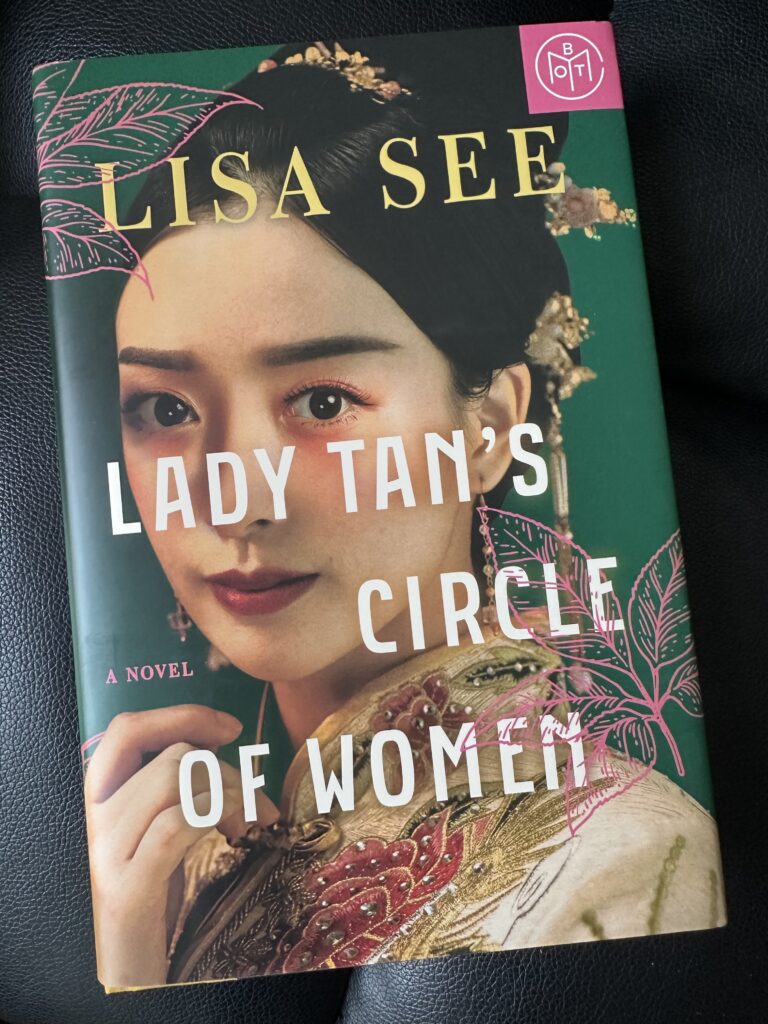
Lady Tan’s Circle of Women by Lisa See*** **Book Hangover Alert CW: foot binding, misogyny This book was stunning. A sweeping historical fiction that follows the life of Lady Tan Yunxian, a woman doctor who really lived during the late 1400s and early 1500s in Imperial China. Though we have some documentation about Lady Tan, much about her life remains unknown. See creates an incredibly vivid nuanced portrait of Yunxian and the lives of women in this time period. It’s a wonderful story of women’s friendship and how woman can thrive in a society designed for and by men. I will say the descriptions of foot binding were very difficult to read. I’m in pain just thinking about it. Also so impressed by the amount of research See did. 4.5/5 remedies
DC Comics
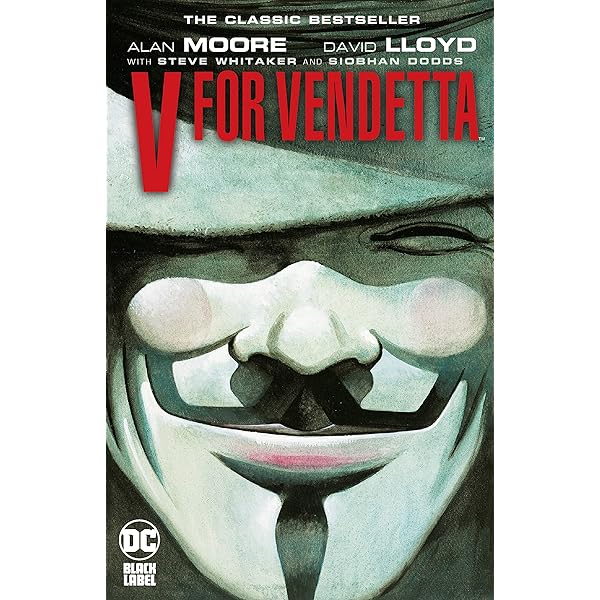
V for Vendetta by Alan Moore and David Lloyd CW: torture, genocide, experimentation on humans, rape Randomly decided to read this because I was thinking about a quote from the movie. This series of comics follows V, a mysterious masked vigilante as he works for vengeance and anarchy in a near-future Great Britain. It’s actually surprisingly different from the movie. I guess serialized comics are a much different shape than a 2 hour movie. I know Alan Moore also hated the movie. The comics are less about the people organizing to overthrow the government and more about vengeance and anarchy. The government men in the comics in general had more nuance (although I couldn’t keep them all straight), and it was disappointing that two of the five female characters in the comics didn’t get to be in the movie. Moore and Lloyd’s comic was interesting in that it came out in the 80s and 90s and it had more than just one type of woman. It’s not perfect, but it’s surprisingly good in it’s female representation. Also the oppressive authoritarian government thing, unfortunately still relevant. One more thing, but it’s a spoiler. Read More: SPOILERS AHEAD
I’m not sure I can forgive V for torturing Evey, even if it was to teach her something, “to free her” from the oppression in her mind, even if she forgave him. However, I’m not sure the comics really ask me to forgive him. The movie does, and I think that’s why I’ve always felt weird about it. But in the comics, I don’t feel like I’m asked to excuse V’s behavior. He’s not a good guy. He’s bringing down an oppressive regime, yes, but he’s not noble. Or at least, that was my interpretation.
3.5/5 Guy Fawkes masks
***This book is part of my Books for a Social Conscience series! Read The Hundred Years’ War on Palestine for an in-depth look at conflict in the region. Read Felix Ever After for a heartwarming LGBTQIA+ love story. Read Light from Uncommon Stars for a warm hug of a book that deals with LGBTQIA+ themes. Read Mother Clap’s Molly House to learn more about gay and lesbian history in England. Read Lady Tan’s Circle of Women for an empowering tale of women in Imperial China.
Reads marked as part of the Books for a Social Conscience series will regularly address topics like race and racism, colonialism and post-colonialism, LGBTQIA+ experience, feminism, BIPOC experience, social and political issues, history, identity, class, disability experience, immigration, gun violence, poverty, colorism, environmentalism, and more! The goal of these books is to diversify the stories we’re reading, grow our empathy for those who are different from us, and amplify voices who are often silenced.
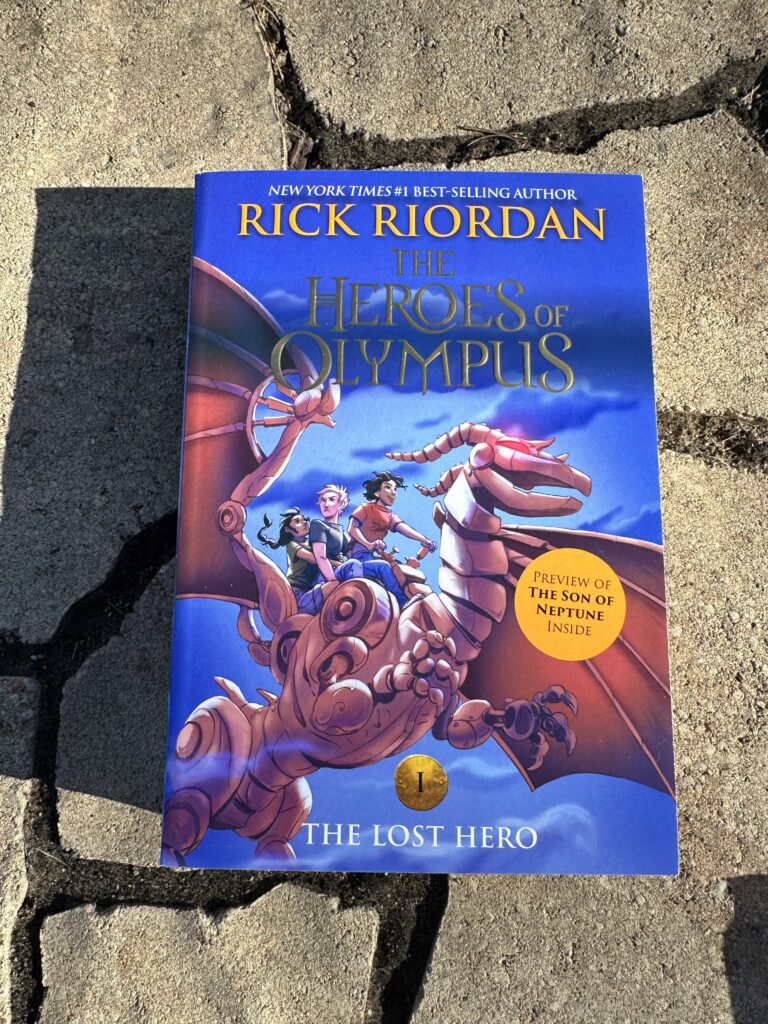
The Lost Hero by Rick Riordan Book 1 of 5 Heroes of Olympus I remember the first time I read this book, I was a little disappointed because Percy isn’t in it and I missed him as a narrator. But rereading it, I was happy to return to getting to know Jason, Leo, and Piper, who I had grown to love throughout the series. This is the first book in the Heroes of Olympus series, which follows the Percy Jackson and the Olympians series. This book follows Jason Grace, who wakes up on a bus with Piper and Leo with no memory of who he is. He, Piper, and Leo, all half-bloods, end up at Camp Half Blood where they must go on a quest to save Hera, queen of the gods, get Jason’s memory back, and maybe figure out where Percy Jackson disappeared to. It is excellent. I love that the Aphrodite kids finally get a redemption hero in Piper. 4/5 baseball-bat-wielding satyrs
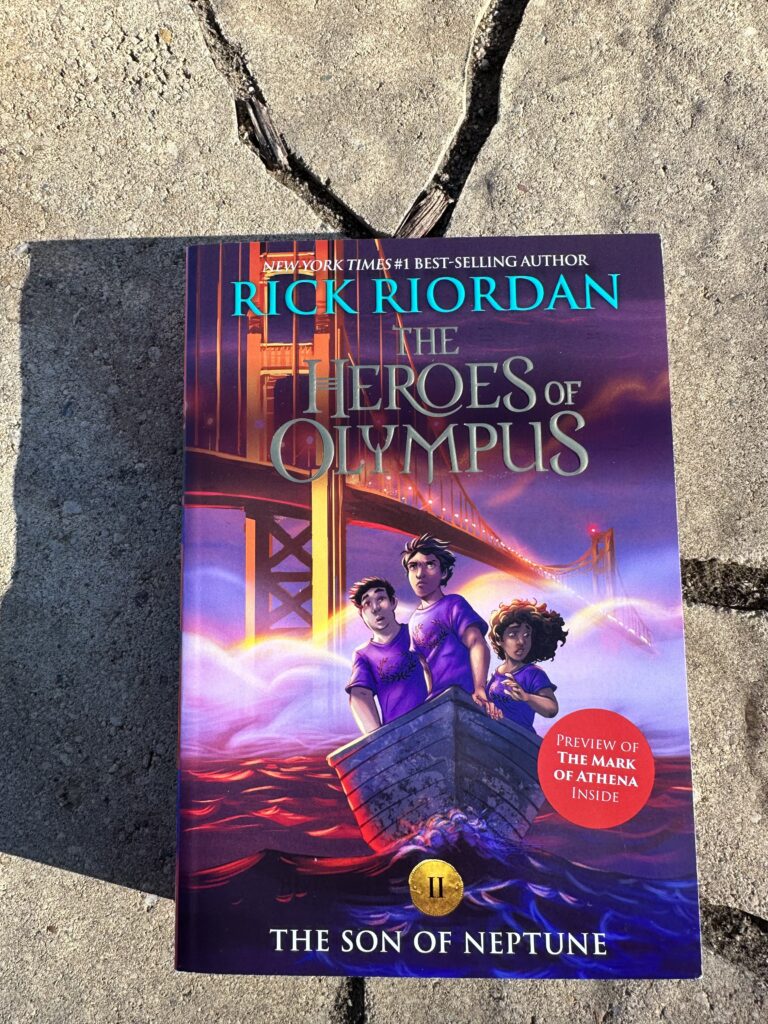
The Son of Neptune by Rick Riordan Book 2 of 5 Heroes of Olympus And Percy’s back! This book follows Percy as he wakes up missing his own memory and must make his way to Camp Jupiter, a camp for Roman demigods. He meets Frank and Hazel and learns of the disappearance of Jason Grace from Camp Jupiter. Percy, Hazel, and Frank must go on their own quest and unite Camp Half-Blood and Camp Jupiter for the impending fight with Gaia, foretold in the Great Prophesy. I love Frank and Hazel so much, so it was nice to reread this one. 4.5/5 gold-eating horses
New Books Read
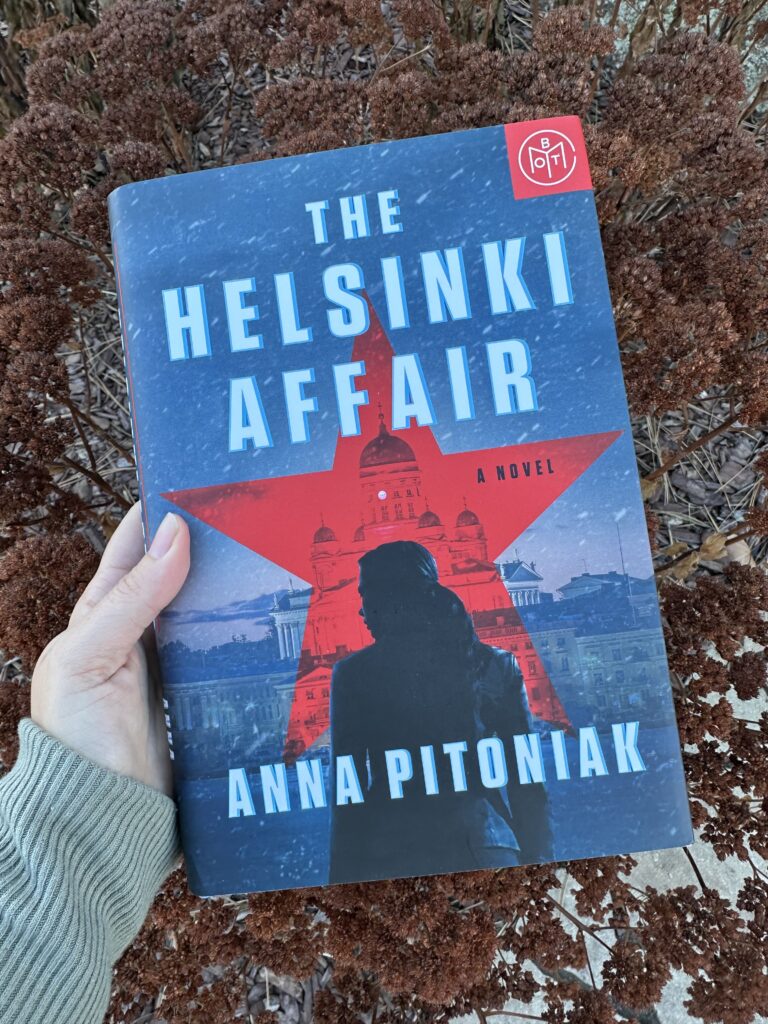
The Helsinki Affair by Anna Pitoniak* Do you ever binge-read things not because you like them but just because you want to? I didn’t think this book was amazing, but that did not stop me from reading it in like two days just because I wanted to spend the whole weekend reading. It’s a thriller. I’m realizing I don’t really like thrillers. CIA agent (whose name I can’t remember) gets a tip that an American politician is about to be assassinated, but her superiors don’t believe the tip. When the American politician dies, she is pulled into a Russian plot to destabilize the US, and the more she learns, the more she suspects her father, a former CIA agent, is somehow wrapped up in the intrigue, relating back to something that happened when he was stationed in Helsinki when she was just a child. The characters were pretty flat; the plot was reasonably entertaining. I kept waiting for a twist that didn’t really come, and the ending didn’t feel totally wrapped up. But it was okay. 3/5 Russian oligarchs
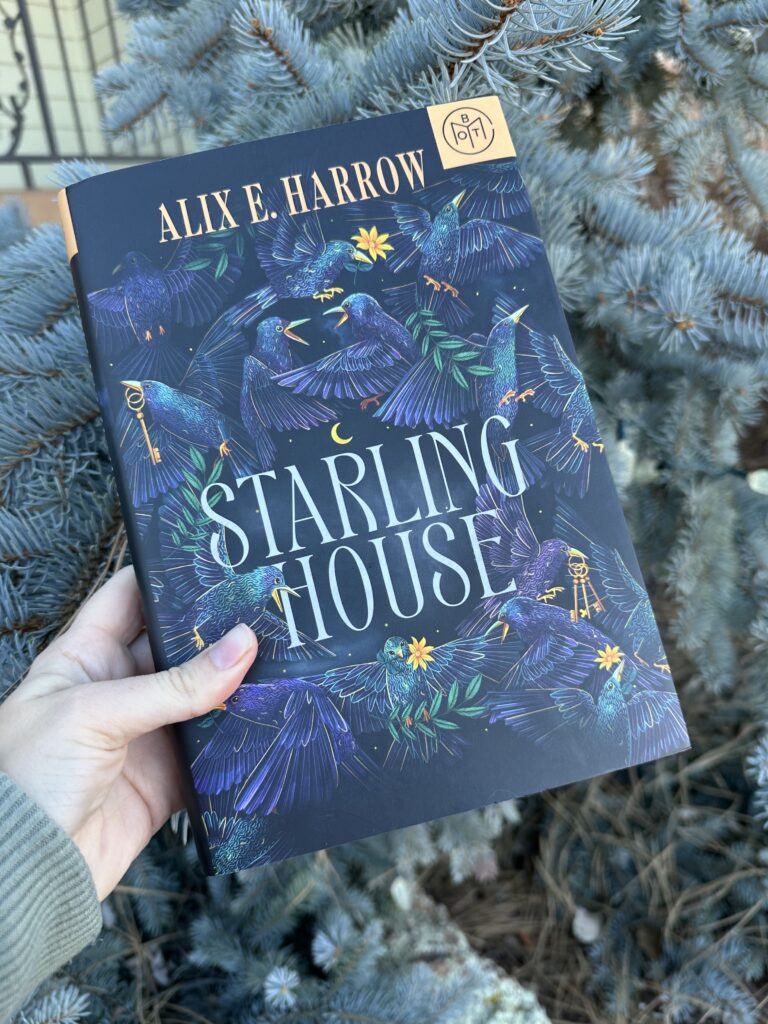
Starling House by Alix E. Harrow **Book Hangover Alert This book was the spooky vibes I was looking for when I read The Stranger Upstairs. Opal is a young woman just trying to take care of her younger brother after the death of their mother in a small town slowly being poisoned by the nearby power plant. Out of desperation and strange curiosity, Opal takes a job as a housekeeper for the town’s most mysterious young man at the local haunted house. But Opal will learn there’s much more to the house, the young man, the town, and her own past than she ever knew. It was delightful. I loved Opal and her found family and the house and the spooky vibes. 5/5 spooky creatures
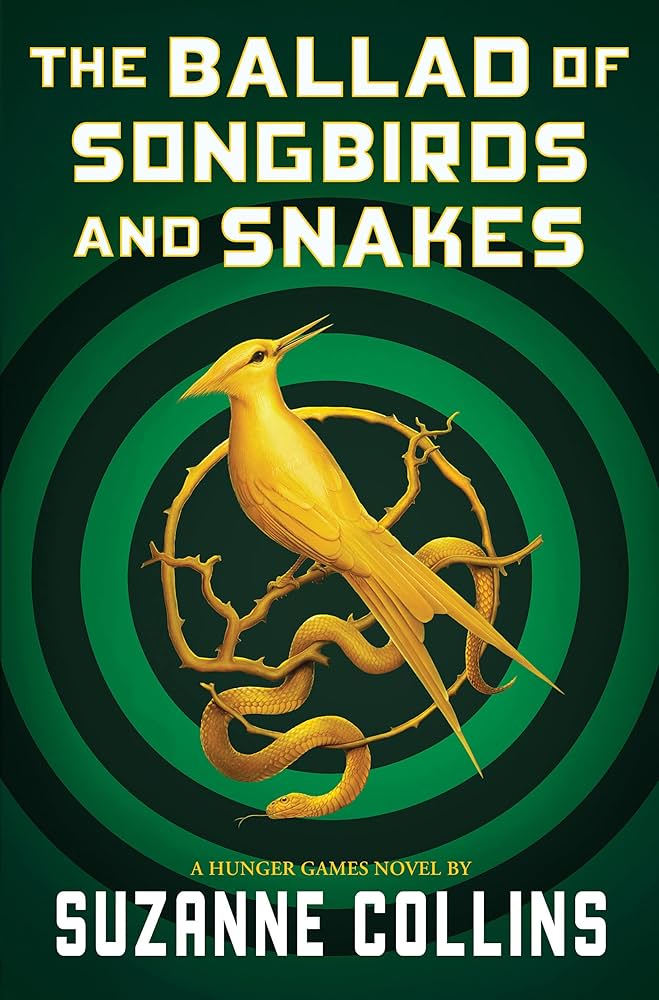
The Ballad of Songbirds and Snakes by Suzanne Collins*** **Book Hangover Alert *This book includes only straight white cis people Prequel to the Hunger Games Series CW: war, death, oppression This book somehow ended up with all three designations. Yes, it only includes straight, white cis people, but I think it is at least partly intentional, as it supports the repressive society Collins is creating. And I still believe this is a book that will help improve your social consciousness, despite that lack of diversity. Collins writes an incisive critique of war, fascism, and the sensationalization of news and reality TV. The Ballad of Songbirds and Snakes follows a young Coriolanus Snow growing up in the Capital and shows how his involvement in the development of the Hunger Games leads to the games we see in the Hunger Games trilogy 64 years later. I know this book came out in 2020 and Collins probably wasn’t explicitly basing it on the Israel/Palestine conflict (and let’s face it, there are many authoritarian regimes to be inspired by–not least her explicit Roman Empire references), but it’s impossible not to draw parallels between the propaganda of Israel and the outsized reaction of the Israeli military following the October 7th Hamas attack. As the United States slides toward fascism, I feel like Collins was like, “You guys apparently didn’t get it when I wrote the first three Hunger Games books, so here’s another one. Do you get it now?!” 5/5 sponsors
Reading Pictures by Alberto Manguel I read this in preparation for a class I’m going to teach in the spring. It is a series of essays about how to interpret art. It was fascinating and I enjoyed it very much. I plan to use several of the essays as readings for my class. 4/5 paintings
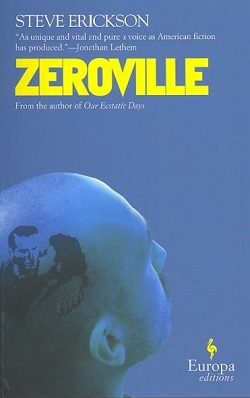
Zeroville by Steve Erickson **Book Hangover Alert CW: child abuse I don’t even know how to write a review for this book. It was very weird. In a good way. Movie fanatic Vikar moves to LA in 1969 to work in the movies. He works as a set builder and movie editor and through dreams and the movies he sees, begins to make a momentous discovery. Vikar read as an autistic character to me, and I thought that was well done. I also liked the way Erikson played with form in this novel, from the chapter breaks and numeration, and the way his scenes sometimes read like individual frames in a movie. Wild. 4/5 movies
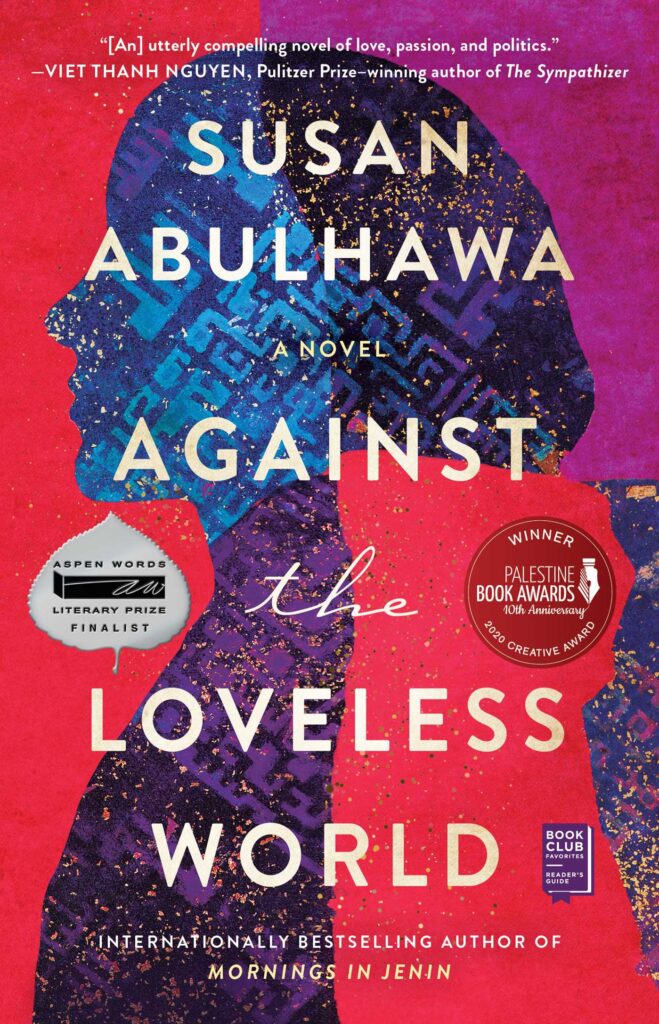
Against the Loveless World by Susan Abulhawa*** **Book Hangover Alert CW: sexual assault, oppression, war, abuse, torture If you’re looking to learn more about Palestine, but not really feeling history/nonfiction books, this is a great choice. The story follows Nahr, a Palestinian growing up in Kuwait, where her parents fled to from Palestine, and her journey to return to Palestine and work for the freedom of her homeland. The prose was lovely; Nahr’s journey from thoughtless teen to mature woman was beautifully done. And I also feel like a learned a lot about the Palestinian conflict, without having to read history. 4.5/5 dances
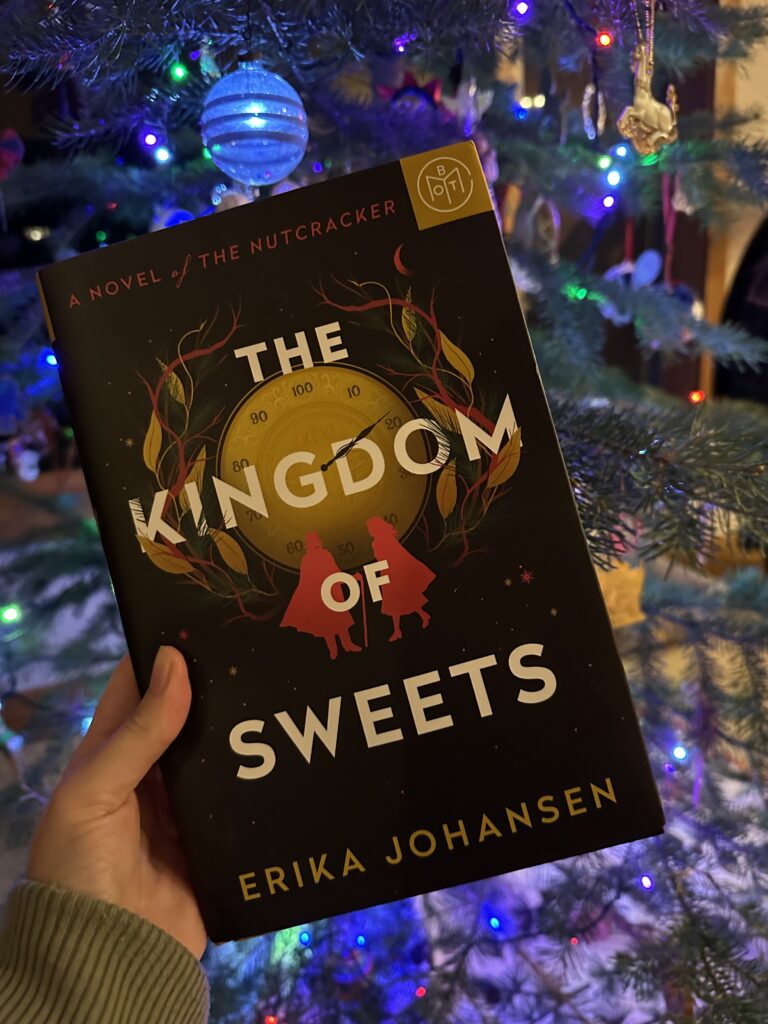
The Kingdom of Sweets by Erika Johansen* This retelling of The Nutcracker was fun for December. It was deliciously dark and I really enjoyed it. Clara and Natasha are twins, blessed or cursed at birth by their godfather Herr Drosselmeyer, Clara to be light and Natasha to be dark. The sisters grow up and apart with these designations coloring all their relationships. The Christmas they turn seventeen, Herr Drosselmeyer returns with enchanted gifts: a nutcracker and a clown that seem to be more than just toys. That night the girls cross into the Kingdom of Sweets, and Natasha takes the chance to seize her own destiny. I was just a little disappointed there was no Mouse King in this retelling. I love a good Mouse King. 3.5/5 sweets
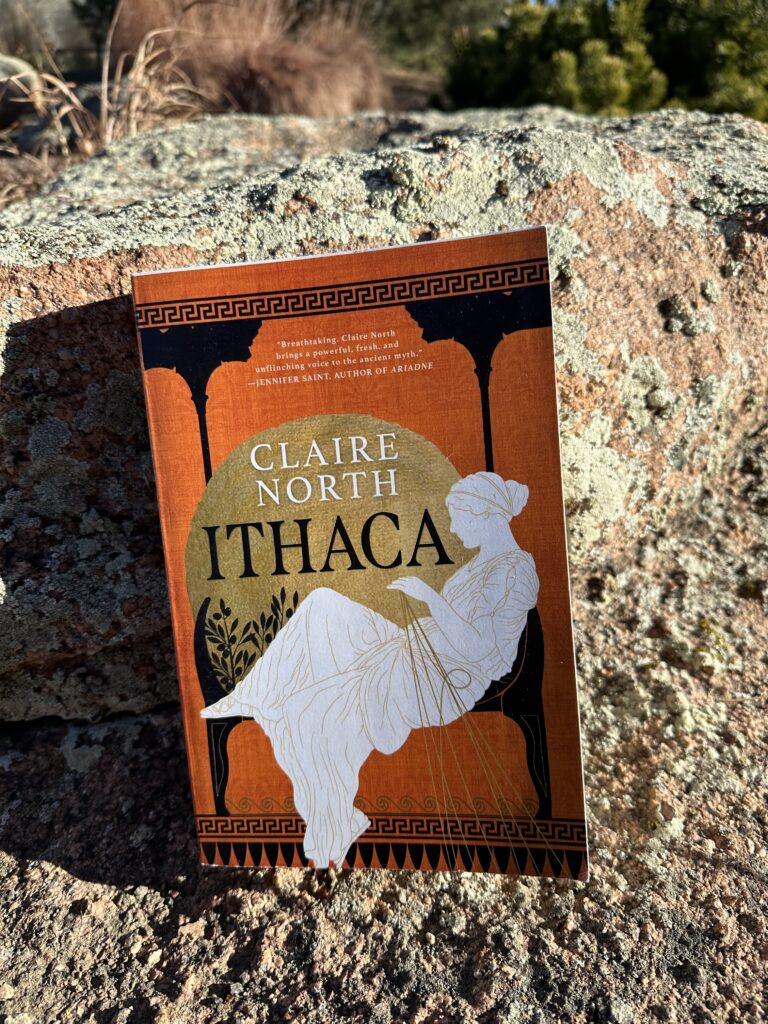
Ithaca by Claire North **Book Hangover Alert Book 1 of 3 House of Odysseus You know me, I’m a sucker for a Greek myth retelling, especially a feminist one. This book tells the story of Penelope, wife of Odysseus, as she waited twenty long years for his return. If this is a story you think you know, you’ve never heard it told by Hera, queen of the gods. I loved it. It was excellent. I’m excited to read the rest of the books. 5/5 warrior women
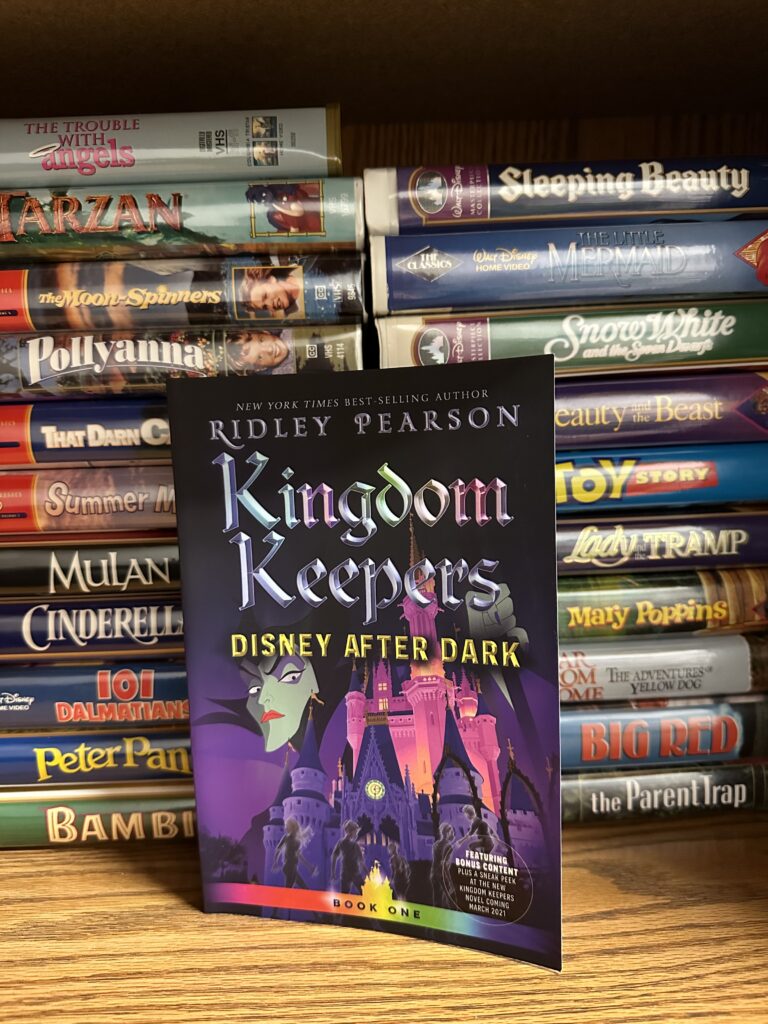
Disney After Dark by Ridley Pearson* Book 1 of 7 Kingdom Keepers I’ve been meaning to read these for a long time. They’re fun for us crazy Disney nerds. Finn and four other kids are chosen to be holographic hosts at the Walt Disney World parks. But the kids quickly learn that it wasn’t just a quick acting job; every night when they go to sleep, they wake up as holographs in the Magic Kingdom. They must work together to save the park from the forces of evil. It’s fun. It’s not amazing or anything. But a quick, easy read. 3.5/5 Small World dolls
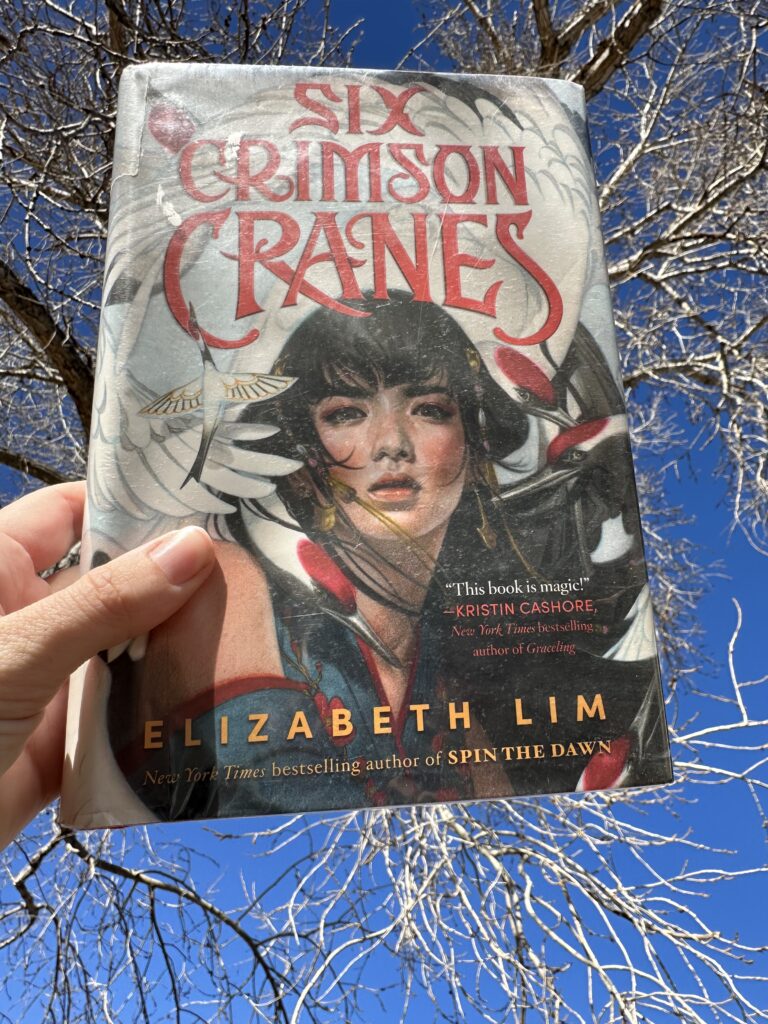
Six Crimson Cranes by Elizabeth Lim **Book Hangover Alert Book 1 of 2 Six Crimson Cranes And we go out with a bang! My last book of the year was excellent, thanks for asking. This book has everything; a beautiful map, a lush, Asian-inspired fantasy world, evil enchanters, magic, dragons, a plucky young heroine, and just a little sprinkling of romance. I adored it. Shiori is dreading her betrothal, but she’s got bigger problems. Magic has been banned in Kiata, and Shiori has a natural talent. After Shiori learns her stepmother is also an enchantress, her stepmother curses her and her six brothers and banishes them to the outskirts of the empire. Shiori must figure out how to break the curse and save her kingdom. 4.5/5 paper birds
*This book only includes straight, white, cis people.
**Book Hangover Alert indicates the kind of book that will leave you full up on love. Satisfied, but wishing the book never had to end. You’ll be laying on the floor with no idea what to do with yourself (other friends have called this feeling Good Book Depression or say that certain books necessitate Floor Time). This is the kind of book that gets its teeth in you and won’t let go easily. After the last page you’ll be thinking about this book for a long time. You’ll bother all your friends trying to get them to read it so that you won’t be alone in your Hangover.
***This book is part of my Books for a Social Conscience series! First a caveat: I have decided that simply having queer people and/or people of color in a book is not enough to qualify it for the Books for a Social Conscience distinction. That sets the bar too low. So while in the past I would have included The Heroes of Olympus books, Starling House, Ithaca, and Six Crimson Cranes, I will not be including them in the new system. We love representation! Don’t get me wrong, but honestly at this point if you don’t have queer people and/or people of color in your book, like what are you doing? I will now be including a new designation: *This book only includes straight, white, cis people.
Anyway, read The Ballad of Songbirds and Snakes for a critique of fascism, war, and media. Read Against the Loveless World to learn more about the Israel/Palestine conflict, particularly how it affects women.
Reads marked as part of the Books for a Social Conscience series will regularly address topics like race and racism, colonialism and post-colonialism, LGBTQIA+ experience, feminism, BIPOC experience, social and political issues, history, identity, class, disability experience, immigration, gun violence, poverty, colorism, environmentalism, and more! The goal of these books is to diversify the stories we’re reading, grow our empathy for those who are different from us, and amplify voices who are often silenced.
The Last Olympian by Rick Riordan Percy Jackson and the Olympians book 5 of 5 **Book Hangover Alert The thrilling conclusion! These books were so good. I am so excited for the new TV show. 5/5 pegasi
BBC
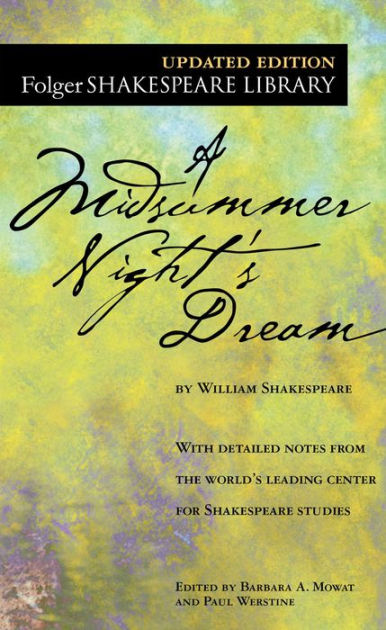
A Midsummer Night’s Dream by William Shakespeare* Yes, I read it again even though I read it last month. I listened to the BBC radio play version this time. Still stellar. 4/5 love flowers
New Books Read
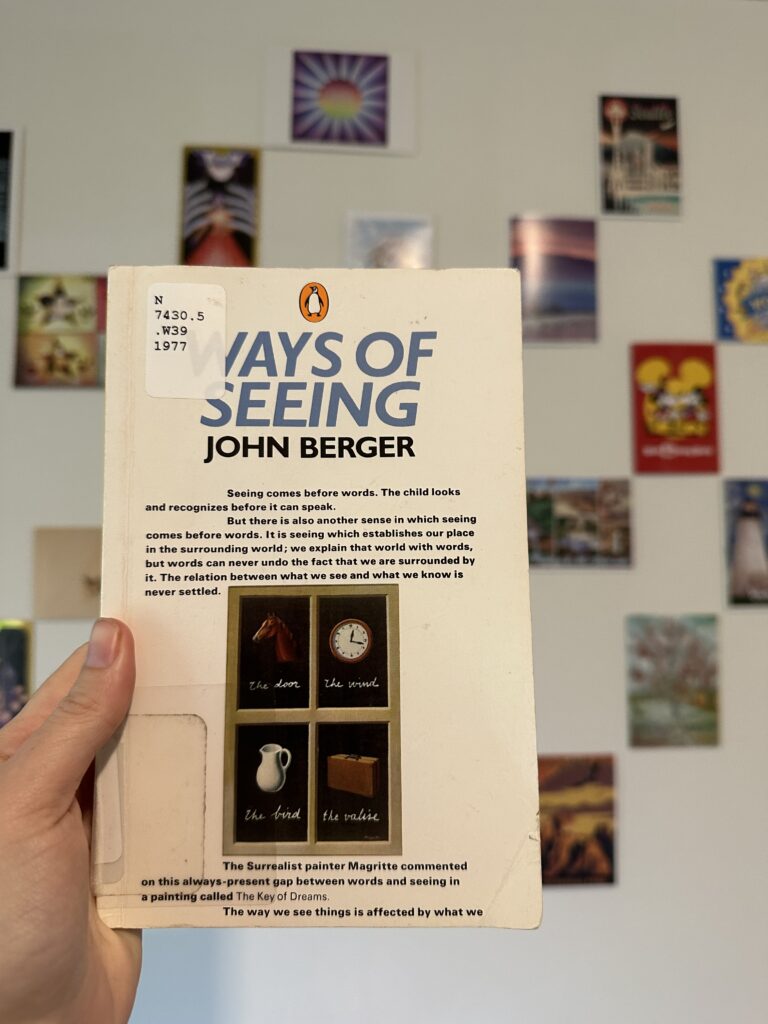
Ways of Seeing by John Berger It’s Nonfiction November apparently. I read this book in preparation for a class I’m going to teach in the spring about the connection between image and text, or art and writing. It was fabulous. It’s quite old, but still relevant. 4/5 visual essays
Graphic UniverseTM
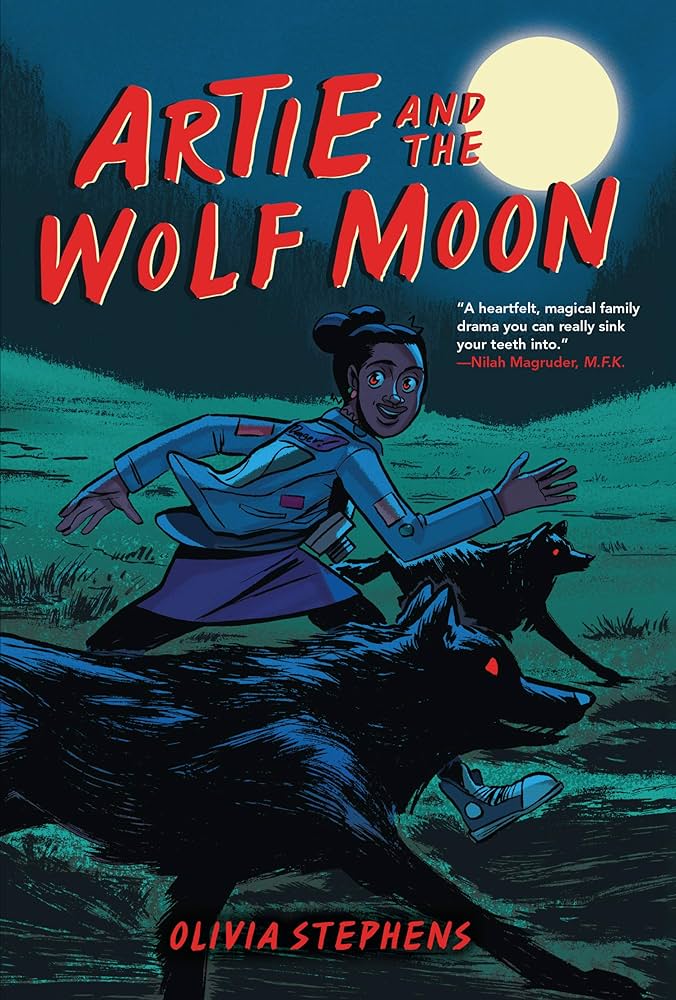
Artie and the Wolf Moon by Olivia Stephens This was the big library book club book, so they had unlimited e-copies for people to borrow. So obviously I got it and read it too. Artie is a teen struggling with all the regular teen things with her single mom when she discovers she’s a werewolf just like her mom. Suddenly, she has to deal with school and friendships and also learning to use her powers and staying safe from vampires. It’s a graphic novel so it’s a pretty light easy read. It was enjoyable. I don’t have a ton to say about it. I’m not in the target audience of young queer black girls, who I think will really love this book. For me I thought the author could have gone farther in developing the theme of community and its importance in African American society. 3/5 werewolves
Penguin Books Limited
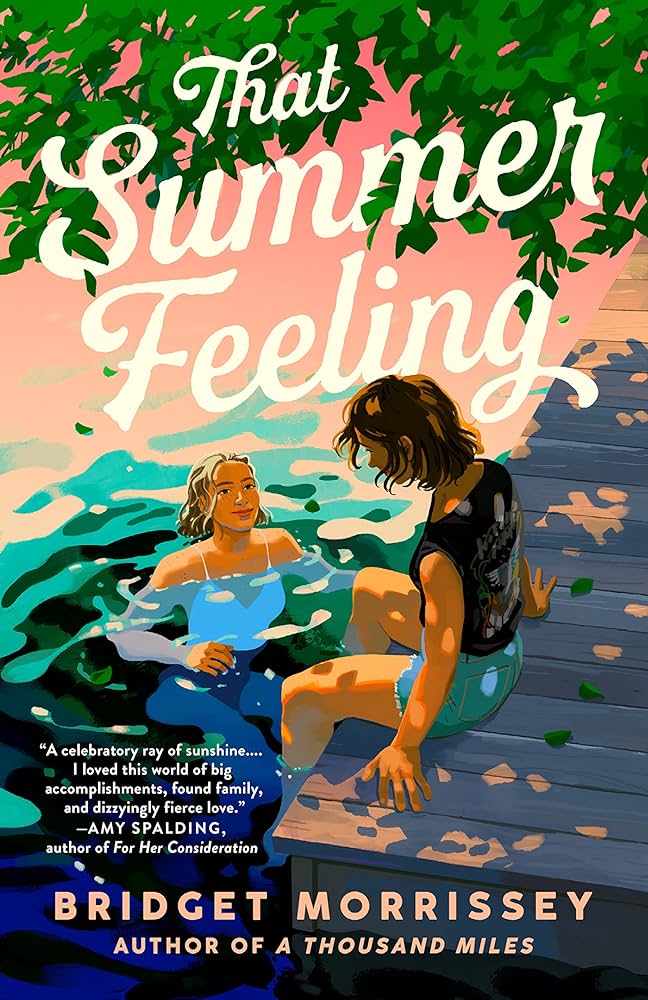
That Summer Feeling by Bridget Morrissey This was fun. At a weeklong summer camp for adults, Garland must heal from the hurt of her divorce in order to discover the truth about herself and open herself to new queer love. It’s pretty simple and predictable, but I guess that’s what people want with romance books. I don’t read a ton of romance books unless they’re queer. 3/5 camp t-shirts
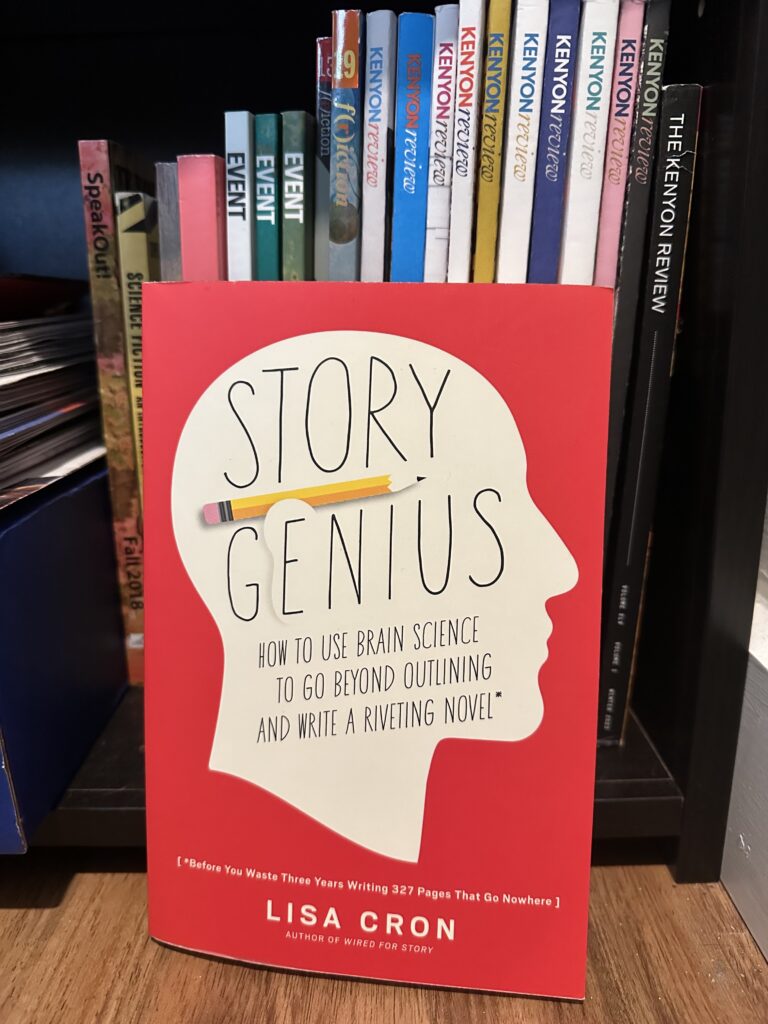
Story Genius: How to Use Brain Science to Go Beyond Outlining and Write a Riveting Novel by Lisa Cron I read this for a fiction class I’m taking for my MFA program. I usually hate books like this. I don’t really believe that anyone can teach you how to write. They can teach you how they write, but you have to figure out what strategies work for you. I thought Cron had some useful things to say about story and your main character’s driving misbelief and how the inner story (the change the main character goes through) drives the plot. When she gets to the parts about outlining all the scenes, I experience my regular frustration at these books, though. I hate writing really in depth outlines because it makes me not excited to actually write the book because I already know everything about the story. I like writing to discover the story, not figuring everything out before I start. Maybe this isn’t as efficient as Cron’s system and I don’t have a book deal to prove my way works, so I could be wrong. But I don’t think I’ll be adopting all of Cron’s strategies. 2.5/5 scene cards
Abrams Books
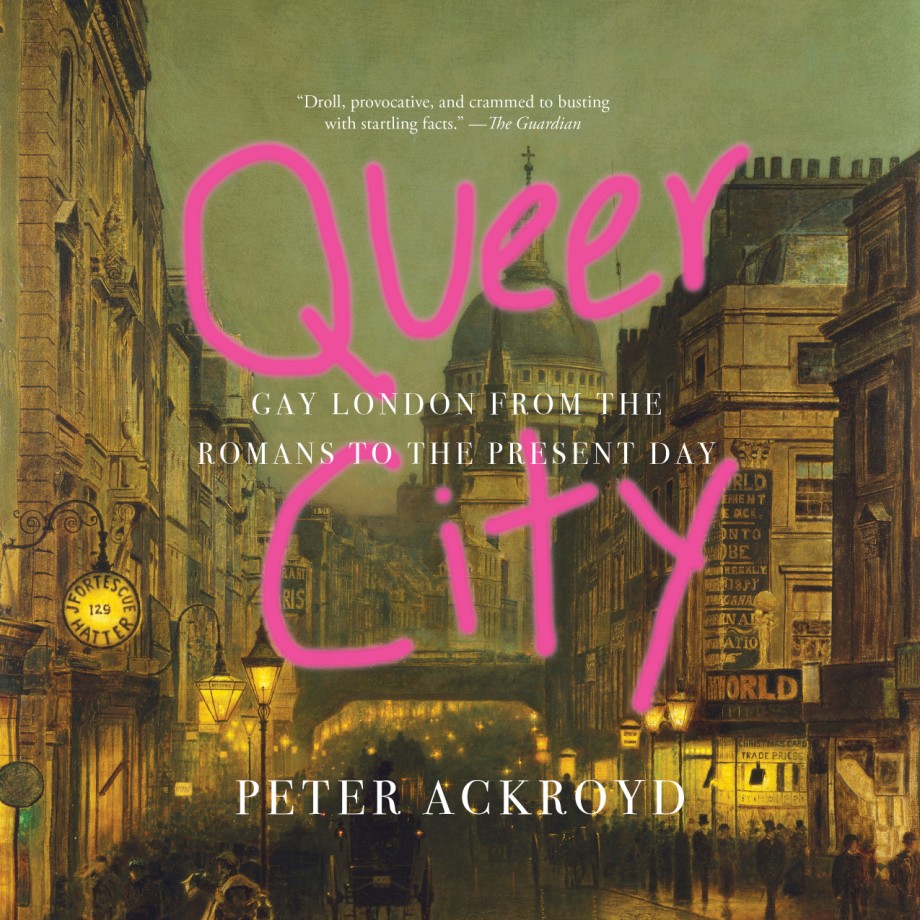
Queer City: Gay London from the Romans to the Present Day by Peter Ackroyd*** I read this hoping to learn more about queer London in the nineteenth century. Ackroyd’s history spans London’s queer history from the Romans until the 2010s. It was actually almost overwhelming how much information was in this book. I had planned to just read the section on the nineteenth century, but it was so fun, I read the whole thing. The main takeaway I think from Ackroyd’s book is that there have always been queer people, in London and elsewhere, and even if they would not define themselves with the words and categories we use today, these feelings and preferences aren’t new. It does make me quite sad though how much queer history is suppressed. 3.5/5 dancing boys
Fantagraphics
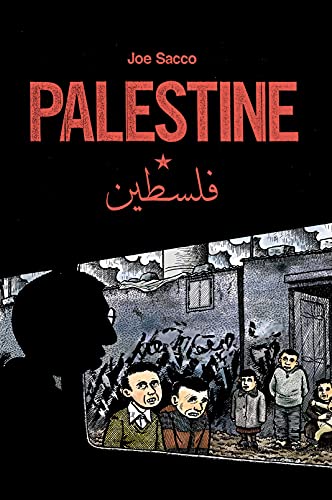
Palestine by Joe Sacco*** If you’re one of the many people right now trying to educate yourself on the Israel/Palestine conflict, this is a great primer. Sacco, a Maltese American, is a graphic journalist who visited Palestine in late 1991 and early 1992, trying to himself understand the conflict. What I like about Sacco is his honesty. He has no illusions about what he’s there to do. He’s looking for a story, for anything good for the comic. He’s suspicious and questions everything. He tries to unravel the complicated history and current situation by sharing the stories of many Palestinians, and even a few Israelis. 3.5/5 olive trees
Little, Brown
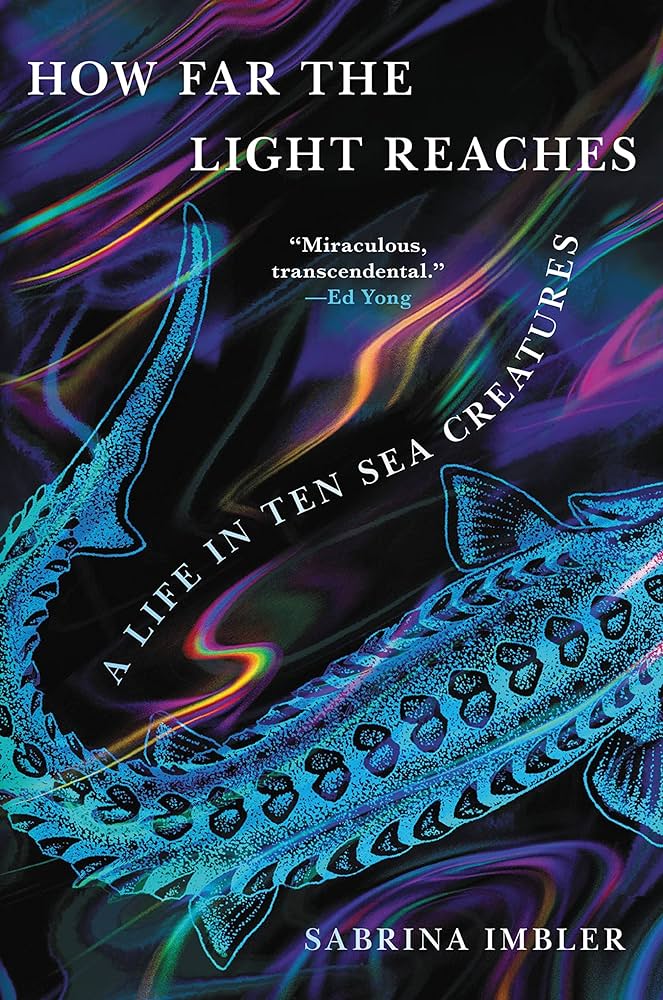
How Far the Light Reaches by Sabrina Imbler*** **Book Hangover Alert CW: eating disorders This book was stunning and gorgeous. The ten lyrical personal essays each explore a different sea creature and through that creature, one facet of Imbler’s life. The metaphors aren’t gimmicky or trite, but are truly insightful and thought provoking. I read this because someone had recommended one of the essays as something I could use in my class that I’m designing, but it was so good that I had to read the whole book. I aspire to write essays like these. 4.5/5 salps
Disney Electronic Content
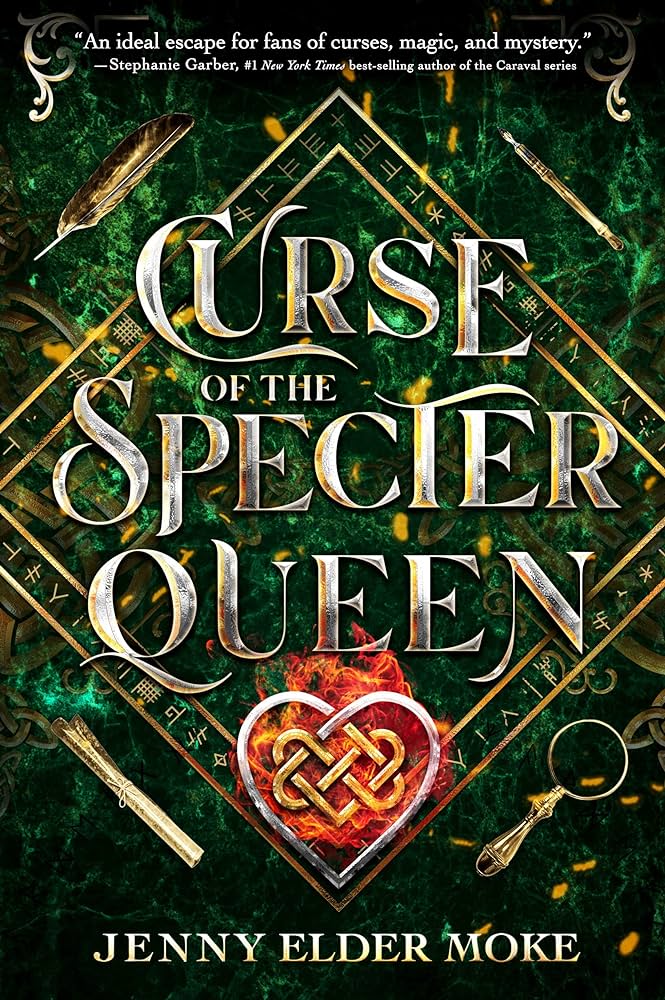
The Curse of the Specter Queen byJenny Elder Moke* Book 1 of 2 Samantha Knox Series This book was so fun. Definitely one of my lighter reads this month. Samantha Knox works in an antique bookstore repairing old books in the 1920s. When a mysterious package arrives followed by some sinister men that burn down her shop looking for the package, Sam is catapulted into an adventure trying to solve an archeological mystery and stop those who want to bring about the Curse of the Specter Queen. Full of Gaelic and Celtic folklore and a sparkling cast of characters, this book gave me the escape I needed. My only quibble is that Bennet was kind of a stuffed shirt. 4/5 antique books
Penguin Random House Canada
A History of my Brief Body by Billy-Ray Belcourt*** Another book of essays, Belcourt examines the unique experience of being First Nations and queer in Canada. His essays are not only personal essays, but bring in theory and his deep reflections. Belcourt is also a poet and his style is interesting, both lyrical and academic as he tries to puzzle out how to live in this world. 3.5/5 queer bodies
Profile
Palestinian Walks: Forays Into a Vanishing Landscape by Raja Shehadeh*** Another good one for those trying to learn more about Palestine. Shehadeh, a lawyer and human rights activist, takes readers on six walks through the hills of Palestine from 1978 to 2006. He reflects on the changing landscape, noticing new Israeli settlements and roads and new laws that prevent him from walking where he once did. Though his walks have become increasingly dangerous, it is so clear that Shehadeh is deeply connected to the land, and I feel his love for it as a reader. Reading about the destroyed ecosystems and now inaccessible walking routes, I feel great sadness for Shehadeh’s land. The policies the Israeli government used to take Palestinian land are eerily similar to the way American settlers took Native American land, claiming that no one was using or cultivating the land, when that was not true, and then mismanaging the land and causing its degradation. Shehadeh is from Ramullah in the West Bank, whereas Sacco focused on Gaza, so it was nice to read both to understand the two different areas and the way people live in each. The West Bank is a patchwork of ever increasing Israeli settlements, interspersed with Palestinian villages. Gaza is a concentration camp. 4/5 walks
*This book only includes straight, white, cis people.
**Book Hangover Alert indicates the kind of book that will leave you full up on love. Satisfied, but wishing the book never had to end. You’ll be laying on the floor with no idea what to do with yourself (other friends have called this feeling Good Book Depression or say that certain books necessitate Floor Time). This is the kind of book that gets its teeth in you and won’t let go easily. After the last page you’ll be thinking about this book for a long time. You’ll bother all your friends trying to get them to read it so that you won’t be alone in your Hangover.
***This book is part of my Books for a Social Conscience series! First a caveat: I have decided that simply having queer people and/or people of color in a book is not enough to qualify it for the Books for a Social Conscience distinction. That sets the bar too low. So while in the past I would have included Artie and the Wolf Moon and That Summer Feeling, I will not be including them in the new system. We love representation! Don’t get me wrong, but honestly at this point if you don’t have queer people and/or people of color in your book, like what are you doing? I will now be including a new designation: *This book only includes straight, white, cis people.
Anyway, read Queer City to learn about how queerness has always existed and been part of history. Read Palestine to learn more about the Israel/Palestine conflict. Read How Far the Light Reaches to discover more queer, non-white perspectives. Read A History of My Brief Body to understand how Canada’s colonialism still affects Native populations, especially queer Natives. Read Palestinian Walks to learn more about the Israel/Palestine conflict, specifically in how it relates to the land.
Reads marked as part of the Books for a Social Conscience series will regularly address topics like race and racism, colonialism and post-colonialism, LGBTQIA+ experience, feminism, BIPOC experience, social and political issues, history, identity, class, disability experience, immigration, gun violence, poverty, colorism, environmentalism, and more! The goal of these books is to diversify the stories we’re reading, grow our empathy for those who are different from us, and amplify voices who are often silenced.
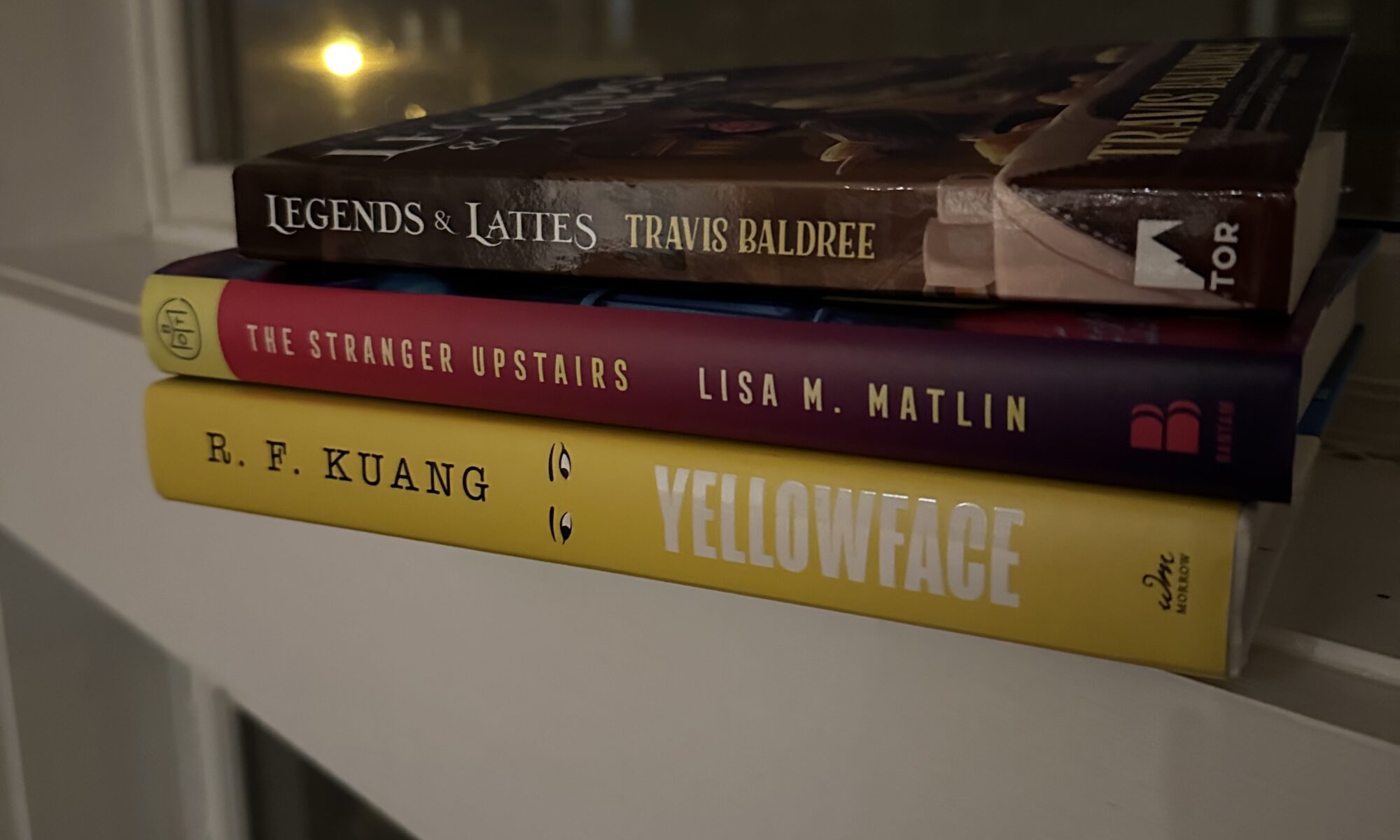
Yellowface by R. F. Kuang*** **Book Hangover Alert Lots of rereading this month. I reread Kuang’s Yellowface, even though I just read it in May, because Kuang came to speak to my MFA cohort. She was fabulous. So smart and so kind. This book was also just as good the second time. I really admire how Kuang created the character of June–someone who we don’t like, who is not a good person, but is still compelling and complicated, and I have to keep reading about. (About the photo, Kuang told us in one of her chats with my MFA cohort that one of the early design drafts of the book had a maneki neko on the back cover, which is not relevant at all to the story. They’re Japanese, not Chinese, but I guess maybe the designers were like ‘they’re stereotypically Asian? And the book is about Asian stereotypes as perceived by white people?’) 5/5 angry tweets
Audible
The Battle of the Labyrinth by Rick Riordan Percy Jackson and the Olympians book 4 of 5 This is the Percy Jackson book that I remembered the least about. It was nice to reread it and get to see more of Rachel Elizabeth Dare and Tyson. 3.5/5 hundred handed ones
St. Martin’s Griffin
Red, White, & Royal Blue by Casey McQuiston*** **Book Hangover Alert Still gay. Still slaps. You can read my original review in the January 2021 blog. I wanted to reread this after seeing the movie, which I think Amazon Prime did a great job with. Of course a lot of the details are missing–there’s only so much of a 400 page book you can put in a 2 hour movie. I was sad Alex’s sister June disappeared, but she was kind of combined with Nora. I was also a little sad the movie cut the Rafael Luna subplot and much of Henry’s family drama. But my biggest beef with the movie, I think, is that the president wasn’t divorced. I really appreciated the family dynamics in the book. 5/5 historical love letters
*A Midsummer Night’s Dream by William Shakespeare The project I’m writing for NaNoWriMo this year is a retelling of A Midsummer Night’s Dream set in a high school a la She’s the Man and 10 Things I Hate About You. So I reread the play. A Midsummer Night’s Dream involves many couples and a lot of confusion as Oberon, king of the faeries and his sidekick Puck do a little matchmaking that doesn’t go quite as planned. I don’t think this is Shakespeare’s best comedy, but it is still great and it’s the first Shakespeare story I remember reading. I also saw it performed at the Globe in London and it was most excellent. So I had fun reading it and underlining good lines and being inspired for my NaNo project. 4/5 faeries
New Books Read
Macmillan Publishers
Teach the Torches to Burn by Caleb Roehrig Part of the Remixed Classics series In the realm of Shakespeare retellings is this Romeo and Juliet retelling. It’s unfortunately not set in a high school, but is set in the original time and place. The story follows Romeo, who is gay in this version, and explores the question of controlling one’s own destiny. I enjoyed it. It wasn’t how I would have done an R&J retelling, but that is okay. I did really like that Juliet was ace. One thing I struggle with in Shakespeare adaptations is the language. In my opinion the best options are: 1) keep Shakespeare’s language no matter what else you change (this is why Baz Luhrman’s R&J works and the 2013 movie with Hailee Steinfeld does not) or 2) stick to contemporary language (see She’s the Man, 10 things I Hate About You, and Rosaline). Where the Hailee Steinfeld movie goes wrong is by not using Shakespeare’s words, but still trying to use some kind of old fashioned language. It’s just bad. This novel I felt did try a to sound a little old fashioned in its prose which really bothered me during the first half. I eventually got used to it, but I thought Roehrig should have just stuck with a more contemporary voice. 3.5/5 torches
Audible
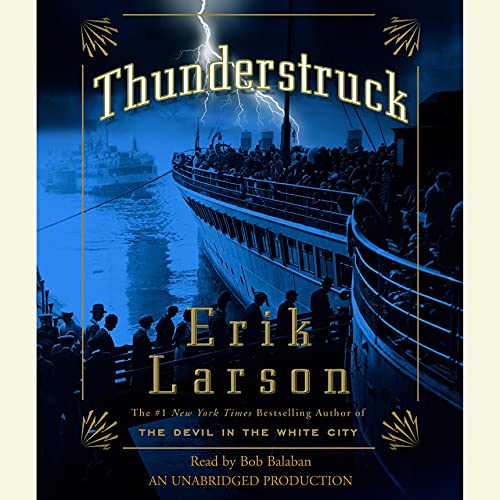
*Thunderstruck by Erik Larson CW: murder, gore, body horror I love an Erik Larson history book. Thunderstruck follows the development of Guglielmo Marconi’s wireless communication technology, interwoven with the story of Hawley Crippen, a mild-mannered doctor who becomes an unlikely murderer. Larson seamlessly weaves these two seemingly disparate stories together. I wasn’t as interested in all the technical discussion of Marconi’s invention, but Larson does do a pretty good job of making it understandable for those of us who don’t know much about science or technology. 3.5/5 wireless messages
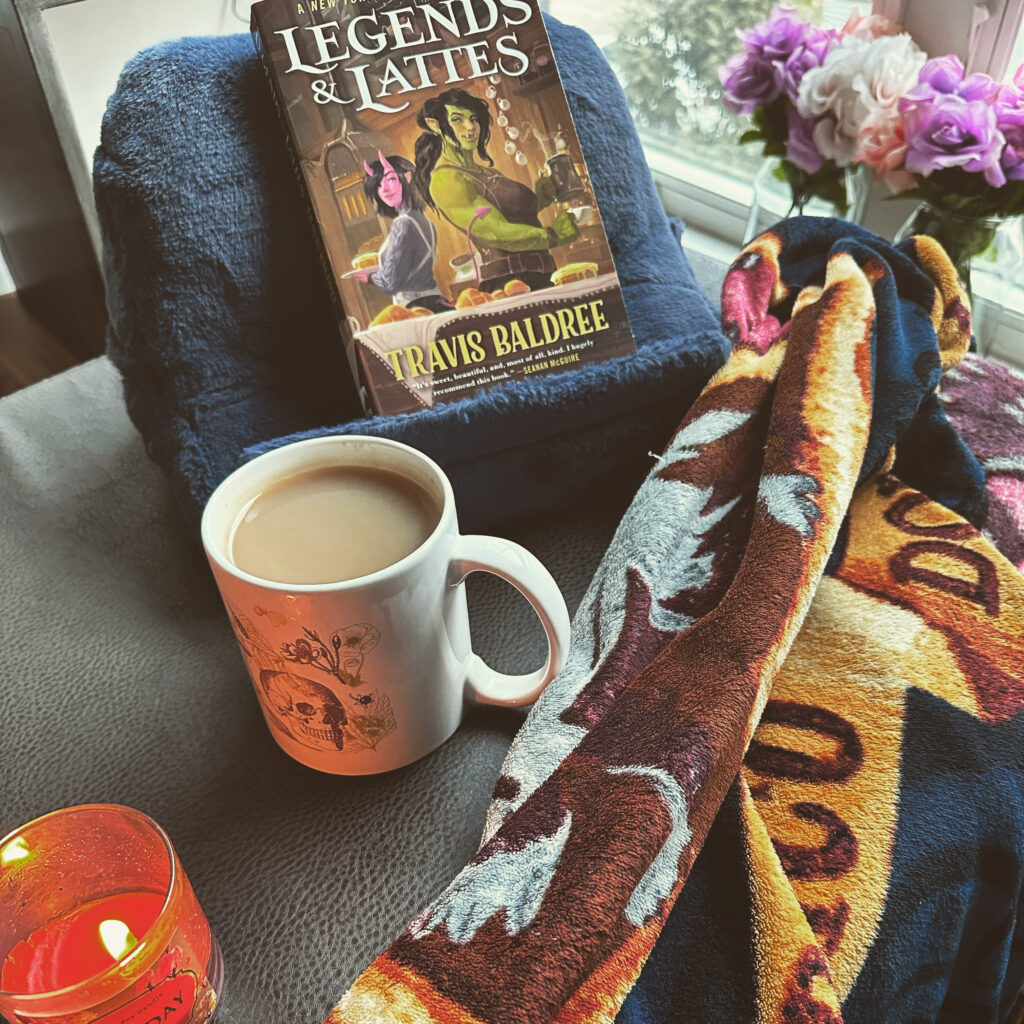
Legends & Lattes by Travis Baldree Legends and Lattes book 1 This book has been described as a warm hug of a book, and that is 100% correct. Leaving a life of adventuring, Viv opens a coffee shop in a city that’s never heard of coffee before. With her newfound friends, she has to learn to solve problems without her sword. I just adored it. I love a good found family trope. I love a low stakes reading experience. I love two strong independent women falling in love. 5/5 cups of coffee
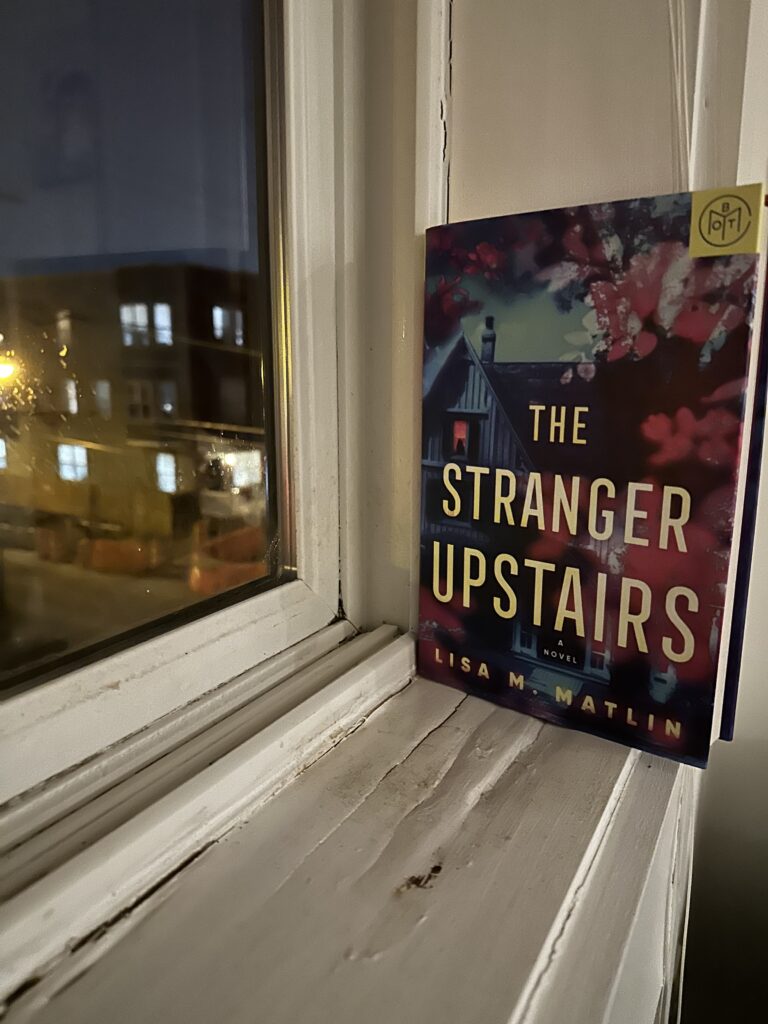
*The Stranger Upstairs by Lisa M. Matlin CW: alcoholism, murder, depression, anxiety This was my Book of the Month for September and I must say I was disappointed. I’m in general not much of a thriller reader but I thought I’d try it. It sounded spooky and fun for autumn. It was not really that spooky and not really fun. I also wouldn’t say I found myself ‘thrilled.’ Sarah Slade and her husband move into a spooky murder house with the intention of fixing it up and selling it. But Sarah’s Instagram perfect life isn’t perfect IRL. Her marriage is failing and it seems like the house doesn’t want to be fixed. The main character is really unlikable, and while I don’t think that’s a problem in and of itself (see June from Yellowface above), I didn’t find the main character compelling in any way. I didn’t care if she lived or died. I didn’t care if anyone in the story lived or died (except for the cat! I was concerned when the cat almost died). One more complaint which is a spoiler: Read More: SPOILERS AHEAD
I also didn’t feel like Matlin actually decided what the deal with the house was. Was the house actually alive and driving people crazy? Or was it just carbon monoxide poisoning? Instead of the ending feeling ambiguous and open for the reader, it just felt like Matlin didn’t make a decision.
2.5/5 poisoned cats
Tor Publishing Group
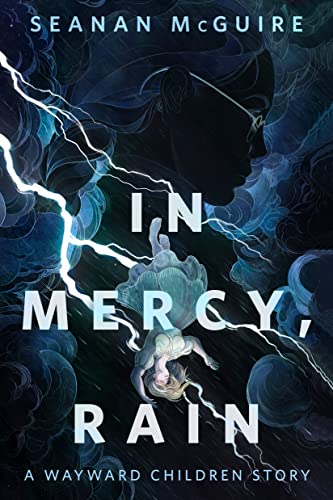
In Mercy, Rain by Seanan McGuire Wayward Children companion This isn’t a novel, it’s a short story companion to the Wayward Children books, but I’m including it on the blog anyway. I usually grab one of the Wayward Children books from the library every time I don’t have anything to read on Libby because my holds won’t be in for a few weeks. But this time I discovered I’ve read all the Wayward Children books that are currently published. So I checked out this short story and the next one. This one is a story about Jack, one of our enduring favorite characters from the series, and it explores her training with Dr. Bleak and her meeting Alexis. 3/5 lightning strikes
Tor Publishing Group
Skeleton Song by Seanan McGuire Wayward Children companion I’m so glad McGuire wrote this because I’ve been wondering about Mariposa ever since we met Christopher in the first book. I always love exploring new worlds with McGuire’s characters, and this little tidbit was so fun. 3/5 bones
Dutton Books
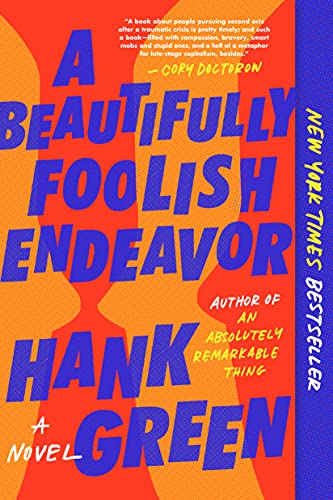
A Beautifully Foolish Endeavor by Hank Green*** **Book Hangover Alert The Carls book 2 of 2 I had to stop in the middle of this one because it returned itself to the library, but I finally finished it! I really enjoyed this book, possibly even more than the first one, though to be fair, I didn’t remember the first one amazingly well (I read the wikipedia page on the first one before I read this one). I liked the examination of power and technology. I liked the found family trope and all the characters (except Andy was a little annoying sometimes). 4/5 alien presences
**Book Hangover Alert indicates the kind of book that will leave you full up on love. Satisfied, but wishing the book never had to end. You’ll be laying on the floor with no idea what to do with yourself (other friends have called this feeling Good Book Depression or say that certain books necessitate Floor Time). This is the kind of book that gets its teeth in you and won’t let go easily. After the last page you’ll be thinking about this book for a long time. You’ll bother all your friends trying to get them to read it so that you won’t be alone in your Hangover.
***This book is part of my Books for a Social Conscience series! First a caveat: I have decided that simply having queer people and/or people of color in a book is not enough to qualify it for the Books for a Social Conscience distinction. That sets the bar too low. So while in the past I would have marked Teach the Torches to Burn, Legends & Lattes, and the Wayward Children stories, I am not counting them under the new system. We love representation! Don’t get me wrong, but honestly at this point if you don’t have queer people and/or people of color in your book, like what are you doing? I will now be including a new designation: *This book only includes straight, white, cis people.
Anyway, read Yellowface for a nuanced look at anti-Asian racism and racism in general in the publishing industry. Read Red, White, & Royal Blue not only for LGBTQIA+ representation, but also for how those identities interact with life in the public sphere. Read A Beautifully Foolish Endeavor to explore technology, power, and privilege.
Reads marked as part of the Books for a Social Conscience series will regularly address topics like race and racism, colonialism and post-colonialism, LGBTQIA+ experience, feminism, BIPOC experience, social and political issues, history, identity, class, disability experience, immigration, gun violence, poverty, colorism, environmentalism, and more! The goal of these books is to diversify the stories we’re reading, grow our empathy for those who are different from us, and amplify voices who are often silenced.
*This book only includes straight, white, cis people.
Cloud Atlas by David Mitchell CW: racism, slavery, cannibalism See my post, the Überbook, for more on my Big Summer David Mitchell Reread. 5/5 moon-gray cats
New Books Read
Holt
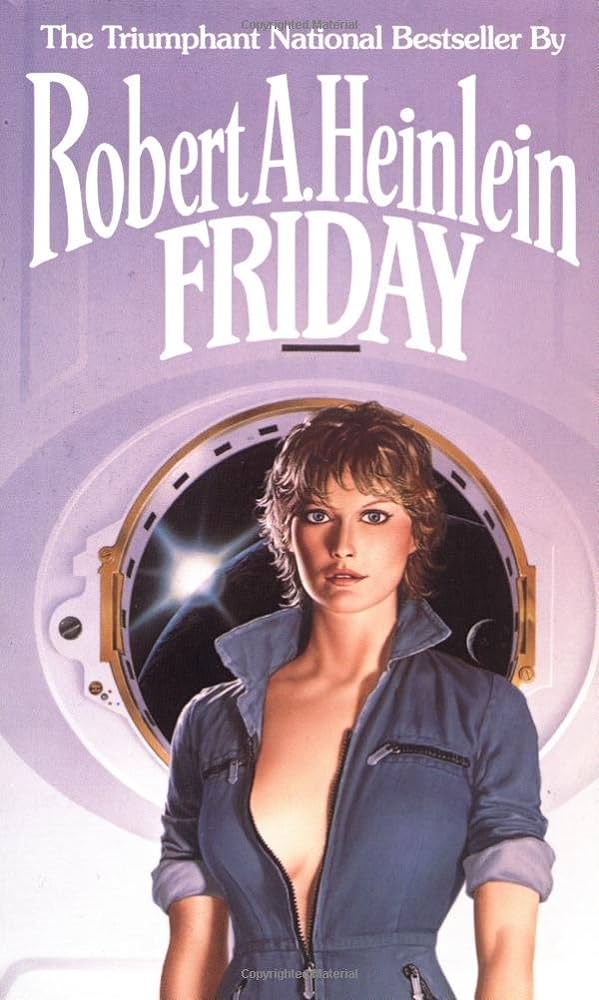
Friday by Robert Heinlein CW: gang rape, torture This is one of my dad’s favorite books and he’s been trying to get me to read it forever. I finally did. I didn’t love it. Artificial person and courier Friday must hide her enhanced abilities as she navigates the social and political conflicts of a Balkanized 21st century North America. Overall it doesn’t really have a plot, so it was tricky to write that little blurb. I chose not to hide any of this review for spoilers, and this is because I don’t recommend reading it. Read my review and don’t bother. This book is unique among sci-fi from the 80s in that it has a female protagonist. I’m sure that were I reading this in the 1980s, this would impress me very much. As it is, I’m a 21st century girl, used to 21st century female representation. Friday was such a male-gaze female character. It was awful; I felt like Heinlein was trying to convince me the whole time that he knows what it’s like to be a woman (he doesn’t, and I also hated all the female characters in the other book I’ve read of his). Maybe because she’s an artificial person, she’s supposed to read as an approximation of a female designed by men? But then that undermines Heinlein’s thesis that artificial people (or people genetically engineered in a lab and not born) are just as human as “purebloods.” There was also too much sex for my taste in the book. I get that Heinlein was trying to show a society whose attitudes toward sex and family were very different from the mainstream in 1982, but I don’t personally want to read about that much casual sex. Then we also need to talk about the gang rape. Friday is gang raped in the second chapter as part of being tortured for information about something that she carried as a courier. In the scene, Friday is able to use her training to not really suffer and even enjoy herself during the rape, and she experiences no trauma from this. To me this is misogynist and also reads kinda victim-blamey. Like oh, if you just have enough mental fortitude, then you won’t be bothered if you get raped! Ew. And then at the end of the novel, Friday reencounters one of the men who raped her and he’s like, “Oh, sorry, I was ordered to rape you and I didn’t really want to, but also you’re so hot I basically couldn’t help myself.” And Friday forgives him! And let’s him join her open polysexual relationship with several other people! Excuse me while I go throw up. Heinlein has a couple interesting ideas in the book as far as infrastructure in the future, and it’s nice that in the future society families and relationships can take non-nuclear shapes. Heinlein also has a good quote about the marks of a sick society that rings eerily true with regard to our own current society in the United States, but I would recommend Googling the quote instead of reading the whole book. 1/5 artificial people
National Geographic Books
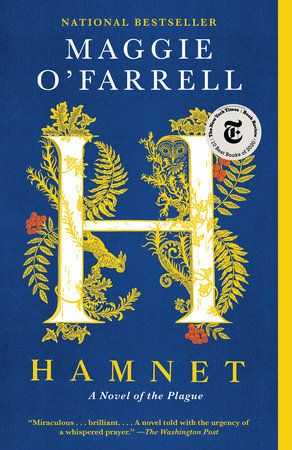
Hamnet by Maggie O’Farrell CW: plague, death of children, infidelity I’m a big fan of the new (?) genre of the imagined history novel. Hamnet follows William Shakespeare’s wife and children in Stratford while he’s off in London writing plays. We know almost nothing about them, other than their names and rough birth and death dates. O’Farrell’s writing is so lyrical and the way she created these characters is so lovely. She gives agency and personality to these women whose stories are lost to history. I didn’t like it quite as much as The Marriage Portrait, but it might possibly be because it’s hard to read about plague after you lived through one, and I was really interested in the art history aspect of The Marriage Portrait. 4.5/5 second-best beds
Pan Macmillan UK
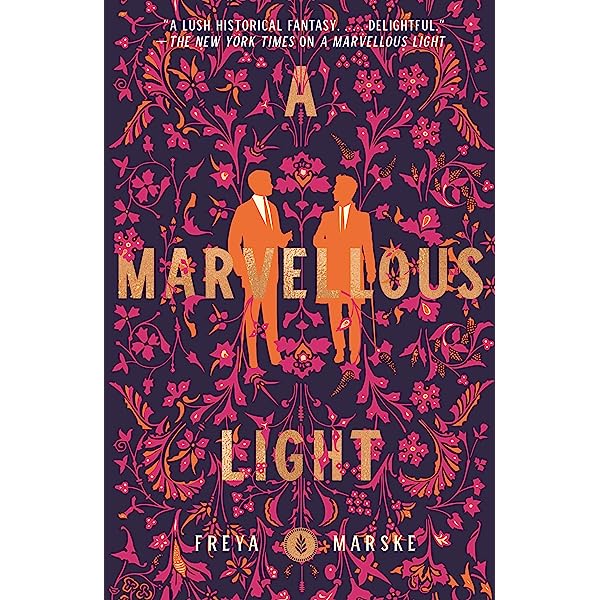
A Marvellous Light by Freya Marske CW: child abuse, bullying This was so delightful. I saw an ad for it on Facebook which said it was a cross between Red White and Royal Blue and Jonathan Strange and Mr. Norrell and since I love both those books, I immediately checked it out from the library. It did not disappoint. Discovering magic exists after a managerial error that led to his government job, Robin Blythe must team up with magician Edwin Courcey to unravel a plot that threatens all magicians in Britain. It’s gay and it slaps. 4/5 magic snowflakes
National Geographic Books
The Anthropocene Reviewed by John Green **Book Hangover Alert I love John Green. I love all his novels, but I was a little like, “eh not sure I want to read a nonfiction book.” But it was excellent! Green’s essay about seemingly disparate things (Kentucky blue grass, Canada geese, ginkgo trees, teddy bears, air conditioning) all speak to the wild, amazing, terrifying, beautiful, horrible experience of being a human. He does a wonderful job of blending personal stories, history, and science to examine what it means to be a human in this world. I loved it. I’ve also apparently watched enough of John Green’s videos that when I read the book, I heard the whole thing in his voice in my head. 4/5 teddy bears
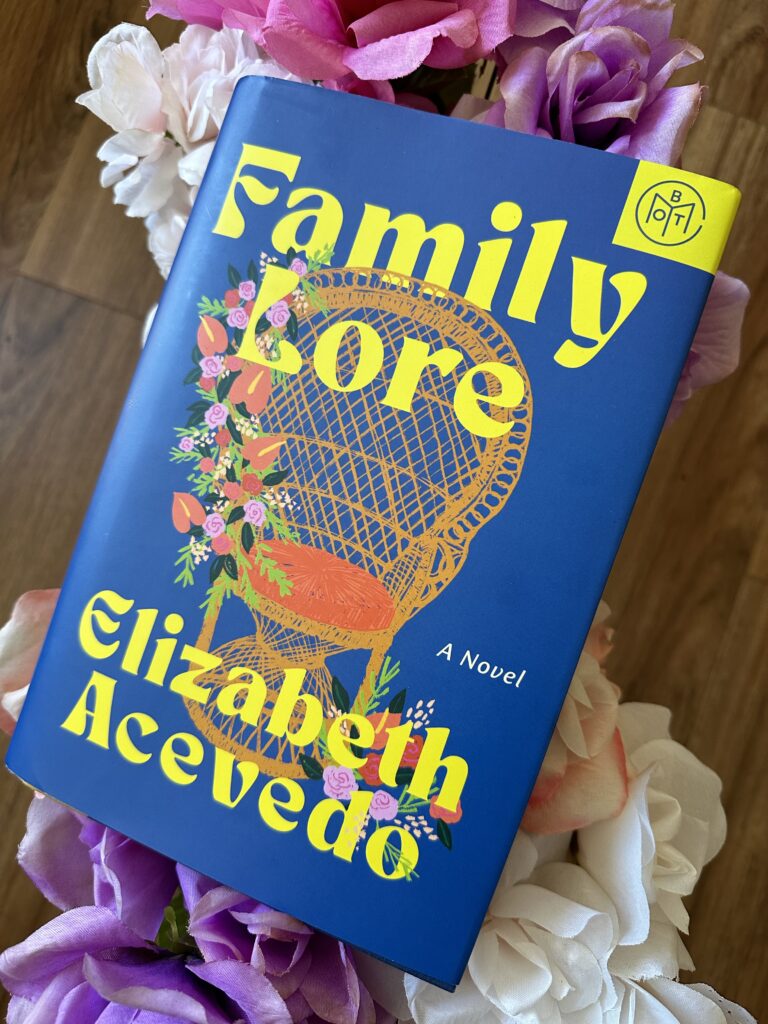
Family Lore by Elizabeth Acevedo*** Acevedo’s adult debut, Family Lore, retains the the poetry-informed lyrical prose of her young adult work while delving into magical realism and examining more mature content and themes. After seeing a documentary, Flor decides to hold a living wake for herself, and, as someone with prophetic dreams that predict upcoming deaths, this troubles her family. Flor’s sisters, one with the ability to discern truth from lies, one with an affinity for plants and herbs, and one without an uncanny ability, only a passion for dancing, orbit Flor in the weeks leading up to the wake, though no one can make her reveal if she’s seen her own impending death. Flor’s sisters, daughter, and niece all play a part in helping to plan the wake, while balancing emotional upheavals in their own lives. The story skillfully skates between the family’s past in the Dominican Republic and present in New York City as Ona, Flor’s daughter and an anthropology professor, works to document her family through the lens of an ethnographer, afraid that this might be the last chance she has to understand her mother better. With heart, humor, and subtlety, Acevedo explores themes of family and legacy, immigration, and tradition and culture. 4/5 limes
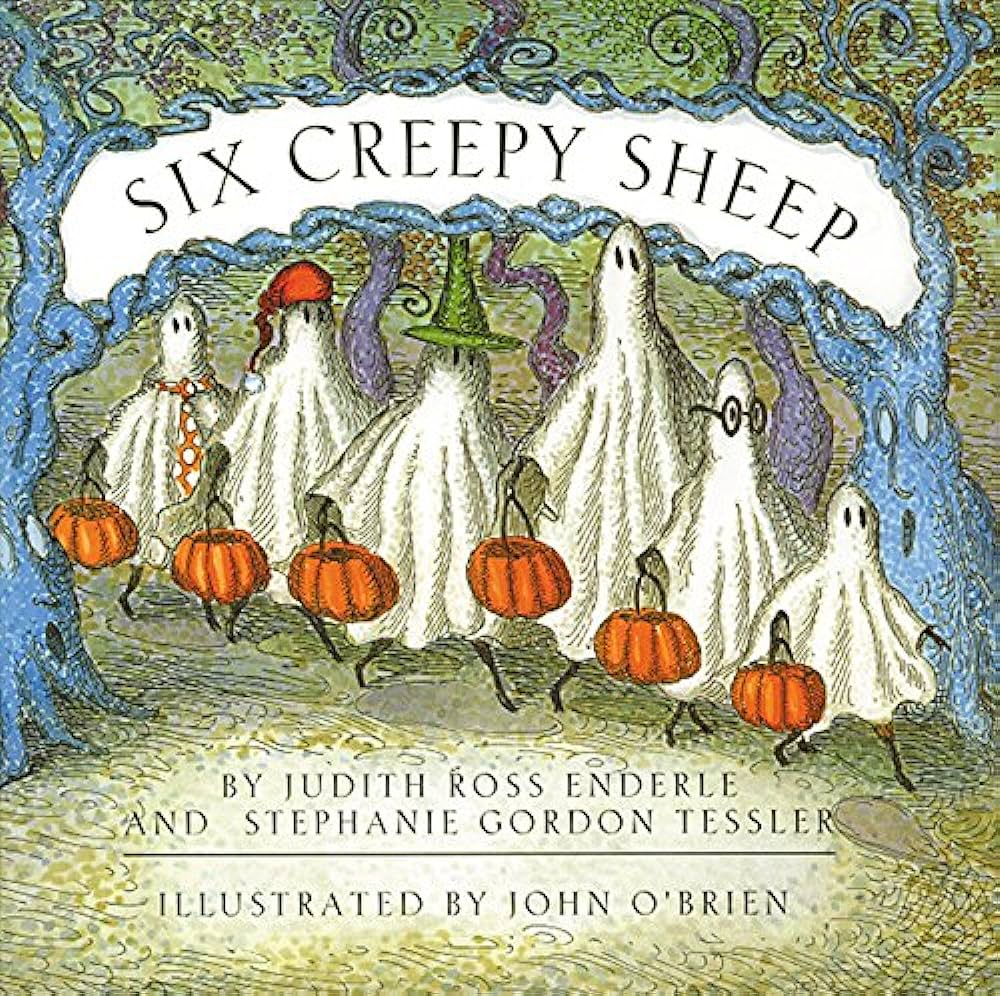
Six Creepy Sheep by Judith Ross Enderle and Stephanie Gordon Tessler, illustrated by John O’Brien I went on a writing retreat at the Highlights Foundation campus in the Poconos with my MFA program, and it was so lovely. This book was in my cabin, and one of the prompts of the StoryGraph genre challenge this year was to read a children’s book you’ve never read before. It’s spooky season so this seemed perfect. It’s super cute! I liked the art and the simple rhyming prose. 3/5 creepy sheep
Simon and Schuster
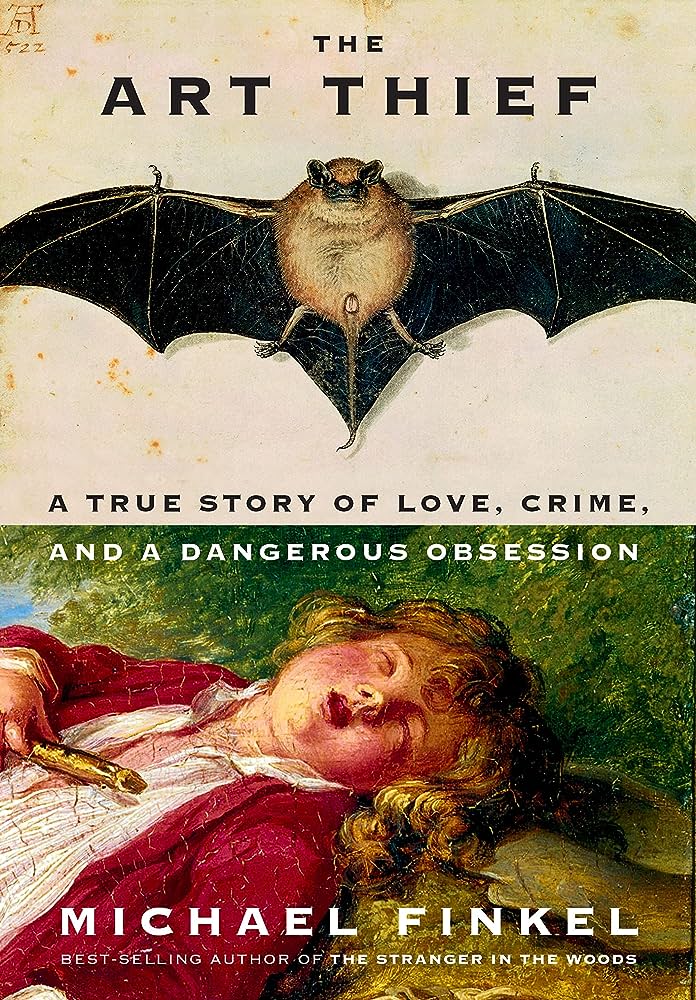
The Art Thief by Michael Finkel **Book Hangover Alert CW: destruction of art and cultural heritage This book was a wild ride from start to finish. It’s a true crime tale of Stéphane Breitwieser, the world’s most prolific art thief. Breitwieser and his girlfriend stole more than 300 art works and artifacts from museums in France, Germany, Belgium, Switzerland, and Austria in the 1990s and 2000s. It was fascinating to read about Breitwieser, the only known art thief who stole things just to have them in his room–not for any economic gain. Finkel attempts to unravel Breitwieser’s psyche and examine how two people could have gotten away with so many heists before Breitwieser was finally caught. 4/5 priceless Renaissance oil portraits
Tor Publishing Group
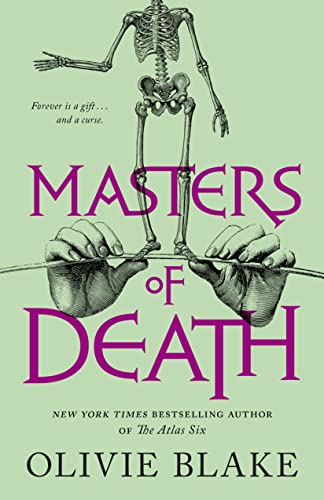
Masters of Death by Olivie Blake I enjoyed this book; it was fun. Death’s godson, Fox D’Mora, must save his godfather and all of humanity in the gambling game played by the immortals. With the help of a demon, a vampire, a ghost, a demigod, an angel, and a reaper, chaos ensues. I enjoyed a lot of the characters and the premise of the book. There was a little too much arguing, which is rarely interesting to read. I also listened to it and sometimes there weren’t quite enough dialogue tags to follow who was talking when we had big group scenes. I also really wanted to root for the romance between Fox and Brandt but I felt like all they did was argue and lie to each other. I wanted to see a little more tenderness or just happiness or fun between them. There was also too much use of the f-word. It just get’s tiresome and loses its power if it’s used too often in novels. But overall I enjoyed it. 3.5/5 immortals
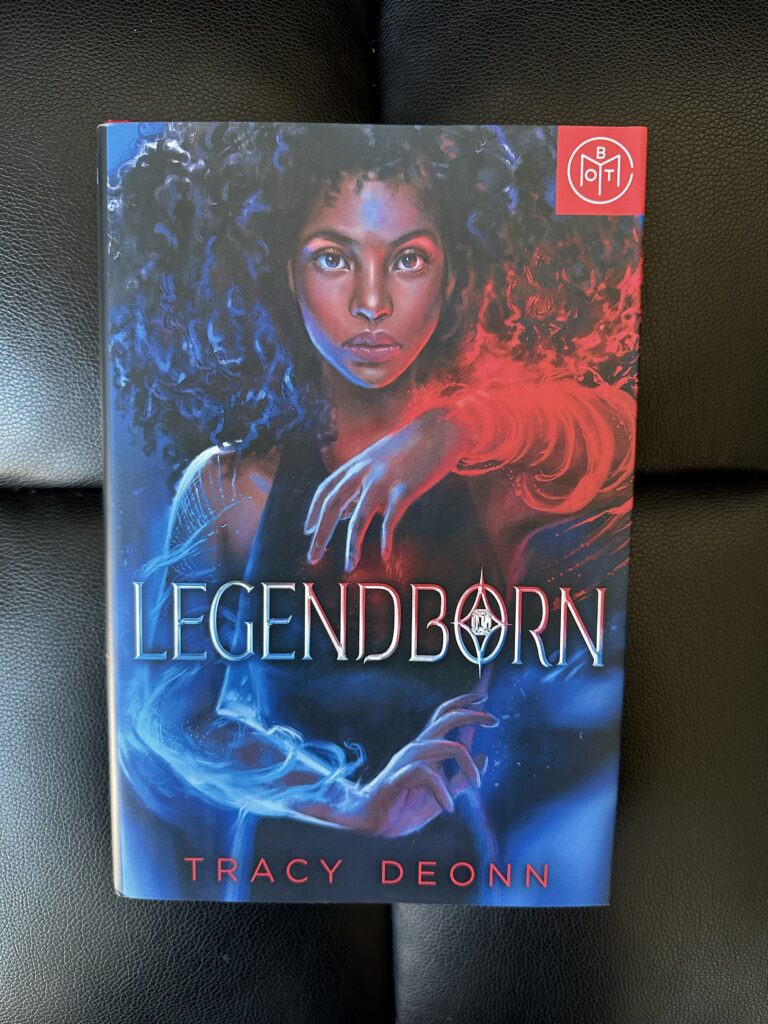
Legendborn by Tracy Deonn*** **Book Hangover Alert CW: slavery, racism, death of a parent This book was so great. After her mother’s tragic and suspicious death, Bree Matthews joins the mysterious Order of the Round Table, determined to find out if their magicians had anything to do with her mother’s death. Learning about the magic the Order practices, passed down by King Arthur and his knights, Bree begins to understand the magic that has lain dormant inside her and the legacy of her ancestors. This book was excellent. I love an Arthurian retelling, and this one was so fresh the way it also examined the legacy of slavery and generational trauma. I loved getting to know the characters, and I was right there with Bree as she unraveled the mystery. I’m excited to read the next one! 5/5 scions of Arthur
**Book Hangover Alert indicates the kind of book that will leave you full up on love. Satisfied, but wishing the book never had to end. You’ll be laying on the floor with no idea what to do with yourself (other friends have called this feeling Good Book Depression or say that certain books necessitate Floor Time). This is the kind of book that gets its teeth in you and won’t let go easily. After the last page you’ll be thinking about this book for a long time. You’ll bother all your friends trying to get them to read it so that you won’t be alone in your Hangover.
***This book is part of my Books for a Social Conscience series! First a caveat: I have decided that simply having queer people or people of color in a book is not enough to qualify it for the Books for a Social Conscience distinction. That sets the bar too low. So while in the past I would have marked A Marvellous Light and Masters of Death as Books for a Social Conscience, I have decided that the only way they are subverting dominant narratives is by having queer people and people of color in them. We love representation! Don’t get me wrong, but honestly at this point if you don’t have queer people and/or people of color in your book, like what are you doing? Maybe I should start marking books that I read that only have straight, white people in them.
Anyway, read Family Lore for a magical immigrant family. Read Legendborn for an interrogation of the legacy of slavery in the context of Arthurian legend.
Reads marked as part of the Books for a Social Conscience series will regularly address topics like race and racism, colonialism and post-colonialism, LGBTQIA+ experience, feminism, BIPOC experience, social and political issues, history, identity, class, disability experience, immigration, gun violence, poverty, colorism, environmentalism, and more! The goal of these books is to diversify the stories we’re reading, grow our empathy for those who are different from us, and amplify voices who are often silenced.
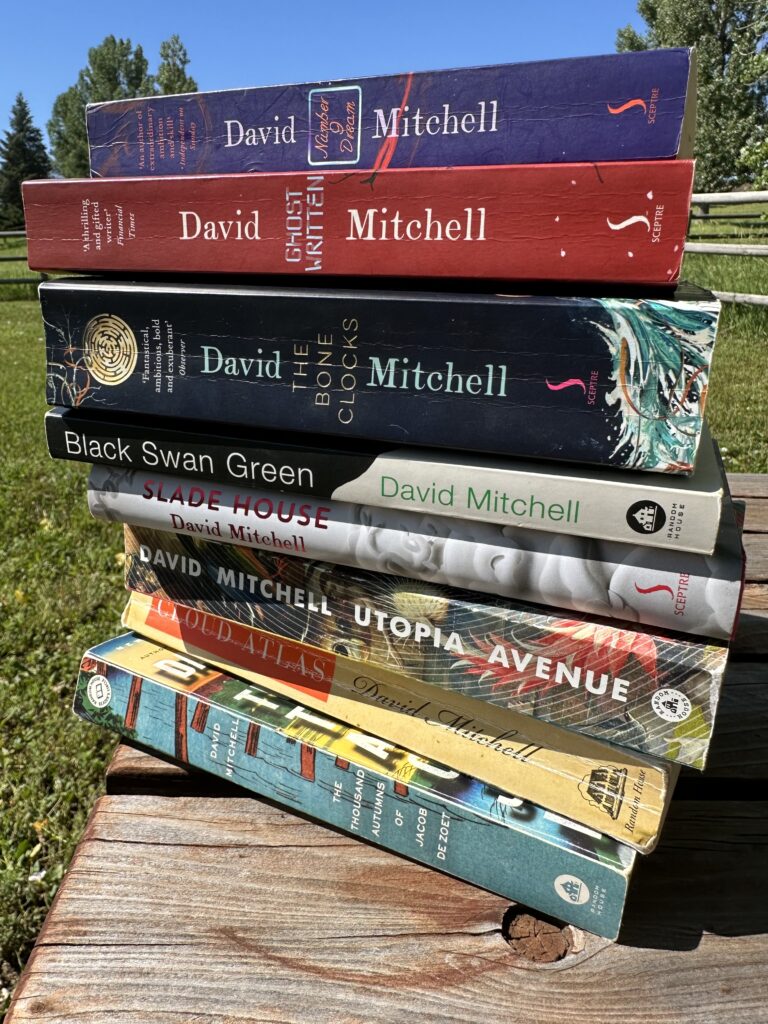
Of the people I know and the BookTok people I see on the internet, I’m the only one obsessed with David Mitchell. This baffles me. For example, it shocks me that there is almost no useful information on the David Mitchell fandom wiki.
I adore David Mitchell’s books. I love the rich, complex characters; I love the vivid historical fiction; I love the splash of fantasy and science fiction; I love the clear-eyed predictions of our future as a species and society. But my very favorite thing is that all of Mitchell’s books take place in the same universe. This leads to characters waltzing into and out of his various novels, recurring themes, and fun Easter eggs.
In a note at the end of The Bone Clocks, Mitchell addresses his recurring characters saying if he were to create a mega-book of all his works, he would call it The Überbook (hence the title of this post). Mitchell discusses how the recurring characters started off small, partly as a way to not have to invent whole new people every time he needed another character (why not borrow an already created character from one of this other works?), but continued as he likes to imagine all of his characters living in the same universe. You do not have to read all of his books or read his books in a certain order to understand what’s going on. Each book stands alone. I do not believe Mitchell wrote all eight novels with the intention that they be treated like the Marvel Cinematic Universe in timeline order. This did not stop me.
I decided this summer to reread all eight of Mitchell’s novels. But not just reread them; I organized the sections and chapters of each novel into chronological order and I read them in that order, ping-ponging between books where necessary. I also began a big spreadsheet, where I attempted to track recurring characters and themes and keep all the insights I had doing this project.
I had great fun with my nerdy little project. The only problem was that I began this project knowing there were connections, but not really knowing what I was looking for during each reread. This, along with changing the way I entered information into the spreadsheet part of the way through, has led to some inaccuracies in my spreadsheet and the feeling that I need to start over and read everything again. I also am writing this post after I’ve moved. I read all the books before I moved and I left them at my parents’ house, so I’m writing this post with aid of my spreadsheet, but without the aid of the copious notes I took in my copies of each of Mitchell’s books.
But for now, I’ll share with you what I have so far.
I realize that the embedded spreadsheet is difficult to look at on this webpage. I don’t know enough about WordPress to fix that, so here is the link to look at in Google Docs.
About each book
I think it might be useful here to give a super-duper brief summary of each book for those who haven’t read all of them.
The Thousand Autumns of Jacob de Zoet In 1799 a young Dutchman working for the East India company lives in Deijima, where the Dutch are trying to establish trade with the Japanese. Jacob de Zoet fights Dutch corruption and navigates xenophobia from both the Dutch and the Japanese. He falls in love with a young midwife and medical student named Orito Abigawa. In the mountains near Nagasaki, the sinister Abbot Enemoto is running a secret cult. When Orito is abducted it’s up to Jacob and Uzaemon Ogawa, one of the Japanese translators, to save her and stop Enemoto.
TheBone Clocks The Bone Clocks follows Holly Sykes, who on a fateful day in 1985, offers sanctuary to a woman she meets on the road. The woman’s soul sleeps dormant in Holly’s psyche until Holly can help a group called the Horologists, whose souls remember all their past lives, defeat the Anchorites, a group who consume others’ souls in order to be immortal.
Ghostwritten Made up of ten interconnected vignettes, Ghostwritten explores the world and its interconnections. It follows a terrorist in Okinawa, who calls a music shop in Tokyo where two young people fall in love and move to Hong Kong, where they are seen by a businessman, whose maid’s grandmother lives on a mountain in Sichuan Province, China, and was host to a disembodied soul, who searches Mongolia for where it belongs, and on its journey is hosted by a KGB operative, who stops a museum heist in St Petersburg and kills a man whose friend in London is having his life biographied by a ghostwriter, who saves a physicist from getting hit by a car, who goes on to invent an advanced AI, that talks to a late night radio host, who also speaks to the terrorist from the beginning. And I know that was like the worst run on sentence ever. Fight me.
Cloud Atlas Six interlocking stories examine reincarnation and the circularity of time. The stories follow a young lawyer on a sea voyage from New Zealand to San Francisco in 1849, an ambitious composer working as an amanuensis in 1931 in Belgium, a shrewd journalist investigating a report on a new nuclear power plant in 1975 near San Francisco, a publisher who through a wacky chain of events ends up incarcerated at an old folks home in Hull in 2012, a clone trying to lead a revolution in 2145 in Seoul, and a young tribesman living in a primitive society 106 Winters after the Fall, or some kind of nuclear catastrophe.
Utopia Avenue In the late 1960s a folk rock band is formed of bassist Dean Moss, guitarist Jasper de Zoet, pianist Elf Holloway, and drummer Griff Griffin. The novel follows their formation, hand chosen by manager Levon Frankland, and their origins playing in clubs to their meteoric rise to fame. Don’t worry, there are disembodied souls and Horologists in this one too; it’s not just your average rock’n’roll narrative.
Slade House Soul carnivores Norah and Jonah Grayer live in Slade House and hunt an unsuspecting person once every nine years. Once they’ve entrapped their prey, they consume the person’s soul, so that they can live on indefinitely.
Number9Dream Number9Dream is the coming of age of Eiji Miyaki, who moves to Tokyo hoping to find his father, whose identity is unknown to him. Eiji must learn to let go of the grief and guilt associated with his twin sister’s untimely death and his anger at his mother who abandoned him and his sister, and to find new love and connection. And if that sounds relatively normal compared to the other Mitchell books, I assure you, weird shit does happen.
Black Swan Green The coming of age of Jason Taylor in the village of Black Swan Green in Worcestershire, England. Jason must deal with a stutter, middle school bullies, and his parents’ crumbling marriage by having the courage to stand up for what is right and take responsibility for his own actions. This one is probably the most ‘normal’ of Mitchell’s books, but don’t worry, there are still recurring characters and some weird dreamy sequences (not as weird as the dreamy sequences in Number9Dream, but still).
Music in Mitchell’s books
One thing I realized I should be doing as I read, was making a Spotify playlist. Mitchell is a music enthusiast. Many of his characters are musicians or composers (Robert Frobisher, Marco, Satoru, the band Utopia Avenue, etc.), and it’s clear from the way he writes that he loves music. Many songs are referenced throughout Mitchell’s works. If I’d thought of it earlier, I would have made a playlist that featured every song mentioned in one of his books. But this will have to be something I do on the next read-through. For now, here is a playlist compiled from ones other people have made on Spotify pertaining to several of his books and added to by me.
Something else to note is Mitchell’s auditory style of writing. Certain sections contain heavy use of rhythm, rhyme, onomatopoeia, and alliteration. This most often happens when the POV character is a musician but notably appears a few other places. In the “Sloosha’s Crossing” section of Cloud Atlas, for example, Zachry’s voice represents a future where humans have regressed to small primitive tribes after a nuclear fallout. Mitchell’s use of rhythm, rhyme, onomatopoeia, and alliteration in this section signals a return to oral storytelling and more primitive living, underscoring the theme of the circularity of time in Cloud Atlas.
Throughout Utopia Avenue we get a lot of onomatopoeia, which makes sense because all of the POVs are musicians uniquely concerned with sound, but in Jasper de Zoet’s POV this is heightened. Hidden in Jasper’s psyche is a noncorporeal being, the soul of Abbot Enemoto from The Thousand Autumns of Jacob de Zoet. Enemoto is always knocking in Jasper’s mind, intent on killing him in revenge for his ancestor’s defeat of Enemoto in 1800. The constant onomatopoeia of the knock-knocks serves to heighten the tension throughout the novel.
In Number9Dream, in the chapter called “Study of Tales,” Eiji Miyaki stays in the house of a deaf author and he reads some of her short stories. The short stories are about an anthropomorphic goat named Goatwriter, and they are full of linguistic playing with rhythm, rhyme, and alliteration. Goatwriter also has a stutter which contributes to the rhythm of the language. There are several notable things about this section, I think. First is that the author (Mrs. Sasaki’s sister) is deaf, but through her writing creates auditory patterns. There’s also Goatwriter’s stutter, which is a recurring theme; Jason Taylor from Black Swan Green also has a stutter, and David Mitchell himself grew up with a stutter. Though Jason works on overcoming his stutter, Goatwriter leans into it to create the unique rhythm of the stories. Then there is the name Goatwriter, which can’t help but bring to mind the word ghostwriter. Ghostwritten is obviously the title of one of David Mitchell’s other books, in which one character, Marco, is a ghostwriter (working for Timothy Cavendish in the London section). I don’t know that Mitchell necessarily meant for that to be a connection, but I do think in Eiji’s coming of age by the end of Number9Dream, he has learned to write his own story, so to speak.
Locations in David Mitchell books
Something else I love about David Mitchell books is their global nature. Several of his books take place in a series of related locations, and locations reappear in multiple books. I decided to plot important locations on a Google Map. Once again, this map is not exhaustive, as I’m sure I forgot some locations. Each book is on its own layer and its pins match the color coding in the spreadsheet. Locations that appear in multiple books are in yellow.
If you’d like to visit the map and turn on and off the layers, you can see the map here.
Recurring animal friends
Apart from recurring characters, Mitchell has a few recurring animals. The moon-gray cat is the first one I noticed. The moon-gray cat is an omen, signaling good or bad luck for the character that sees it. For example, the moon-gray cat leads Orito Abigawa to safety in The Thousand Autumns of Jacob de Zoet. It saves Ed Brubeck’s life in The Bone Clocks when his hotel in Bagdad is bombed. It appears to Jason Taylor from Black Swan Green before he successfully completes the Spooks. Whenever the moon-gray cat appears dead though, it’s a bad omen. Jason Taylor sees it dead before he breaks his grandfather’s watch. Nathan Bishop from Slade House sees it before he is killed. Dean Moss from Utopia Avenue looks for it, but can’t find it shortly before he is killed. I’m sure this isn’t an exhaustive list of the moon-gray cat’s appearances, because I didn’t know I was looking for them.
Another animal that appears periodically is the Fat Rat. This is another one that I wasn’t looking for and only realized too late that I should be keeping track of. Fat Rat appears when a character appears to be hallucinating, or dealing with something particularly traumatic. Characters see Fat Rat and hear the Fat Rat responding to them, either their spoken words or thoughts. Orito Abigawa speaks to Fat Rat in the shrine on Mt Shiranui, where she is being held captive. Zachry also speaks to Fat Rat in the Sloosha’s Crossing section of Cloud Atlas after the Kona have attacked and destroyed most of Zachry’s village. I want to say Fat Rat appears in Number9Dream too, in the chapter “Reclaimed Land,” but I’m not certain.
Recurring themes
The most obvious of Mitchell’s themes are reincarnation and the circularity of time, the idea that we cross and recross paths with each other. But another one that comes up often is the futile search for Paradise or Utopia. Mitchell also fights back against the idea of basic human nature as “dog eat dog.” Many characters throughout his books share the idea that “the weak are meat, the strong do eat,” or a kind of Social Darwinism that is used to justify all kinds of atrocities. Mitchell is always pushing back against that idea that this is basic human nature. Almost all of Mitchell’s books deal in some way with racism or xenophobia or other types of prejudice.
Questions I still have
I’ve now read Cloud Atlas 5 times, Ghostwritten, Black Swan Green, and The Bone Clocks 3 times each, and all of his other books twice and I still feel like there’s more to find. If I was stuck on a deserted island, I’d take David Mitchell’s collected works. I still have questions:
Who is Hilary V. Hush? In Cloud Atlas, each segment is discovered by the protagonist in the next segment (Adam Ewing’s journal is found by Robert Frobisher, whose letters are found by Luisa Rey, whose story is read by Timothy Cavendish, whose memoir is turned into a movie watched by Sonmi, whose story becomes the religion of Zachry’s people). But Timothy Cavendish reads Luisa Rey’s story in the form of a crime novel written by Hilary V. Hush. Who is that? Why didn’t Luisa write it? It makes it seem like Luisa is a fictional character written by this person, but Luisa appears as a successful journalist in Utopia Avenue and Ghostwritten. In the movie, the submitted manuscript is written by Javier, Luisa’s neighbor’s son. So who is Hilary V. Hush?
When is the Night Train segment of Ghostwritten set and how long does it last? And to that end, when is the entirety of Ghostwritten set? I estimated 1999 which is when the book came out, but it is never actually mentioned. The “Night Train” section does take place over several years, as the Zookeeper calls in about once a year. Bat Segundo states that he’s been running the show for eight years on the night of the apocalypse, so are we meant to believe that section runs from 1999-2007? And let’s not forget, Bat was on the radio back in 1968 when he interviews Utopia Avenue. Dwight Silverwind appears in this segment and is killed by the Zookeeper. We know Dwight Silverwind is alive in 2004 when he meets Aoife Brubeck in Cloud Atlas, so at least that part and everything after it in “Night Train” has to take place after 2004. And this of course begs the question of when the very last segment in Ghostwritten takes place. It appears right after “Night Train,” so I would assume it takes place after.
How does the Mongolian heal Jasper de Zoet if they never go to Europe? In the Mongolia section of Ghostwritten, the Mongolian tells the reader about all the places they have drifted as a soul without a body between 1937 and 1999. The Mongolian states that they never went to Europe. But in the 1960s, Jasper de Zoet is helped by the Mongolian, who helps subdue Abbot Enemoto for a time inside Jasper’s head. I think this is just a plot hole. I think Mitchell just forgot that he had said that about the Mongolian in Ghostwritten, as that was written long before Utopia Avenue. We know there are other noncorpora out there (one calls into Bat Segundo’s show) but I doubt we would have more than one who calls themself the Mongolian.
Why is Meronym the only character in Cloud Atlas who has a comet birthmark but is not the POV in her section? This is interesting because in the movie, Zachry has the birthmark. Also on the subject of the movie, are we to assume that Zachry and Meronym leave earth for the moon at the end? And if so does that mean Meronym is an alien? Because I don’t get any of that from the book. At the end of their section in the book, Zachry leaves his decimated village and goes to live with the remaining people from Meronym’s community on another of Hawaii’s islands. But Meronym’s people come from Prescience Isle, formerly known as Iceland, as we learn from The Bone Clocks.
So I guess now I’ll go fix the David Mitchell fandom wiki???
Once again, I won’t be reviewing these David Mitchell books in this post. I’m going to do a different post specifically for my Big David Mitchell Summer Reread.
Ghostwritten by David Mitchell **Book Hangover Alert CW: terrorism, racism, rape 4/5 moon-gray cats
Number9Dream by David Mitchell **Book Hangover Alert CW: body horror, gore, murder, racism 4/5 moon-gray cats
Slade House by David Mitchell **Book Hangover Alert CW: serial murder 4/5 moon-gray cats
Utopia Avenue by David Mitchell **Book Hangover Alert CW: misogyny, abusive relationships 5/5 moon-gray cats
The Bone Clocks by David Mitchell **Book Hangover Alert 5/5 moon-gray cats
New Books Read
Tor Books
Vicious by V. E. Schwab CW: serial murder This was delightful. I enjoyed Schwab’s The Invisible Life of Addie La-Rue, but I think I enjoyed this one even more. Eli and Victor are obsessed with the idea of EOs–Extraordinaries, or people with extraordinary abilities. They figure out that to become an EO, one must have a near death experience, so naturally, they decide to try it themselves. What could go wrong? I thought this book was wonderful. I loved all the characters and I really loved how Schwab constructed the narrative and the way information was revealed to the reader. 4/5 EOs
Tor Publishing Group
Lost in the Moment and Found by Seanan McGuire Wayward Children book 8 of 10 CW: grooming, child abuse I want to note that McGuire does include an author content warning at the beginning of the book that you can consult for more information. Antsy runs away from her unsafe home and enters a door into a shop where lost things go. She works in the shop and visits a multitude of worlds to find things for the shop. I love these books. I love the concept of the doors. I only hope I’m not too old to find one. 3.5/5 lost things
Flatiron Books
Pageboy by Elliot Page*** CW: body dysmorphia, child abuse, sexual harassment, sexual exploitation, stalking, rape This one was not easy to read. Of course, I knew a little of Page’s story and I know no one who is trans has really has it easy, but there was a lot I didn’t know. Page skillfully weaves a memoir from his young childhood navigating the challenges of discovering his sexuality, knowing, though not always accepting, that he wasn’t a girl, and having to hide his queerness as he grew to fame as an actor. All that would be hard enough for someone with a strong support network, but Page did not have that. His life was filled with adults who did not have his best interests at heart, ranging from his abusive step-mom, his parents who failed to advocate for him, and producers, directors, and others who exploited him. At its heart, Pageboy is about Page’s journey to self-advocacy and self-acceptance. Though hard to read, the memoir ends with hope and the freeing lightness that the future will be better than the past. 4/5 movie shoots
Scholastic Inc.
Nick and Charlie by Alice Oseman*** Heartstopper Universe A delightful little palate cleanser after reading Pageboy. Low stress, nice to visit some of my favorite characters. This little novella takes place right before Nick goes off to university and Charlie feels a little left behind and unsure what his and Nick’s future will hold. Very sweet and lovely. 3/5 Nellies
HarperCollins Publishers
Radio Silence by Alice Oseman*** Heartstopper Universe CW: mental illness, child abuse This is Oseman’s second novel and it also takes place in the Heartstopper Universe chronologically after Solitaire, though you don’t have to have read any of the other Heartstopper books. Radio Silence follows Frances Janvier and Aled Last (whom you might recognize as one of Charlie Spring’s friends). Frances and Aled become friends when Frances finds out Aled is the Creator behind her favorite internet podcast. Both of them discover how to be themselves as they learn how to be friends. I liked getting to see more of Aled, who didn’t make it into the Heartstopper TV series, but maybe he’ll make it into future seasons?? I liked Frances’s voice and I really appreciated this meditation on friendship. So many YA books are so focused on romance, it’s nice to see one focused on friendship, which I would argue is more important in one’s teenage years. 3.5/5 crazy-patterned leggings
Audible
The Prince of Secrets by A. J. Lancaster Stariel book 2 of 5 This is the sequel to The Lord of Stariel, and this one is just as enjoyable as the first. I think I read the first one because it was free on Audible, but I do think I’ll probably read the rest. I won’t say too much about the plot of this one in case you haven’t read the first one. They’re cozy fantasies and I really enjoy all the characters and the world of Stariel. 3.5/5 blue-feathered wings
Audible
Shakespeare: The World as Stage by Bill Bryson We went on a road trip this month so this book is an attempt to find something my dad and I both want to listen to. He’s a big Bill Bryson fan; I’m interested in the topic of Shakespeare. I enjoyed this book. It’s a slim biography of Shakespeare and touches on many aspects of Elizabethan history, while also noting how little we actually know for sure about Shakespeare as a person. A lot of scholars and lay people have many theories about Shakespeare–that he was someone else, that he was several people, etc.–but Bryson does a great job of examining and picking apart each theory, none of which really has any evidence that could prove Shakespeare wasn’t who we think, except that there is not much evidence that he was who we think either. Overall a fascinating read. 3.5/5 fires in London
**Book Hangover Alert indicates the kind of book that will leave you full up on love. Satisfied, but wishing the book never had to end. You’ll be laying on the floor with no idea what to do with yourself (other friends have called this feeling Good Book Depression or say that certain books necessitate Floor Time). This is the kind of book that gets its teeth in you and won’t let go easily. After the last page you’ll be thinking about this book for a long time. You’ll bother all your friends trying to get them to read it so that you won’t be alone in your Hangover.
***This book is part of my Books for a Social Conscience series! Read Pageboy for a trans memoir that grapples with the difficulties of growing up trans and queer, especially in the public eye, but also offers hope for the future. Read any of the Heartstopper books for happy LGBTQIA+ representation.
Reads marked as part of the Books for a Social Conscience series will regularly address topics like race and racism, colonialism and post-colonialism, LGBTQIA+ experience, feminism, BIPOC experience, social and political issues, history, identity, class, disability experience, immigration, gun violence, poverty, colorism, environmentalism, and more! The goal of these books is to diversify the stories we’re reading, grow our empathy for those who are different from us, and amplify voices who are often silenced.
I won’t be reviewing these two David Mitchell books in this blog post because they are part of my Big Summer David Mitchell Reread, which will have its own blog post.
The Thousand Autumns of Jacob de Zoet by David Mitchell **Book Hangover Alert 4/5 moon-gray cats
Black Swan Green by David Mitchell **Book Hangover Alert 4/5 moon-gray cats
New Books Read
Hodder & Stoughton
Little Thieves by Margaret Owen Little Thieves book 1 of 2 I’ve been wanting to read this mostly because it has a nice cover. It was fun; I enjoyed it. Little Thieves is a retelling of the Goose Girl fairytale and it’s very fresh. There’s a heist, a curse to be broken, dark magic to beat, low gods to satisfy. I liked the world and the folklore a lot. I wasn’t as into it in the first half, because I found Vanja a bit unlikable, and it was frustrating that it took her so long to realize that the only way she would be able to break her curse would be to work together and make friends. Once she started being friends with Gisele, Ragne, and Emeric, I was much more into it. 3.5/5 castle kobolds
Macmillan Publishers
To Sleep in a Sea of Stars by Christopher Paolini Fractalverse book 1 of 2 CW: war, attempted genocide Like many people who were young in the 2000s, I loved the Eragon books. Then it seemed like Paolini kind of dropped off the face of the earth for a while. Now he returns with an epic sci-fi saga. Surveying an uncolonized planet, Kira finds an alien relic. When it binds itself to her, she, and all of humanity, is pulled into an intergalactic war with more than one alien species. On top of that, Kira has to learn to live in symbiosis with the alien presence that has bonded itself with her. I did read the whole thing and at 32 hours on audio, that is recommendation in and of itself. However, I wasn’t that into it. I was interested enough to finish but I don’t know that I’ll read the second book. I did like the characters of the crew of the Wallfish and I thought the concept of the ship minds was interesting. 3/5 jellies
Little, Brown and Company
Rebecca by Daphne du Maurier **Book Hangover Alert I’d heard good things about this book, but I was a little underwhelmed byJamaica Inn by du Maurier. But I love a gothic horror so I had to check Rebecca off the list. Working as a companion for an older woman in Monte Carlo, the young, unnamed narrator meets the widower Maxim de Winter and they impulsively get married. When she returns to his estate with him, she finds the whole household and community and Maxim himself still haunted by his dead wife Rebecca. It was really good. I’m still thinking about it. The beginning was just a little slow but du Maurier has fabulous tension building and created such interesting contrasts between our unnamed narrator and Rebecca. It was so interesting how even though Mrs. de Winter is our narrator and point of view character, she fades in comparison to Rebecca who looms so large over the story, despite being dead for the whole thing. 4/5 fancy dress balls
**Book Hangover Alert indicates the kind of book that will leave you full up on love. Satisfied, but wishing the book never had to end. You’ll be laying on the floor with no idea what to do with yourself (other friends have called this feeling Good Book Depression or say that certain books necessitate Floor Time). This is the kind of book that gets its teeth in you and won’t let go easily. After the last page you’ll be thinking about this book for a long time. You’ll bother all your friends trying to get them to read it so that you won’t be alone in your Hangover.