The Überbook

Or The Big Summer David Mitchell Reread
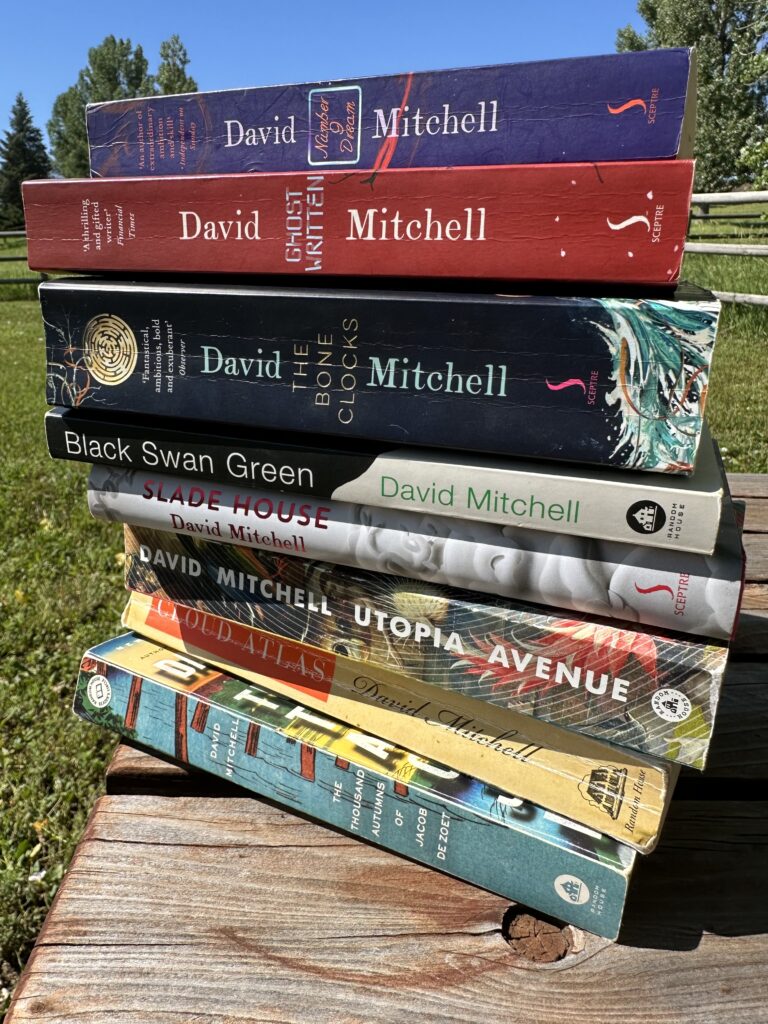
Of the people I know and the BookTok people I see on the internet, I’m the only one obsessed with David Mitchell. This baffles me. For example, it shocks me that there is almost no useful information on the David Mitchell fandom wiki.

I adore David Mitchell’s books. I love the rich, complex characters; I love the vivid historical fiction; I love the splash of fantasy and science fiction; I love the clear-eyed predictions of our future as a species and society. But my very favorite thing is that all of Mitchell’s books take place in the same universe. This leads to characters waltzing into and out of his various novels, recurring themes, and fun Easter eggs.

In a note at the end of The Bone Clocks, Mitchell addresses his recurring characters saying if he were to create a mega-book of all his works, he would call it The Überbook (hence the title of this post). Mitchell discusses how the recurring characters started off small, partly as a way to not have to invent whole new people every time he needed another character (why not borrow an already created character from one of this other works?), but continued as he likes to imagine all of his characters living in the same universe. You do not have to read all of his books or read his books in a certain order to understand what’s going on. Each book stands alone. I do not believe Mitchell wrote all eight novels with the intention that they be treated like the Marvel Cinematic Universe in timeline order. This did not stop me.

I decided this summer to reread all eight of Mitchell’s novels. But not just reread them; I organized the sections and chapters of each novel into chronological order and I read them in that order, ping-ponging between books where necessary. I also began a big spreadsheet, where I attempted to track recurring characters and themes and keep all the insights I had doing this project.

I had great fun with my nerdy little project. The only problem was that I began this project knowing there were connections, but not really knowing what I was looking for during each reread. This, along with changing the way I entered information into the spreadsheet part of the way through, has led to some inaccuracies in my spreadsheet and the feeling that I need to start over and read everything again. I also am writing this post after I’ve moved. I read all the books before I moved and I left them at my parents’ house, so I’m writing this post with aid of my spreadsheet, but without the aid of the copious notes I took in my copies of each of Mitchell’s books.

But for now, I’ll share with you what I have so far.

I realize that the embedded spreadsheet is difficult to look at on this webpage. I don’t know enough about WordPress to fix that, so here is the link to look at in Google Docs.

About each book

I think it might be useful here to give a super-duper brief summary of each book for those who haven’t read all of them.

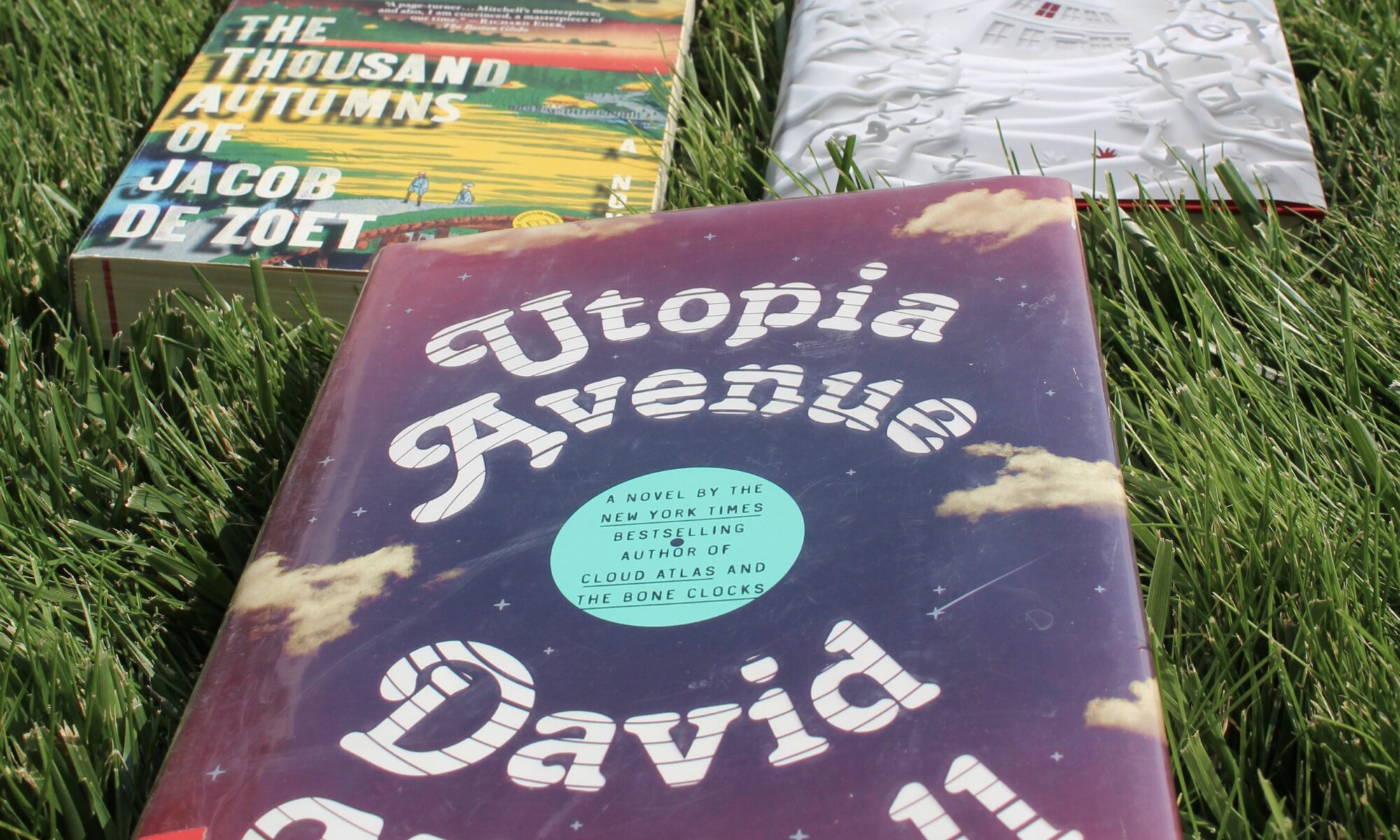
The Thousand Autumns of Jacob de Zoet
In 1799 a young Dutchman working for the East India company lives in Deijima, where the Dutch are trying to establish trade with the Japanese. Jacob de Zoet fights Dutch corruption and navigates xenophobia from both the Dutch and the Japanese. He falls in love with a young midwife and medical student named Orito Abigawa. In the mountains near Nagasaki, the sinister Abbot Enemoto is running a secret cult. When Orito is abducted it’s up to Jacob and Uzaemon Ogawa, one of the Japanese translators, to save her and stop Enemoto.

The Bone Clocks
The Bone Clocks follows Holly Sykes, who on a fateful day in 1985, offers sanctuary to a woman she meets on the road. The woman’s soul sleeps dormant in Holly’s psyche until Holly can help a group called the Horologists, whose souls remember all their past lives, defeat the Anchorites, a group who consume others’ souls in order to be immortal.

Ghostwritten
Made up of ten interconnected vignettes, Ghostwritten explores the world and its interconnections. It follows a terrorist in Okinawa, who calls a music shop in Tokyo where two young people fall in love and move to Hong Kong, where they are seen by a businessman, whose maid’s grandmother lives on a mountain in Sichuan Province, China, and was host to a disembodied soul, who searches Mongolia for where it belongs, and on its journey is hosted by a KGB operative, who stops a museum heist in St Petersburg and kills a man whose friend in London is having his life biographied by a ghostwriter, who saves a physicist from getting hit by a car, who goes on to invent an advanced AI, that talks to a late night radio host, who also speaks to the terrorist from the beginning. And I know that was like the worst run on sentence ever. Fight me.

Cloud Atlas
Six interlocking stories examine reincarnation and the circularity of time. The stories follow a young lawyer on a sea voyage from New Zealand to San Francisco in 1849, an ambitious composer working as an amanuensis in 1931 in Belgium, a shrewd journalist investigating a report on a new nuclear power plant in 1975 near San Francisco, a publisher who through a wacky chain of events ends up incarcerated at an old folks home in Hull in 2012, a clone trying to lead a revolution in 2145 in Seoul, and a young tribesman living in a primitive society 106 Winters after the Fall, or some kind of nuclear catastrophe.

Utopia Avenue
In the late 1960s a folk rock band is formed of bassist Dean Moss, guitarist Jasper de Zoet, pianist Elf Holloway, and drummer Griff Griffin. The novel follows their formation, hand chosen by manager Levon Frankland, and their origins playing in clubs to their meteoric rise to fame. Don’t worry, there are disembodied souls and Horologists in this one too; it’s not just your average rock’n’roll narrative.

Slade House
Soul carnivores Norah and Jonah Grayer live in Slade House and hunt an unsuspecting person once every nine years. Once they’ve entrapped their prey, they consume the person’s soul, so that they can live on indefinitely.

Number9Dream
Number9Dream is the coming of age of Eiji Miyaki, who moves to Tokyo hoping to find his father, whose identity is unknown to him. Eiji must learn to let go of the grief and guilt associated with his twin sister’s untimely death and his anger at his mother who abandoned him and his sister, and to find new love and connection. And if that sounds relatively normal compared to the other Mitchell books, I assure you, weird shit does happen.

Black Swan Green
The coming of age of Jason Taylor in the village of Black Swan Green in Worcestershire, England. Jason must deal with a stutter, middle school bullies, and his parents’ crumbling marriage by having the courage to stand up for what is right and take responsibility for his own actions. This one is probably the most ‘normal’ of Mitchell’s books, but don’t worry, there are still recurring characters and some weird dreamy sequences (not as weird as the dreamy sequences in Number9Dream, but still).

Music in Mitchell’s books

One thing I realized I should be doing as I read, was making a Spotify playlist. Mitchell is a music enthusiast. Many of his characters are musicians or composers (Robert Frobisher, Marco, Satoru, the band Utopia Avenue, etc.), and it’s clear from the way he writes that he loves music. Many songs are referenced throughout Mitchell’s works. If I’d thought of it earlier, I would have made a playlist that featured every song mentioned in one of his books. But this will have to be something I do on the next read-through. For now, here is a playlist compiled from ones other people have made on Spotify pertaining to several of his books and added to by me.

Something else to note is Mitchell’s auditory style of writing. Certain sections contain heavy use of rhythm, rhyme, onomatopoeia, and alliteration. This most often happens when the POV character is a musician but notably appears a few other places. In the “Sloosha’s Crossing” section of Cloud Atlas, for example, Zachry’s voice represents a future where humans have regressed to small primitive tribes after a nuclear fallout. Mitchell’s use of rhythm, rhyme, onomatopoeia, and alliteration in this section signals a return to oral storytelling and more primitive living, underscoring the theme of the circularity of time in Cloud Atlas.

Throughout Utopia Avenue we get a lot of onomatopoeia, which makes sense because all of the POVs are musicians uniquely concerned with sound, but in Jasper de Zoet’s POV this is heightened. Hidden in Jasper’s psyche is a noncorporeal being, the soul of Abbot Enemoto from The Thousand Autumns of Jacob de Zoet. Enemoto is always knocking in Jasper’s mind, intent on killing him in revenge for his ancestor’s defeat of Enemoto in 1800. The constant onomatopoeia of the knock-knocks serves to heighten the tension throughout the novel.

In Number9Dream, in the chapter called “Study of Tales,” Eiji Miyaki stays in the house of a deaf author and he reads some of her short stories. The short stories are about an anthropomorphic goat named Goatwriter, and they are full of linguistic playing with rhythm, rhyme, and alliteration. Goatwriter also has a stutter which contributes to the rhythm of the language. There are several notable things about this section, I think. First is that the author (Mrs. Sasaki’s sister) is deaf, but through her writing creates auditory patterns. There’s also Goatwriter’s stutter, which is a recurring theme; Jason Taylor from Black Swan Green also has a stutter, and David Mitchell himself grew up with a stutter. Though Jason works on overcoming his stutter, Goatwriter leans into it to create the unique rhythm of the stories. Then there is the name Goatwriter, which can’t help but bring to mind the word ghostwriter. Ghostwritten is obviously the title of one of David Mitchell’s other books, in which one character, Marco, is a ghostwriter (working for Timothy Cavendish in the London section). I don’t know that Mitchell necessarily meant for that to be a connection, but I do think in Eiji’s coming of age by the end of Number9Dream, he has learned to write his own story, so to speak.

Locations in David Mitchell books

Something else I love about David Mitchell books is their global nature. Several of his books take place in a series of related locations, and locations reappear in multiple books. I decided to plot important locations on a Google Map. Once again, this map is not exhaustive, as I’m sure I forgot some locations. Each book is on its own layer and its pins match the color coding in the spreadsheet. Locations that appear in multiple books are in yellow.

If you’d like to visit the map and turn on and off the layers, you can see the map here.

Recurring animal friends

Apart from recurring characters, Mitchell has a few recurring animals. The moon-gray cat is the first one I noticed. The moon-gray cat is an omen, signaling good or bad luck for the character that sees it. For example, the moon-gray cat leads Orito Abigawa to safety in The Thousand Autumns of Jacob de Zoet. It saves Ed Brubeck’s life in The Bone Clocks when his hotel in Bagdad is bombed. It appears to Jason Taylor from Black Swan Green before he successfully completes the Spooks. Whenever the moon-gray cat appears dead though, it’s a bad omen. Jason Taylor sees it dead before he breaks his grandfather’s watch. Nathan Bishop from Slade House sees it before he is killed. Dean Moss from Utopia Avenue looks for it, but can’t find it shortly before he is killed. I’m sure this isn’t an exhaustive list of the moon-gray cat’s appearances, because I didn’t know I was looking for them.

Another animal that appears periodically is the Fat Rat. This is another one that I wasn’t looking for and only realized too late that I should be keeping track of. Fat Rat appears when a character appears to be hallucinating, or dealing with something particularly traumatic. Characters see Fat Rat and hear the Fat Rat responding to them, either their spoken words or thoughts. Orito Abigawa speaks to Fat Rat in the shrine on Mt Shiranui, where she is being held captive. Zachry also speaks to Fat Rat in the Sloosha’s Crossing section of Cloud Atlas after the Kona have attacked and destroyed most of Zachry’s village. I want to say Fat Rat appears in Number9Dream too, in the chapter “Reclaimed Land,” but I’m not certain.

Recurring themes

The most obvious of Mitchell’s themes are reincarnation and the circularity of time, the idea that we cross and recross paths with each other. But another one that comes up often is the futile search for Paradise or Utopia. Mitchell also fights back against the idea of basic human nature as “dog eat dog.” Many characters throughout his books share the idea that “the weak are meat, the strong do eat,” or a kind of Social Darwinism that is used to justify all kinds of atrocities. Mitchell is always pushing back against that idea that this is basic human nature. Almost all of Mitchell’s books deal in some way with racism or xenophobia or other types of prejudice.

Questions I still have

I’ve now read Cloud Atlas 5 times, Ghostwritten, Black Swan Green, and The Bone Clocks 3 times each, and all of his other books twice and I still feel like there’s more to find. If I was stuck on a deserted island, I’d take David Mitchell’s collected works. I still have questions:

Who is Hilary V. Hush? In Cloud Atlas, each segment is discovered by the protagonist in the next segment (Adam Ewing’s journal is found by Robert Frobisher, whose letters are found by Luisa Rey, whose story is read by Timothy Cavendish, whose memoir is turned into a movie watched by Sonmi, whose story becomes the religion of Zachry’s people). But Timothy Cavendish reads Luisa Rey’s story in the form of a crime novel written by Hilary V. Hush. Who is that? Why didn’t Luisa write it? It makes it seem like Luisa is a fictional character written by this person, but Luisa appears as a successful journalist in Utopia Avenue and Ghostwritten. In the movie, the submitted manuscript is written by Javier, Luisa’s neighbor’s son. So who is Hilary V. Hush?

When is the Night Train segment of Ghostwritten set and how long does it last? And to that end, when is the entirety of Ghostwritten set? I estimated 1999 which is when the book came out, but it is never actually mentioned. The “Night Train” section does take place over several years, as the Zookeeper calls in about once a year. Bat Segundo states that he’s been running the show for eight years on the night of the apocalypse, so are we meant to believe that section runs from 1999-2007? And let’s not forget, Bat was on the radio back in 1968 when he interviews Utopia Avenue. Dwight Silverwind appears in this segment and is killed by the Zookeeper. We know Dwight Silverwind is alive in 2004 when he meets Aoife Brubeck in Cloud Atlas, so at least that part and everything after it in “Night Train” has to take place after 2004. And this of course begs the question of when the very last segment in Ghostwritten takes place. It appears right after “Night Train,” so I would assume it takes place after.

How does the Mongolian heal Jasper de Zoet if they never go to Europe? In the Mongolia section of Ghostwritten, the Mongolian tells the reader about all the places they have drifted as a soul without a body between 1937 and 1999. The Mongolian states that they never went to Europe. But in the 1960s, Jasper de Zoet is helped by the Mongolian, who helps subdue Abbot Enemoto for a time inside Jasper’s head. I think this is just a plot hole. I think Mitchell just forgot that he had said that about the Mongolian in Ghostwritten, as that was written long before Utopia Avenue. We know there are other noncorpora out there (one calls into Bat Segundo’s show) but I doubt we would have more than one who calls themself the Mongolian.

Why is Meronym the only character in Cloud Atlas who has a comet birthmark but is not the POV in her section? This is interesting because in the movie, Zachry has the birthmark. Also on the subject of the movie, are we to assume that Zachry and Meronym leave earth for the moon at the end? And if so does that mean Meronym is an alien? Because I don’t get any of that from the book. At the end of their section in the book, Zachry leaves his decimated village and goes to live with the remaining people from Meronym’s community on another of Hawaii’s islands. But Meronym’s people come from Prescience Isle, formerly known as Iceland, as we learn from The Bone Clocks.

So I guess now I’ll go fix the David Mitchell fandom wiki???

August 2023 Books

Books Reread

Once again, I won’t be reviewing these David Mitchell books in this post. I’m going to do a different post specifically for my Big David Mitchell Summer Reread.

Ghostwritten by David Mitchell
**Book Hangover Alert
CW: terrorism, racism, rape
4/5 moon-gray cats

Number9Dream by David Mitchell
**Book Hangover Alert
CW: body horror, gore, murder, racism
4/5 moon-gray cats

Slade House by David Mitchell
**Book Hangover Alert
CW: serial murder
4/5 moon-gray cats

Utopia Avenue by David Mitchell
**Book Hangover Alert
CW: misogyny, abusive relationships
5/5 moon-gray cats

The Bone Clocks by David Mitchell
**Book Hangover Alert
5/5 moon-gray cats

New Books Read

Tor Books

Vicious by V. E. Schwab
CW: serial murder
This was delightful. I enjoyed Schwab’s The Invisible Life of Addie La-Rue, but I think I enjoyed this one even more. Eli and Victor are obsessed with the idea of EOs–Extraordinaries, or people with extraordinary abilities. They figure out that to become an EO, one must have a near death experience, so naturally, they decide to try it themselves. What could go wrong? I thought this book was wonderful. I loved all the characters and I really loved how Schwab constructed the narrative and the way information was revealed to the reader.
4/5 EOs

Tor Publishing Group

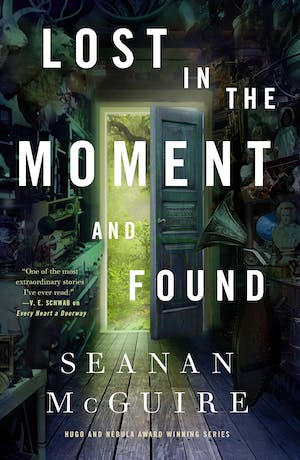
Lost in the Moment and Found by Seanan McGuire
Wayward Children book 8 of 10
CW: grooming, child abuse
I want to note that McGuire does include an author content warning at the beginning of the book that you can consult for more information. Antsy runs away from her unsafe home and enters a door into a shop where lost things go. She works in the shop and visits a multitude of worlds to find things for the shop. I love these books. I love the concept of the doors. I only hope I’m not too old to find one.
3.5/5 lost things

Flatiron Books

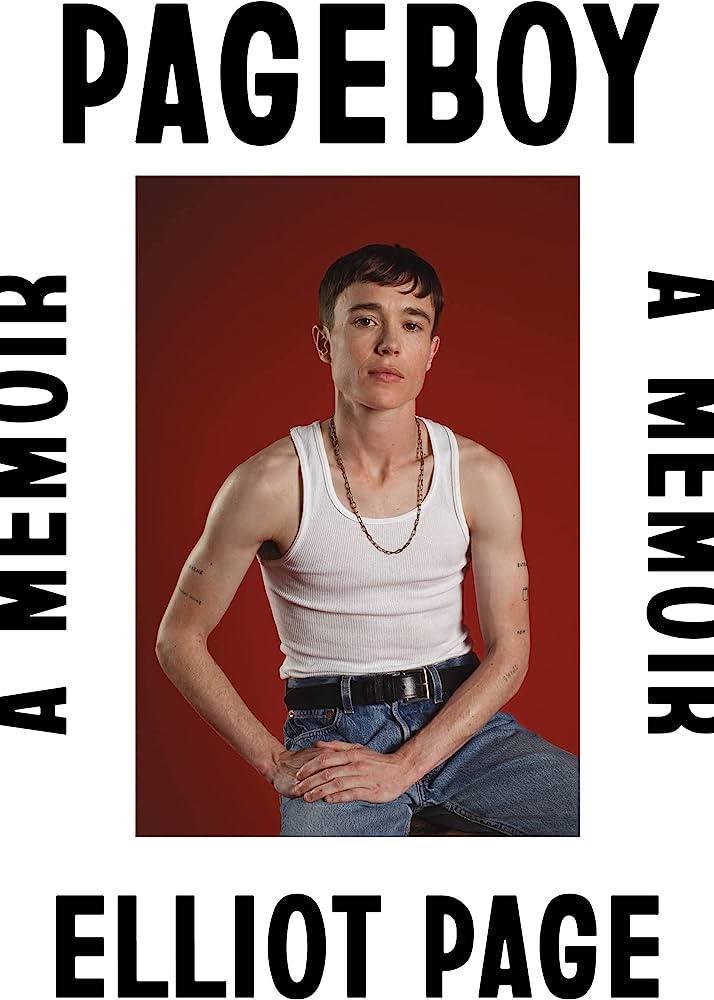
Pageboy by Elliot Page***
CW: body dysmorphia, child abuse, sexual harassment, sexual exploitation, stalking, rape
This one was not easy to read. Of course, I knew a little of Page’s story and I know no one who is trans has really has it easy, but there was a lot I didn’t know. Page skillfully weaves a memoir from his young childhood navigating the challenges of discovering his sexuality, knowing, though not always accepting, that he wasn’t a girl, and having to hide his queerness as he grew to fame as an actor. All that would be hard enough for someone with a strong support network, but Page did not have that. His life was filled with adults who did not have his best interests at heart, ranging from his abusive step-mom, his parents who failed to advocate for him, and producers, directors, and others who exploited him. At its heart, Pageboy is about Page’s journey to self-advocacy and self-acceptance. Though hard to read, the memoir ends with hope and the freeing lightness that the future will be better than the past.
4/5 movie shoots

Scholastic Inc.

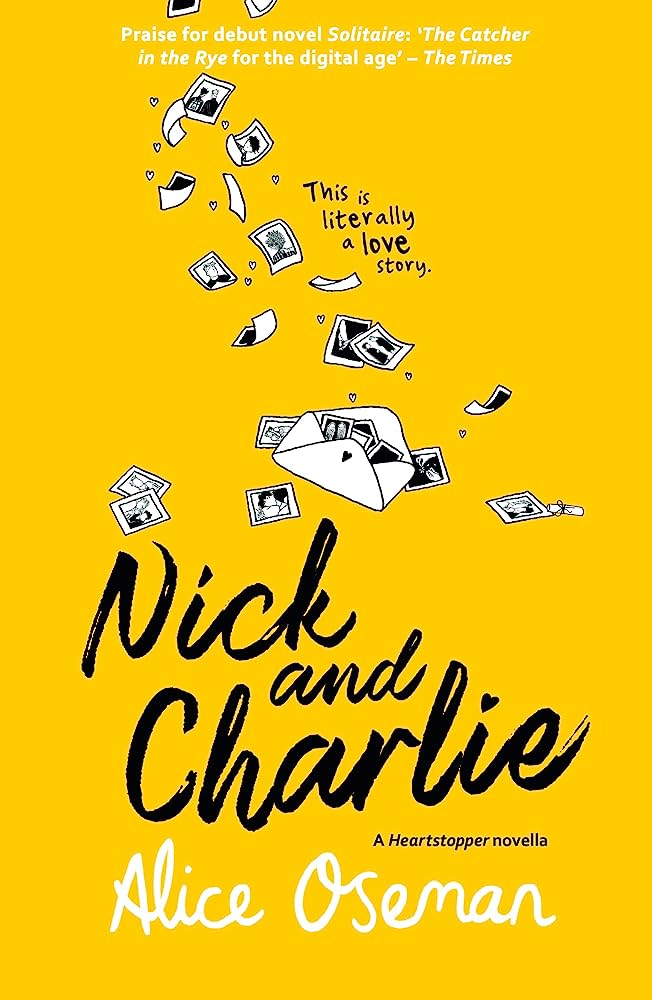
Nick and Charlie by Alice Oseman***
Heartstopper Universe
A delightful little palate cleanser after reading Pageboy. Low stress, nice to visit some of my favorite characters. This little novella takes place right before Nick goes off to university and Charlie feels a little left behind and unsure what his and Nick’s future will hold. Very sweet and lovely.
3/5 Nellies

HarperCollins Publishers

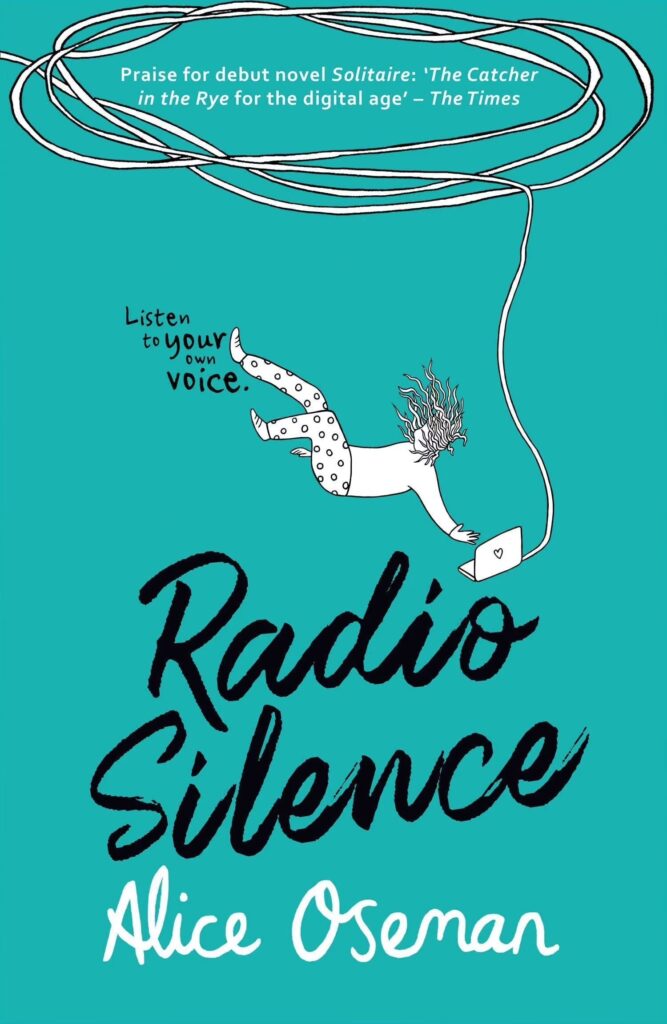
Radio Silence by Alice Oseman***
Heartstopper Universe
CW: mental illness, child abuse
This is Oseman’s second novel and it also takes place in the Heartstopper Universe chronologically after Solitaire, though you don’t have to have read any of the other Heartstopper books. Radio Silence follows Frances Janvier and Aled Last (whom you might recognize as one of Charlie Spring’s friends). Frances and Aled become friends when Frances finds out Aled is the Creator behind her favorite internet podcast. Both of them discover how to be themselves as they learn how to be friends. I liked getting to see more of Aled, who didn’t make it into the Heartstopper TV series, but maybe he’ll make it into future seasons?? I liked Frances’s voice and I really appreciated this meditation on friendship. So many YA books are so focused on romance, it’s nice to see one focused on friendship, which I would argue is more important in one’s teenage years.
3.5/5 crazy-patterned leggings

Audible

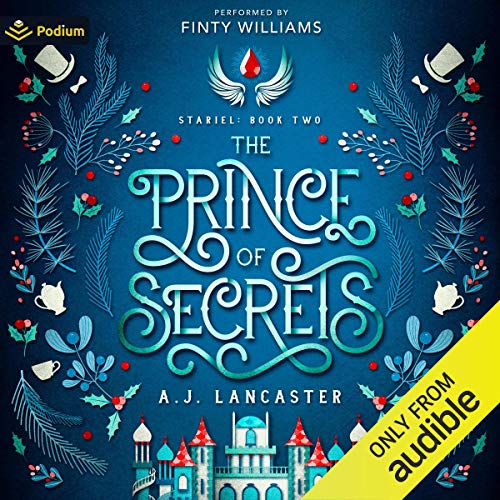
The Prince of Secrets by A. J. Lancaster
Stariel book 2 of 5
This is the sequel to The Lord of Stariel, and this one is just as enjoyable as the first. I think I read the first one because it was free on Audible, but I do think I’ll probably read the rest. I won’t say too much about the plot of this one in case you haven’t read the first one. They’re cozy fantasies and I really enjoy all the characters and the world of Stariel.
3.5/5 blue-feathered wings

Audible

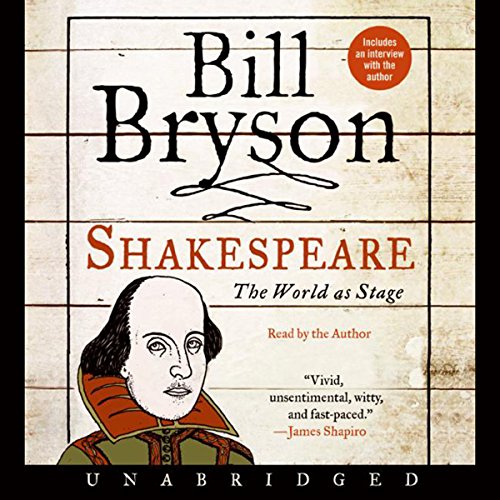
Shakespeare: The World as Stage by Bill Bryson
We went on a road trip this month so this book is an attempt to find something my dad and I both want to listen to. He’s a big Bill Bryson fan; I’m interested in the topic of Shakespeare. I enjoyed this book. It’s a slim biography of Shakespeare and touches on many aspects of Elizabethan history, while also noting how little we actually know for sure about Shakespeare as a person. A lot of scholars and lay people have many theories about Shakespeare–that he was someone else, that he was several people, etc.–but Bryson does a great job of examining and picking apart each theory, none of which really has any evidence that could prove Shakespeare wasn’t who we think, except that there is not much evidence that he was who we think either. Overall a fascinating read.
3.5/5 fires in London

**Book Hangover Alert indicates the kind of book that will leave you full up on love. Satisfied, but wishing the book never had to end. You’ll be laying on the floor with no idea what to do with yourself (other friends have called this feeling Good Book Depression or say that certain books necessitate Floor Time). This is the kind of book that gets its teeth in you and won’t let go easily. After the last page you’ll be thinking about this book for a long time. You’ll bother all your friends trying to get them to read it so that you won’t be alone in your Hangover.

***This book is part of my Books for a Social Conscience series! Read Pageboy for a trans memoir that grapples with the difficulties of growing up trans and queer, especially in the public eye, but also offers hope for the future. Read any of the Heartstopper books for happy LGBTQIA+ representation.

Reads marked as part of the Books for a Social Conscience series will regularly address topics like race and racism, colonialism and post-colonialism, LGBTQIA+ experience, feminism, BIPOC experience, social and political issues, history, identity, class, disability experience, immigration, gun violence, poverty, colorism, environmentalism, and more! The goal of these books is to diversify the stories we’re reading, grow our empathy for those who are different from us, and amplify voices who are often silenced.

September 2020 Books

Books Reread

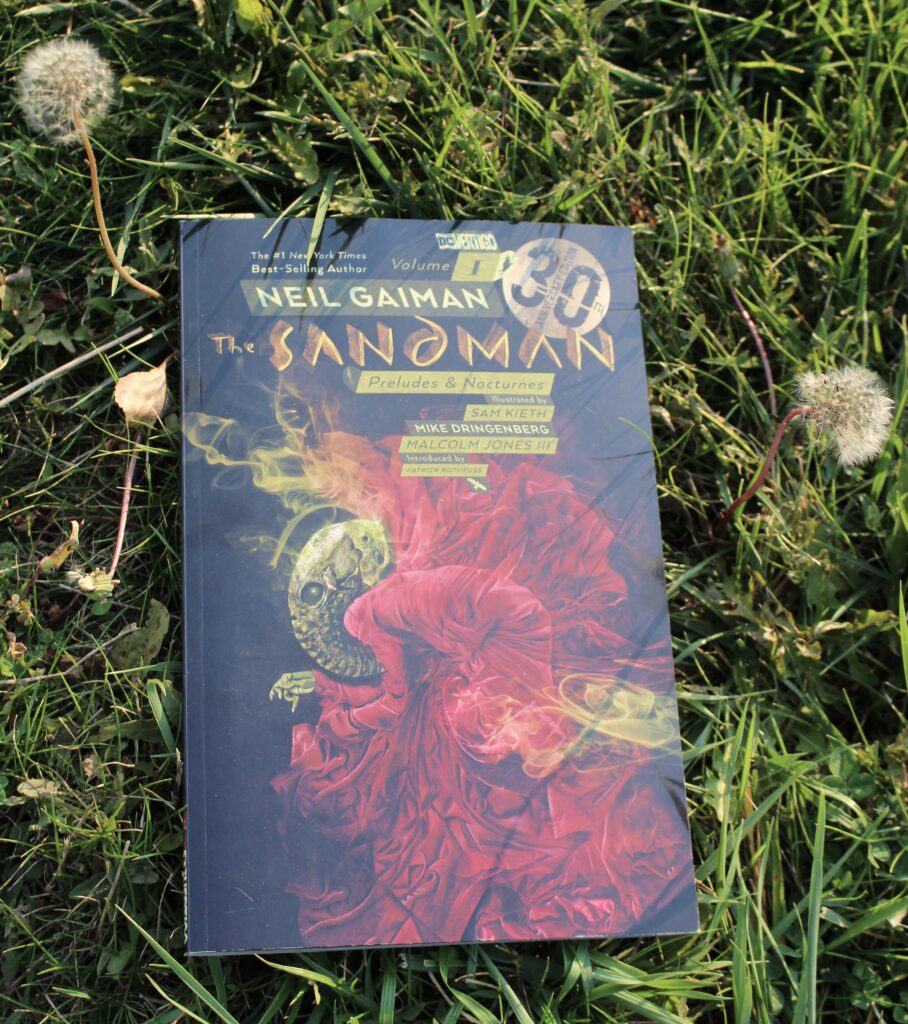
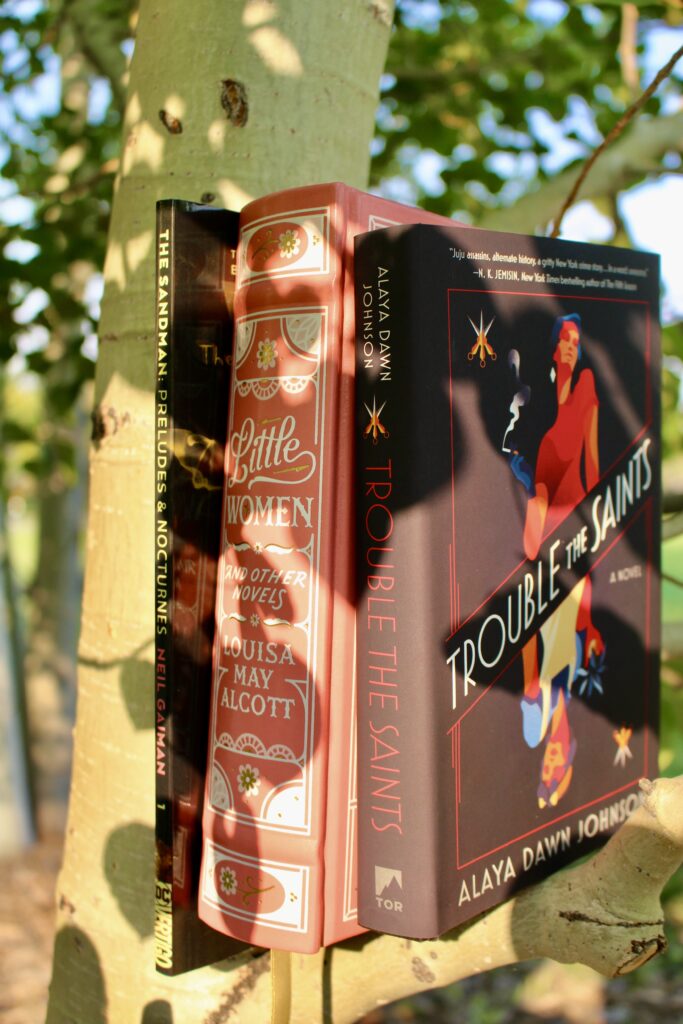
The Sandman Radio Drama by Neil Gaiman
CW: for mature audiences
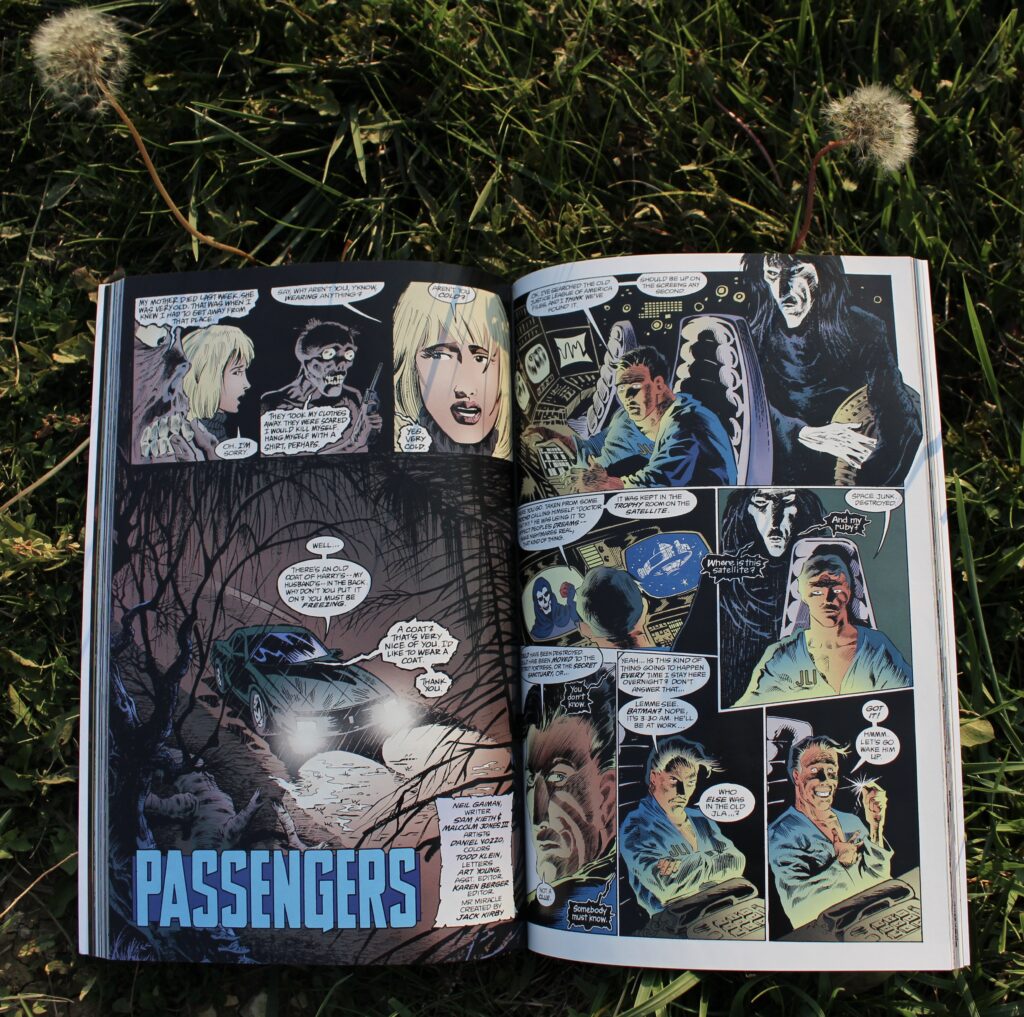
Neil Gaiman is one of my favorite authors (another features later in the post). I’ve read the Sandman comics, but Audible has just put out this radio drama that covers #1-20, or the first 3 collected volumes, Preludes and Nocturnes, A Doll’s House, and Dream Country. Though I love the art from the comics, and that aspect of the Sandman story should not be missed, I really loved the radio play as well. James McAvoy played a wonderful Dream, and Kat Dennings was superb as Death. Gaiman himself plays the narrator.
3.5/5 dreaming cats (cats are something of a theme this month)

Little Women by Louisa May Alcott
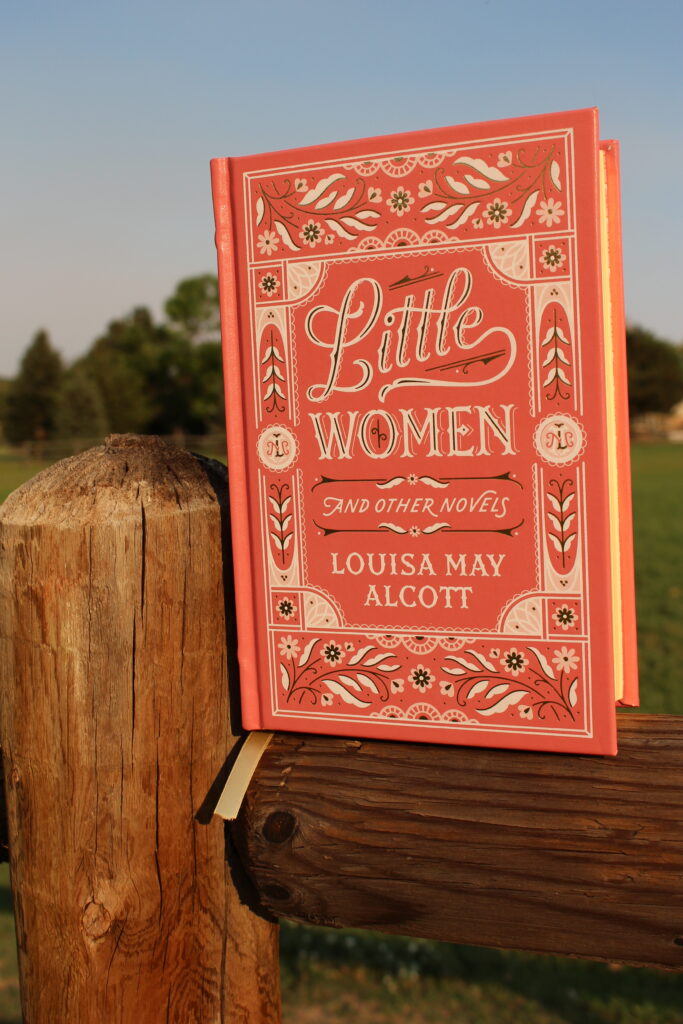
Little Women is one of my absolute favorites. Whenever someone asks me that question “What literary character do you most relate to?” I always say Jo March, like practically every other young, independent feminist. “Timeless classic” is a cliche but this book really is one. I love the feminine-centric story, the love between the sisters, the sweet, funny, and moving trials each sister faces. I also love basically every adaptation of the story. The 1994 movie? Fabulous. The 2018 miniseries? Delightful. The Broadway musical? Perfection. The 2020 movie? Masterpiece. This time I listened to the Audible original version read by Laura Dern and a full cast. It’s not verbatim the original text, but it’s still wonderful.
5/5 sensational stories by Jo March for the Weekly Volcano Press


New Books Read

In an Absent Dream by Seanan McGuire
Wayward Children book 4 of 5
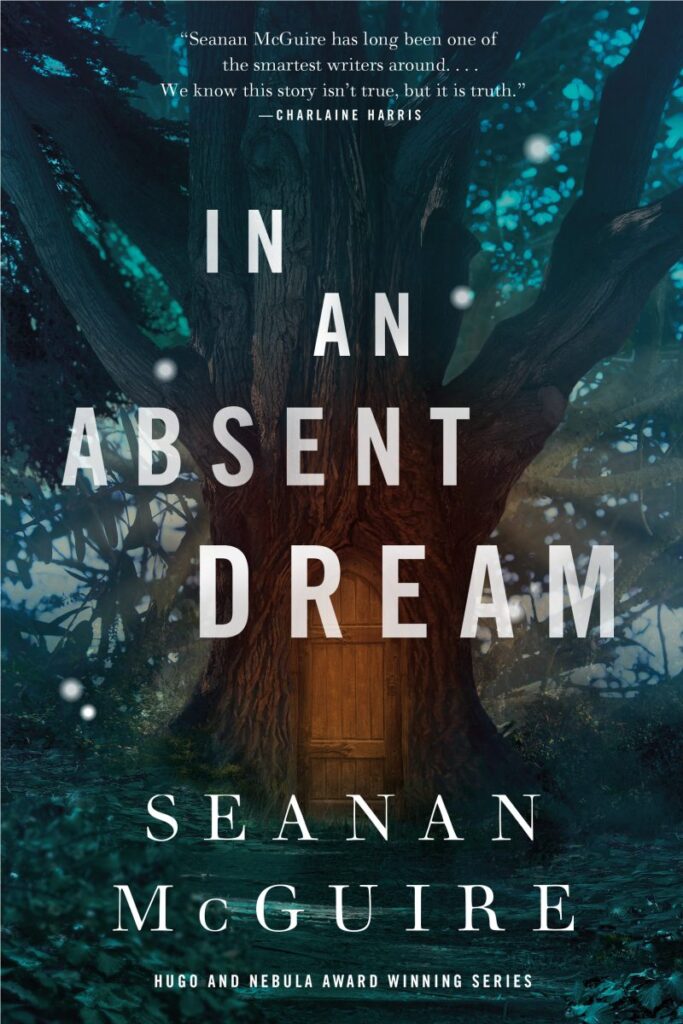
This may have been my favorite book yet from McGuire’s Wayward Children series. The Goblin Market is my favorite of the worlds we’ve been able to explore through McGuire’s infinite doors. In this installment we learn the backstory of Lundy, a character from Every Heart a Doorway, the first book in the series. The story is at once beautifully imaginative, heartbreakingly sad, and absolutely fair.
4/5 fruit pies

Utopia Avenue by David Mitchell
Book Hangover Alert**
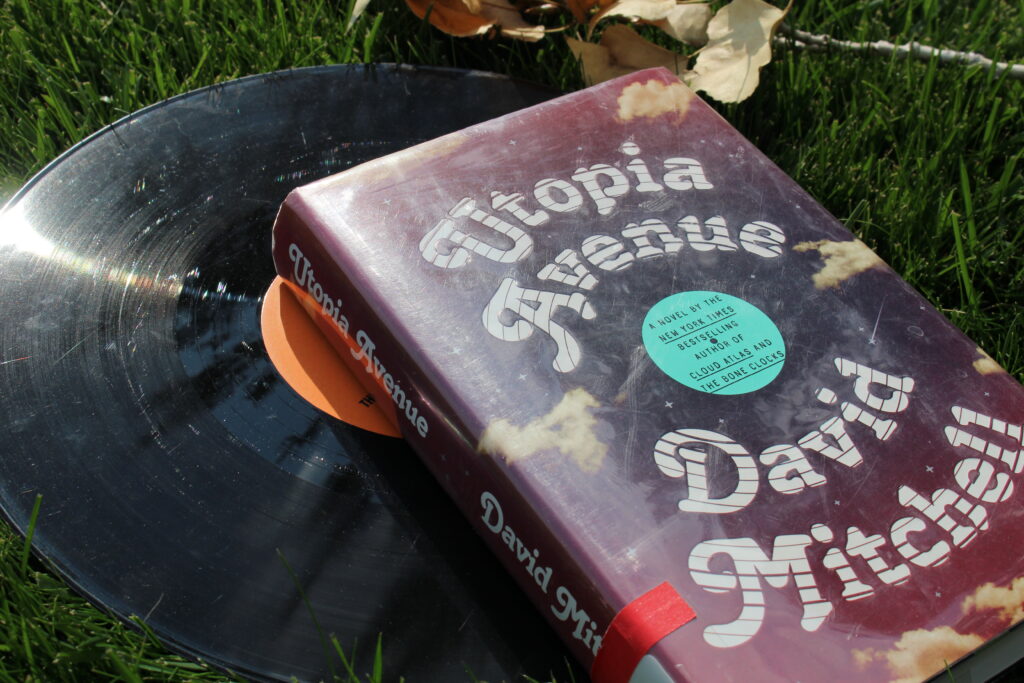
I absolutely adore David Mitchell’s work. I’ve read all his books and have been eagerly awaiting this one since 2015. My favorite thing about his books is that they all exist in the same universe and the characters of one story may waltz through another if you’re paying attention. All across time his stories intersect and interlock. Though you don’t have to have read any of his previous works to understand and enjoy this book, I would recommend reading The Bone Clocks and The Thousand Autumns of Jacob de Zoet as companions for maximum mind-bogglingness. Mitchell’s stories all have an element of the fantastical but the writing, characterization, and world-building is such that you could comfortably live in the house he has created with his words and not realize the walls were made of paper. Utopia Avenue tells the story of a folk-rock band born in London’s fertile 1960s music scene. Not only do characters from Mitchell’s other works make cameos, but real classic rock and folk icons from the 60s jam their way through the novel. The book was so good I haven’t stopped thinking about it since I finished it and I now feel like I have to go back and reread all his books again. Best of all, the book comes with a Spotify playlist for maximum reading and listening pleasure.
6/5 chart-topping singles

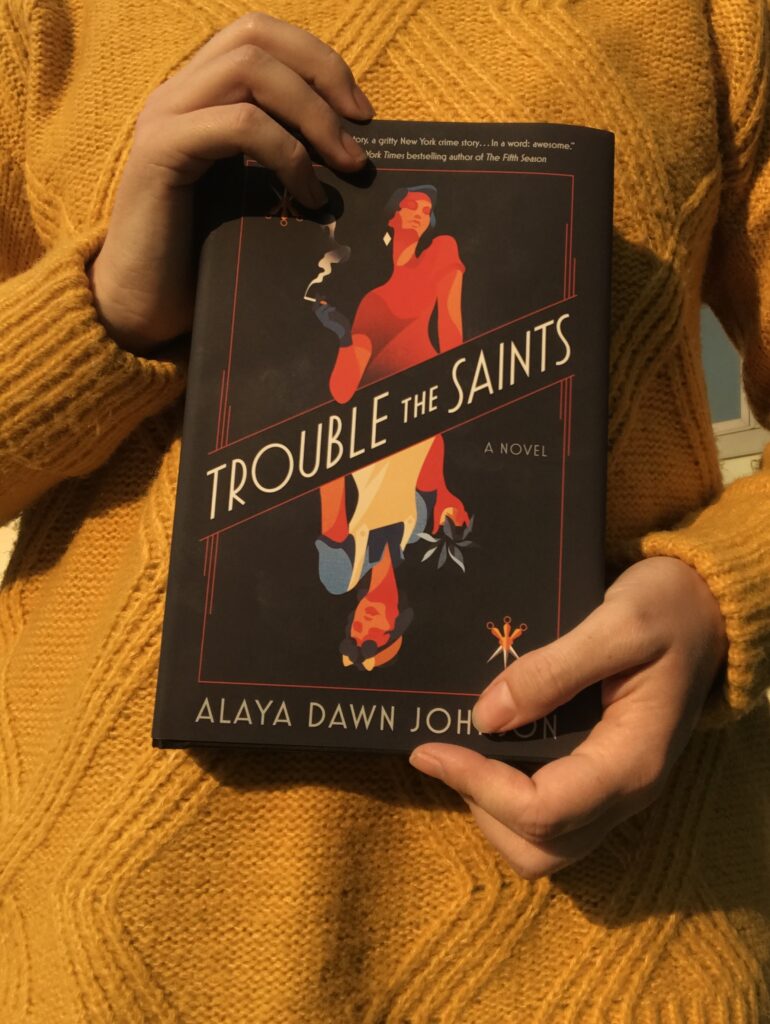
Trouble the Saints by Alaya Dawn Johnson***
CW: anti-Black racism, murder
A gritty historical-fiction/supernatural tale of mobsters and crooked cops set in New York City in the 1940s, Johnson’s novel examines race and thorny issues of morality. The novel follows Pea, an assassin with blessed hands. Some people of color are blessed with special abilities by saint-blessed hands. Naturally, white people want anything that people of color have that they don’t, so what follows is a twisted, dark tale that, like a throwing knife thrown high into the air, you won’t be able to look away from.
4/5 tarot cards


Books read for the Community Cats Podcast

I read the following* books for a book review post on the Community Cats Podcast blog. You’ll be able to read it here when it’s posted.

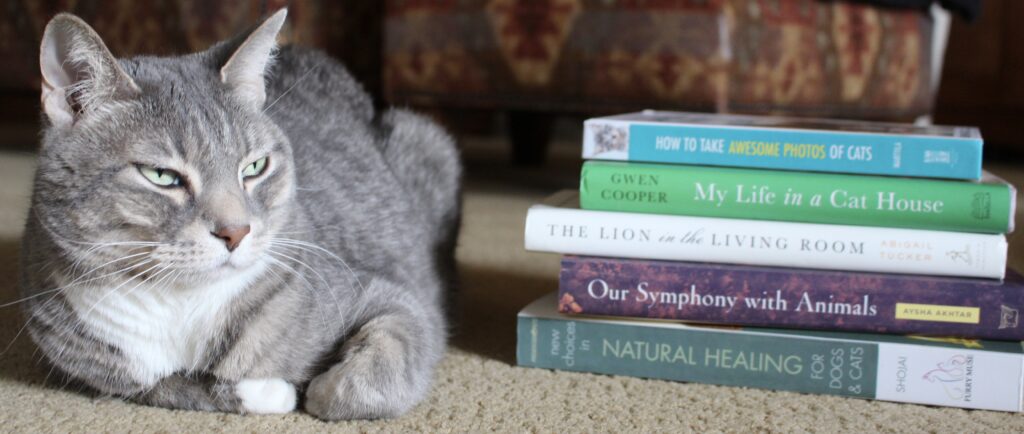
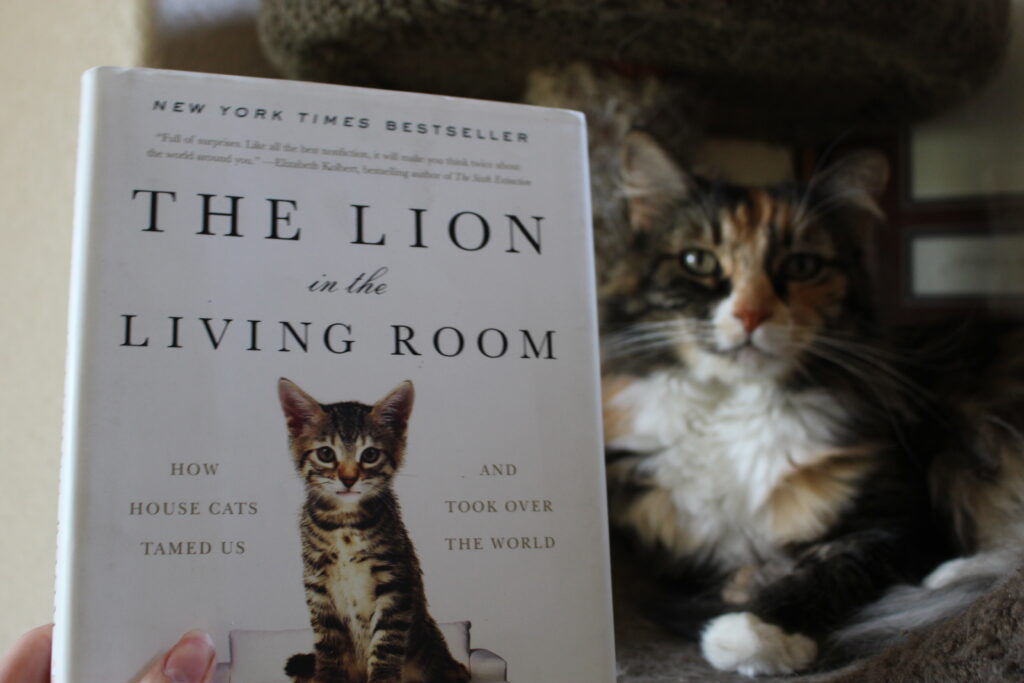
The Lion in the Living Room by Abigail Tucker
Honestly, I was pretty disappointed by this book. I did not enjoy it. Tucker tries to tease out the mystery of how cats have found a place in our hearts and taken over our homes and lives, even though we didn’t domesticate them like dogs or other animals, and they supposedly don’t contribute anything to our lives. Unfortunately, the book reads like a laundry list of reasons why we shouldn’t like cats–including but not limited to their status as an invasive species, their possible link to schizophrenia through an invasive parasite they can give their owners, and studies that show no real health benefits to owning a cat as well as some health risks. Apart from all the science and history she piles up that make cats seem like the worst human-animal alliance in history, she also makes cat lovers sound insane, from breeding and cat fanciers to Jackson Galaxy and the pet product industry, from TNR advocates to Instagram-famous cat owners. Though much of the science and history was interesting, I felt Tucker failed to discover the true nuance of the human-cat bond. Perhaps the benefits I receive from having my cat in my life are not quantifiable by science, or studies, or terms that can be qualified as “useful to humanity,” but I certainly believe my life is better for having my cat in it.
2/5 toxoplasma gondii parasites

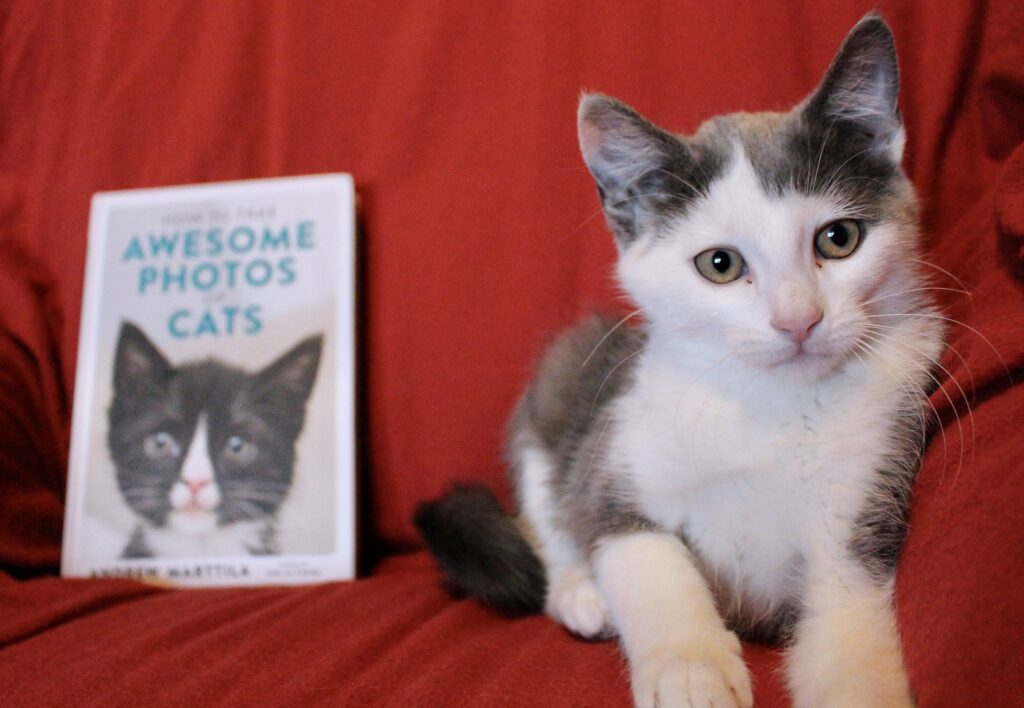
How to Take Awesome Photos of Cats by Andrew Marttila
I’ve read the book, but I’m obviously still working on this one (see above photos). Marttila’s book was a great and very accessible guide to getting better photos of your cat. The book covered basic photography skills, tips for working with feline subjects, specific guides for using smart phones for photography as well as dedicated cameras, basic editing suggestions, and how to use the great photos you’ve taken. Marttila’s tone is casual and easygoing and not at all overwhelming, as some other photography guides can be–full of technical jargon that you feel dumb for not knowing. I’m excited to give his suggestions a try, especially those about editing as I’ve never really known much about that.
3.5/5 cats on catnip

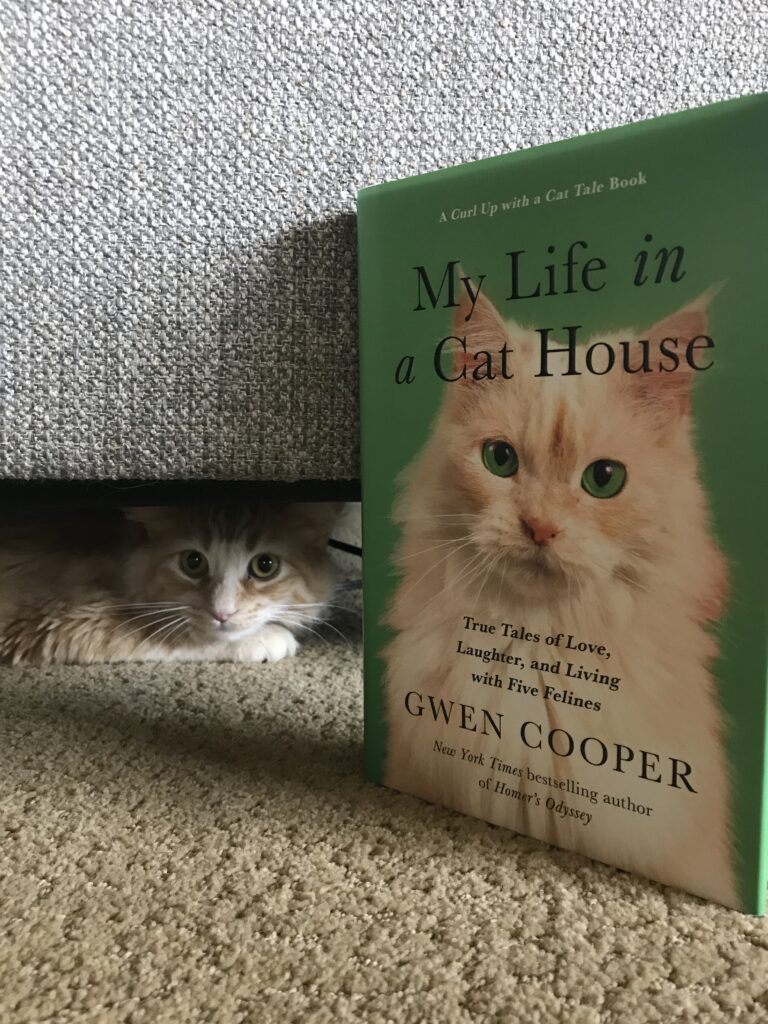
My Life in a Cat House by Gwen Cooper
Author of Homer’s Odyssey, Gwen Cooper writes this time about all the cats she has shared her home with over the years. The memoir is structured into short stories focusing on each of the unique feline’s she has known. I hadn’t read Homer’s Odyssey but I was drawn in to Cooper’s world by her writing style and her keen observation of her feline family. The memoir was a joy for any cat lover, who will recognize the idiosyncrasies and the charm of sharing your home with a cat. At times funny and touching, Cooper fully characterizes each of the five cats she has shared her life with.
3.5/5 unique felines

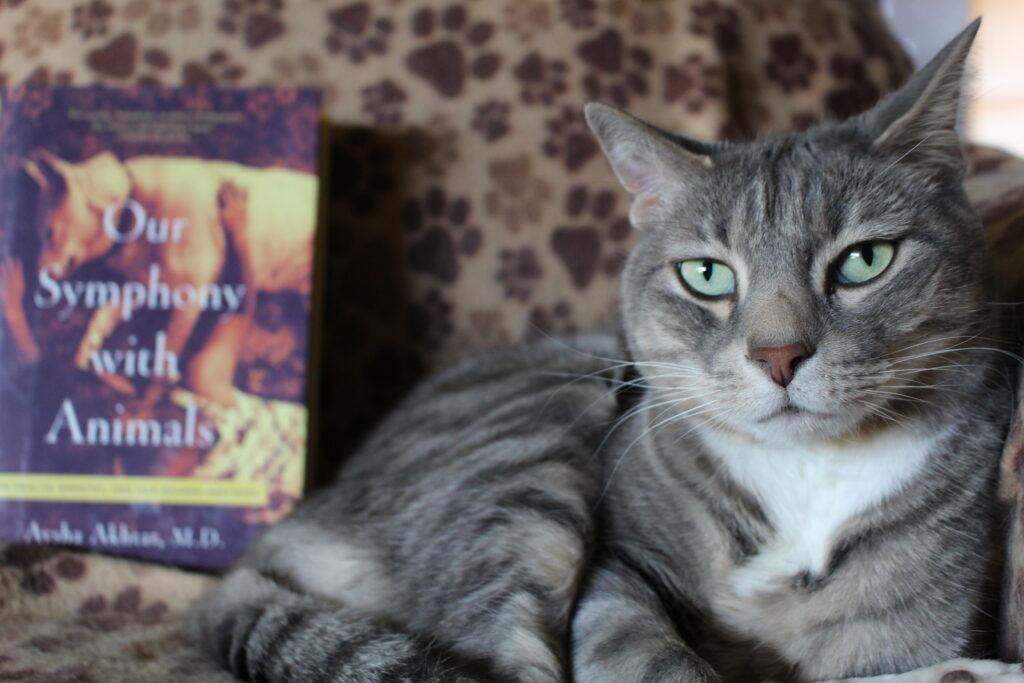
Our Symphony with Animals by Aysha Akhtar M. D.***
CW: sexual abuse of children, animal abuse, trauma, PTSD, violent crime, drug abuse, discussion of serial murder and abuse of women 
I thought this book, based on its title and cover, was going to be hokey and eye-rollingly sentimental. Boy, was I wrong. This book provided me with everything I felt I was missing from The Lion in the Living Room. Dr. Akhtar’s book explores the deep bond of empathy humans share with all animals and how that bond can be incredibly healing. This, I felt, was what Tucker failed to talk about in her quest to understand why people love cats.  Dr. Akhtar also discusses the idea that a lack of empathy toward animals could translate to a lack of empathy toward humans. She visits prisons, animal rescues, poultry farms, the New York Police Department, among others, and speaks with veterans living with PTSD, a serial killer, detectives investigating animal cruelty cases, a former mobster, an ex-rancher, and more. She also cites a wealth of studies and scientific evidence that support the anecdotes and interviews that fill her book. She succeeded in convincing me that a strong empathetic bond between humans and animals is both natural and necessary to a healthy way of living. It’s even convinced me it’s time to be a vegetarian (something I’ve been thinking about a long time).
4.5/5 vegetarians


*Included in my Community Cats Podcast blog post but not here is New Choices in Natural Healing for Cats and Dogs: Herbs, Acupressure, Massage, Homeopathy, Flower Essences, Natural Diets, Healing Energy, 2017 by Amy Shojai, because I didn’t read the whole thing, which is generally a requirement for this blog (it’s a medical handbook, you aren’t supposed to read it cover to cover). I did read the introduction and methodology, which I summarize in the CCP blog.

**Book Hangover Alert indicates the kind of book that will leave you full up on love. Satisfied, but wishing the book never had to end. You’ll be laying on the floor with no idea what to do with yourself (other friends have called this feeling Good Book Depression or say that certain books necessitate Floor Time). This is the kind of book that gets its teeth in you and won’t let go easily. After the last page you’ll be thinking about this book for a long time. You’ll bother all your friends trying to get them to read it so that you won’t be alone in your Hangover.

***This book is part of my Books for a Social Conscience series! Read Trouble the Saints to learn more about anti-Black racism, passing, and corruption in the police and how, although set in the 1940s, those issues are still relevant today. Read Our Symphony with Animals to learn more about empathy for animals, how cruelty to animals can lead to cruelty to humans, and the paradox of protecting some animals (companion animals, endangered animals) and hurting others (animal agriculture farms, scientific testing).

Reads marked as part of the Books for a Social Conscience series will regularly address topics like race and racism, colonialism and post-colonialism, LGBTQ+ experience, feminism, BIPOC experience, social and political issues, history, identity, class, disability experience, immigration, gun violence, poverty, colorism, environmentalism, and more! The goal of these books is to diversify the stories we’re reading, grow our empathy for those who are different from us, and amplify voices who are often silenced.

css.php